


Malaysia does not permit dual citizenship. Article 24 of the Federal Constitution is clear - any Malaysian who acquires the citizenship of another country risks losing their Malaysian citizenship.
Although the principle of single citizenship, sole allegiance to one country, is somewhat archaic, it remains the law in Malaysia.
Yet, the authorities have often enforced this principle selectively and inconsistently. We have seen its overzealous application in statelessness cases involving foundlings and children born to unmarried Malaysian fathers and foreign mothers - situations where the children merely sought the citizenship they are constitutionally entitled to.
Foundlings are entitled under Section 1(e), Part II, Second Schedule, while children deriving lineage through their Malaysian fathers fall under Section 1(a), Part II, Second Schedule of the Constitution.
In these cases, officials have unreasonably insisted on proof that the child holds no other nationality - an impossible or pointless burden in many circumstances - instead of recognising the state’s duty to prevent statelessness.
The global trend, however, is towards greater acceptance of dual or multiple citizenship, with roughly half of the countries around the world now fully allowing it.
What about foreigners?
Article 19 of the Constitution does not specify when or how a naturalised foreigner must renounce their original nationality.
There is neither a stipulated timeframe nor any procedural guidance to ensure that a new Malaysian citizen holds only a single citizenship.
In most countries that disallow dual citizenship, the process is tightly regulated.
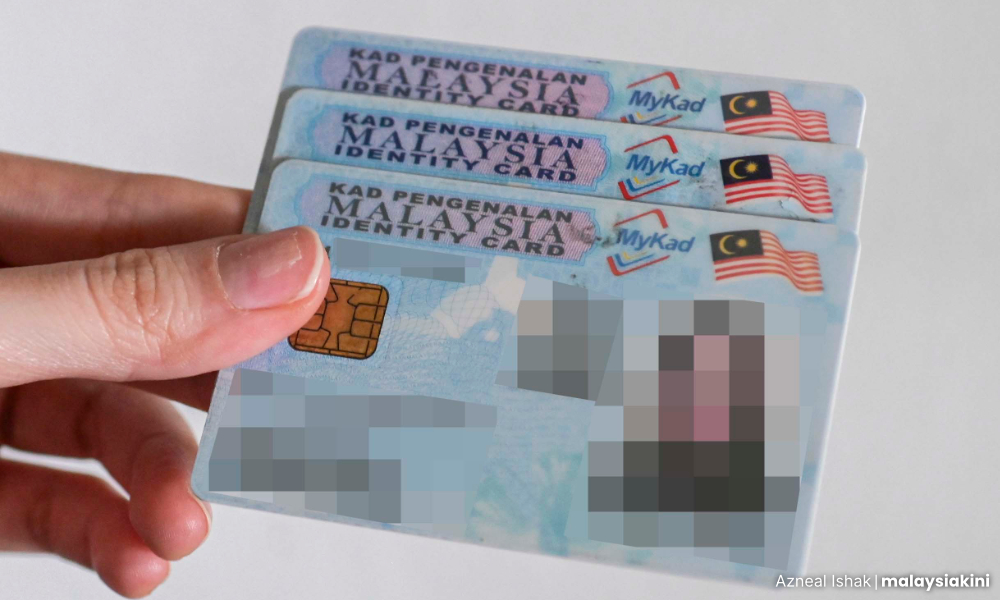
Applicants are generally required to renounce their previous citizenship either before naturalisation is finalised or within a legally defined period thereafter - typically ranging from several months to two years. Failure to comply can lead to the revocation of the newly acquired citizenship.
Malaysia, however, lacks such clarity. This gap makes it entirely plausible that the seven recently naturalised footballers from Argentina, Brazil, the Netherlands, and Spain continue to hold their original citizenships.
Did ‘heritage’ players meet requirement?
More troubling still are allegations that these individuals did not meet the basic requirements for naturalisation under Article 19 of the Constitution, including the minimum 10-year period of residence and adequate knowledge of Bahasa Malaysia.
If their applications were supported by false information, or if key facts were concealed, then Article 26 of the Constitution is clear - citizenship obtained through fraud, false representation, or concealment of material facts may be revoked.
Regardless of the home minister’s assurances, the constitutional implications cannot be brushed aside. If these naturalisations were granted in breach of the Constitution, the government has a duty to right the wrong.
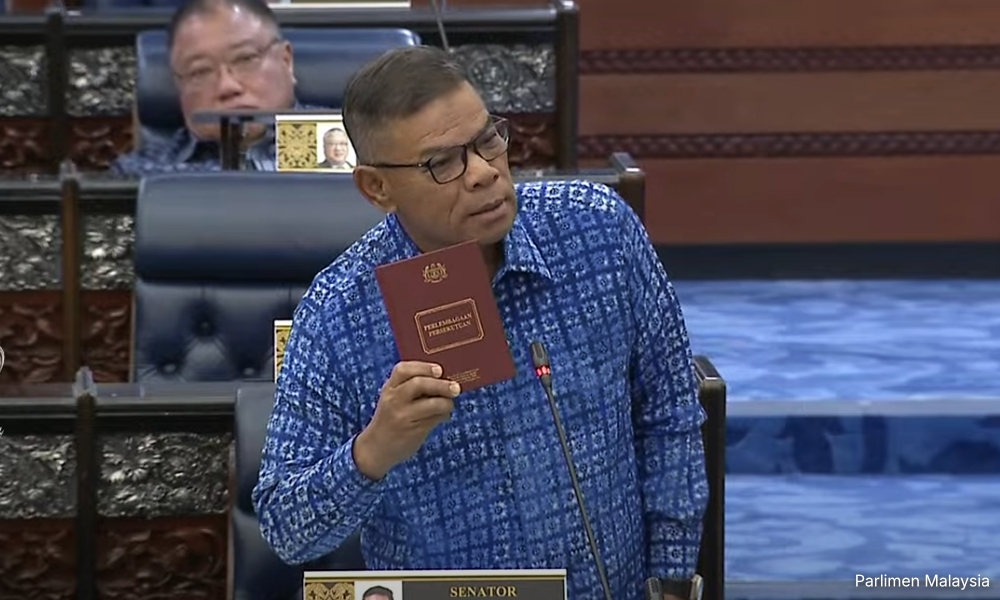
Granting citizenship outside the bounds of the Constitution, or issuing dubious birth certificates for the players’ long-deceased grandparents to circumvent the International Federation of Association Football (Fifa) eligibility rules, are not mere administrative lapses.
These are serious criminal acts that demand a thorough investigation.
Crack the whip
Ultimately, the real offence lies not with the players - whose careers have already been ruined - but with those entrusted to uphold the law, and with those within the national football establishment who pushed and enabled this fraudulent scheme to produce instant national footballers regardless of their links to Malaysia.
The half-hearted claims of responsibility without real consequences and the token suspensions that have followed point to a familiar pattern: a scapegoat or two will be sacrificed while the real culprits walk away unscathed.
Without meaningful accountability, the damage runs deeper than any footballing scandal.
It is not the players who shame Malaysia, but the system that protects those in power - a system that can only further erode public confidence in the rule of law and state institutions. - Mkini
ERIC PAULSEN is the co-founder and adviser of Lawyers for Liberty; former representative of Malaysia to the Asean Intergovernmental Commission on Human Rights.
The views expressed here are those of the author/contributor and do not necessarily represent the views of MMKtT.

No comments:
Post a Comment
Note: Only a member of this blog may post a comment.