

Malaysia is facing deep political disillusionment, and Rafizi Ramli’s reformist approach will be tested on whether it can restore public trust in politics beyond rhetoric.
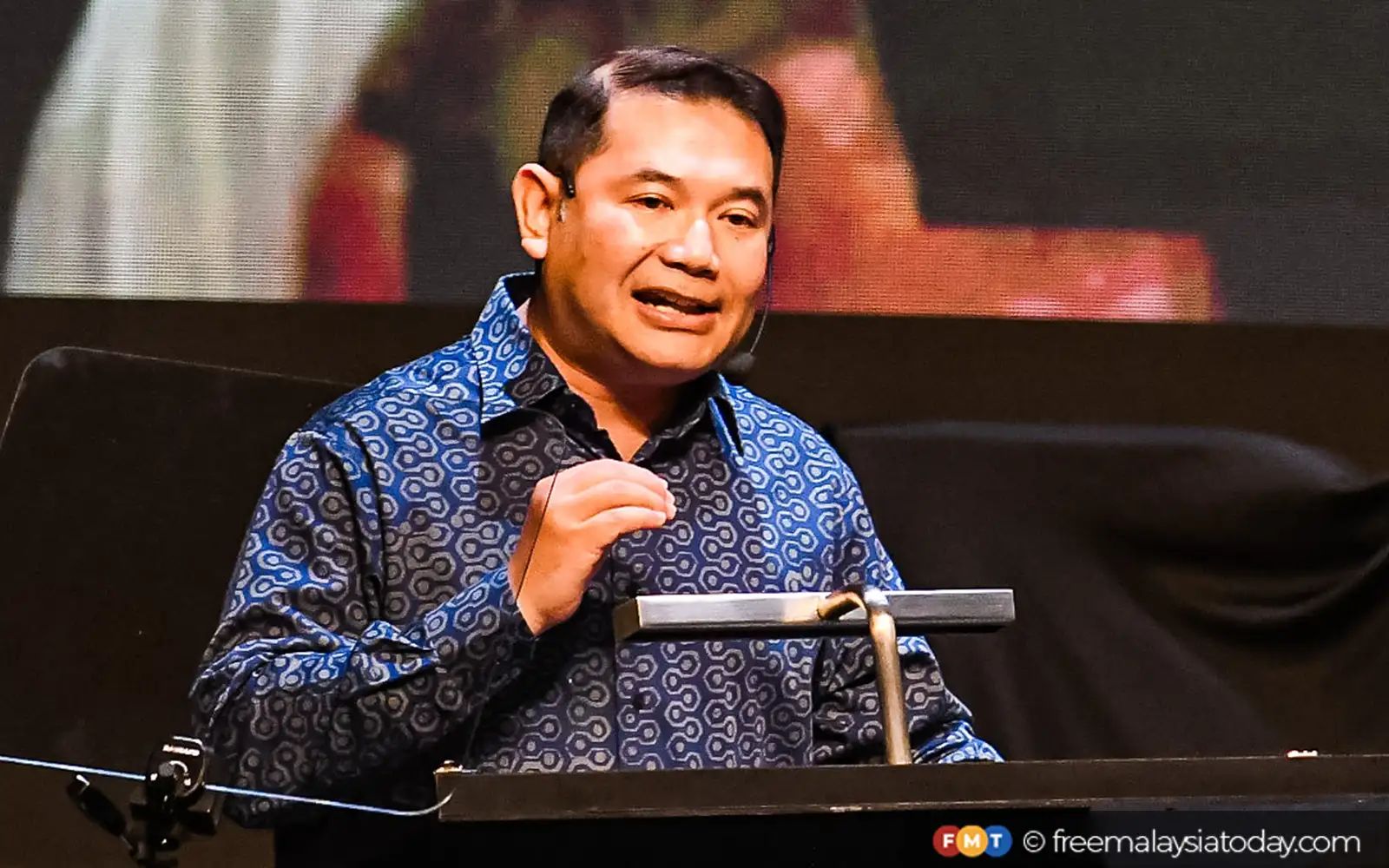
From Ghazalie Abdullah
Malaysia may be entering a dangerous political phase where public disappointment is no longer a temporary frustration but something deeper and more corrosive.
For years, Malaysians have lived through an exhausting cycle of political upheaval, collapsing coalitions, recycled slogans, and endless promises of reform.
Governments changed. Alliances fractured and reassembled. Former enemies became partners before turning into rivals once again. Yet, despite the constant political movement, many ordinary Malaysians increasingly feel that little in their daily realities has truly improved.
The issue confronting the country today may therefore run deeper than governance failures, corruption scandals, or political instability. Malaysia could well be facing a crisis of political credibility itself.
Across the country, frustration is becoming more emotional than ideological. Young professionals struggle with rising living costs and uncertain futures. Graduates enter a workforce that often offers limited mobility.
Businesses remain cautious amid prolonged economic unpredictability.
Even older Malaysians who once placed their hopes in reform politics now view the political landscape with growing scepticism.
This is precisely why the latest developments involving Rafizi Ramli and Nik Nazmi Nik Ahmad are attracting attention beyond ordinary party manoeuvring.
The significance lies not merely in political realignment but in what it may represent psychologically.
Malaysians are no longer simply questioning governments. Increasingly, they are questioning the entire political architecture that has shaped the country for decades.
For more than a decade, Rafizi has occupied an unusual space in Malaysian politics. Unlike many politicians whose influence is built on patronage, personality cults, or emotional populism, Rafizi attempted to build his reputation around policy analysis, institutional critique, and economic interpretation.
Even his critics would acknowledge that he introduced a more forensic and intellectually driven style into national political discourse.
While many politicians relied on rhetoric and slogans, Rafizi often tried to steer conversations towards governance systems, economic structures, institutional accountability, and long-term national competitiveness.
That distinction matters.
Modern societies are not transformed by slogans alone. They progress when citizens believe their leaders are capable, credible, and forward-looking.
One of Malaysia’s greatest challenges today may not simply be economic uncertainty but the slow erosion of national confidence itself. The growing belief that meaningful change is no longer possible.
Against this backdrop, any new political movement associated with Rafizi will inevitably attract attention because it appears to promise something different.
If it resonates with the public, it may be less because of personality politics and more due to its attempt to shift the conversation away from endless racial anxieties, coalition arithmetic, and political survival towards competence, governance, and institutional trust.
But Malaysians are also far more cautious today than politicians sometimes realise.
The public has witnessed too many political “reboots” that ultimately repackaged old habits with new branding.
Voters today are more politically literate and emotionally guarded. They recognise performance politics. They understand marketing. They know when “change” is merely cosmetic.
This means Rafizi and any future political movement around him will face a very high standard of public scrutiny.
Malaysians no longer want impressive speeches alone. They will closely observe whether such leaders behave differently when confronted by power, criticism, and political compromise.
That is where the real test begins.
Can a new political movement genuinely rise above Malaysia’s deeply tribal political culture? Can it resist the pull of personality politics and communal calculations? Can it remain intellectually honest when honesty becomes politically inconvenient?
More importantly, can it restore dignity and trust to public leadership?
Because beneath all the political noise lies a far more human yearning. Most Malaysians are not searching for political saviours or perfection.
They simply want a reassurance that intelligence, integrity and competence still matter in national leadership.
Timing may also favour such a recalibration.
Malaysia’s younger electorate is increasingly evaluating leadership through practical realities rather than historical loyalties.
Many are less emotionally attached to traditional political machinery and more concerned about economic mobility, digital competitiveness, institutional trust, education standards, and quality of life.
They are globally connected, technologically aware, and far less patient with political narratives that appear detached from economic reality. That creates both opportunity and danger.
The opportunity lies in the possibility that a genuinely reform-minded political movement could reconnect younger Malaysians with a sense of national purpose and future optimism.
But the danger is equally serious. If yet another reform movement fails to deliver meaningful change, public cynicism may deepen even further.
And once cynicism becomes embedded in a society, it becomes extraordinarily difficult to reverse.
Ultimately, the larger national question may not be whether Rafizi succeeds politically in the conventional sense. Elections will come and go. Coalitions will continue to rise and fracture.
The more important question is whether he can help Malaysians recover their belief that politics can still produce wise, principled, and future-focussed leadership capable of elevating the national conversation beyond fear, race, and perpetual crisis management.
And perhaps that is the deeper question confronting Malaysia today: whether the country still dares to believe that politics can produce hope instead of merely managing disappointment. - FMT
Ghazalie Abdullah is a former TV3 news presenter and an FMT reader.
The views expressed are those of the writer and do not necessarily reflect those of MMKtT.

No comments:
Post a Comment
Note: Only a member of this blog may post a comment.