Monday, June 1, 2026

Bersatu confident of new allies if PAS goes solo

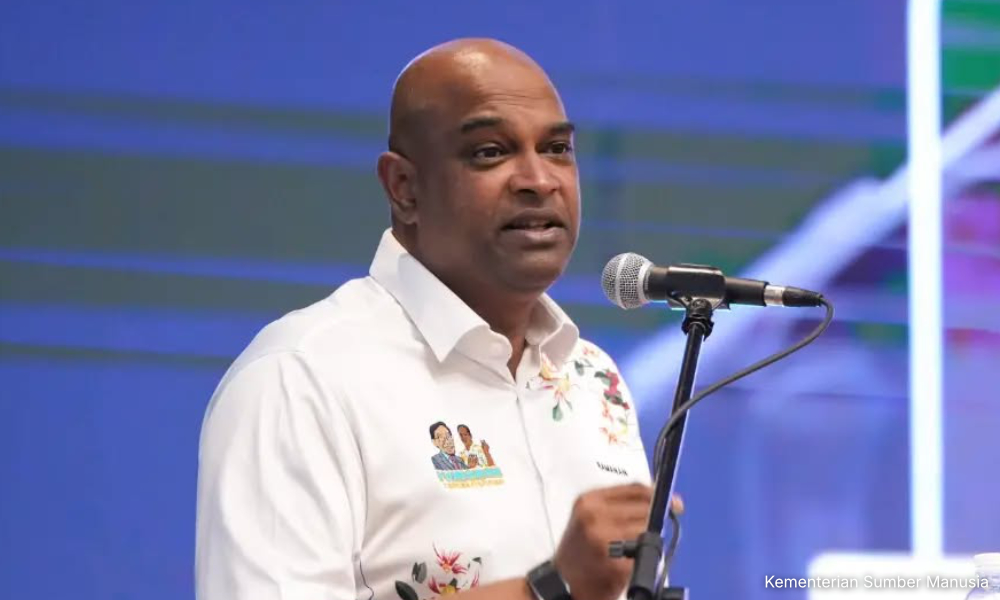
 Party vice-president Ahmad Faizal Azumu says it is up to PAS to determine its own direction in the interest of the Malay community.

Bersatu vice-president Ahmad Faizal Azumu said his party has no right to stop PAS from deciding to contest future elections independently.
PETALING JAYA:
PAS is free to go its own way, says Bersatu vice-president Ahmad Faizal Azumu, who believes many other parties would align with Bersatu if the Islamic party opts to contest future elections independently.

Faizal said it was up to PAS to determine its own direction in the interest of the Malay community’s cause and unity.

“If that is PAS’s position, and if they believe it will advance their struggle and contribute to Malay unity, there is little more we can say. We have no right to stop them from taking that path.

“However, I believe many others will continue to stand with us,” he was quoted by Utusan Malaysia as saying.

Yesterday, PAS information chief Ahmad Fadhli Shaari suggested that his party and Bersatu contest future elections separately following a dispute over the strength of party machinery within Perikatan Nasional.

Fadli said there was little hope for harmonious cooperation if remarks that Bersatu lacked an effective grassroots machinery were easily dismissed.

He was referring to a viral video of a ceramah by Azmin Ali in Melaka on Saturday night, in which the Bersatu secretary-general pushed back against claims that his party lacked grassroots machinery and urged critics to “open their eyes and ears”.

Fadhli said there was nothing wrong with a party lacking a strong grassroots machinery, especially if it was still relatively new. However, the real problem arose when such weaknesses were not acknowledged.

Bersatu information chief Tun Faisal Ismail Aziz, however, said Azmin’s remarks were not directed at PAS but certain individuals who had allegedly ignored explanations provided by party leaders and misrepresented decisions made by the PN Supreme Council.

Faizal, also known as Peja, said any party aspiring to govern the country could not afford to operate alone and must instead build broad cooperation, not only with political parties but also with NGOs that share similar goals and principles.

“PN has gained strong support among Malays and has become a source of hope for many within the community, as reflected in its substantial seat tally in the 15th general election.

“But if that is the decision PAS chooses to make, Bersatu will accept it,” he said. - FMT

TMJ, Anwar extend birthday wishes to king

 The prime minister says Malaysians pray that Sultan Ibrahim and the entire royal family will continue to enjoy good health, longevity, and the continued protection and blessings of Allah.

Malaysians celebrate the official birthday of the Yang di-Pertuan Agong, Sultan Ibrahim, today. (Bernama pic)
KUALA LUMPUR:
Prime Minister Anwar Ibrahim today conveyed his congratulations and prayers to the Yang di-Pertuan Agong, Sultan Ibrahim, in conjunction with the king’s official birthday celebration.

In a Facebook post, Anwar said that on behalf of the government and all Malaysians, he prayed for Sultan Ibrahim, the Raja Permaisuri Agong, Raja Zarith Sofiah, and the entire royal family to be blessed with good health, longevity, and the continued protection and blessings of Allah.

“May His Majesty continue to reign with justice and wisdom, and uphold the highest office under the Federal Constitution in line with the role of the royal institution as the protector of Islam and a symbol of unity, harmony and well-being of all races in this country.

“I, and the rakyat, will continue to express our unwavering loyalty to the constitutional monarchy. Long live Your Majesty,” he said.

The Tunku Mahkota of Johor, Tunku Ismail Sultan Ibrahim, also conveyed his greetings and prayers to the king.

“Allah Peliharakan Sultan. Tuanku,” said Tunku Ismail on the HRH Crown Prince of Johor’s Facebook page.

Johor menteri besar Onn Hafiz Ghazi also extended his heartfelt congratulations and prayers to Sultan Ibrahim on the occasion.

“I, and the entire Bangsa Johor, offer our deepest respects. May Allah protect the Sultan and bless Johor,” he said in a Facebook post.

In a separate message, deputy prime minister Fadillah Yusof said he, together with all Malaysians, prayed that Sultan Ibrahim and the royal family would be granted continued good health and remain under the protection and blessings of Allah. - FMT

Monthly BUDI95 quota stays at 200 litres, says finance ministry

 It says a technical error during the maintenance of the system at 11pm yesterday had the quota displayed as 150 litres.

PETROL BUDI95
The finance ministry said it will continue to ensure that the implementation of the BUDI95 initiative proceeds smoothly and transparently to protect the people’s interests and ensure that targeted fuel subsidies reach those who are eligible.
PETALING JAYA:
The finance ministry says the monthly quota under the BUDI95 initiative remains at 200 litres, and not 150 litres as displayed during the maintenance of the system at 11pm yesterday.

The ministry said some users may have seen the monthly quota displayed as 150 litres.

In a statement this morning, it said the display was caused by a technical system error, which has since been identified and rectified.

“The ministry wishes to emphasise that the BUDI95 monthly quota remains at 200 litres a month for eligible users, including for June,” it said.

It said it will continue to ensure that the implementation of BUDI95 proceeds smoothly, transparently, and in an orderly manner to protect the interests of the people and ensure that targeted fuel subsidies reach those who are eligible. - FMT

Upko’s GRS move seen as way to boost credibility on Sabah rights

 Political analyst Bilcher Bala says the party's past membership in Pakatan Harapan had created the perception that its struggles were confined within the national framework of a Malaya-based bloc.

Hajiji Noor Ewon Benedick
Upko president Ewon Benedick (third from left) announced that his party had applied to become a member of GRS, submitting the application to coalition chairman Hajiji Noor. (Ewon Benedick pic)
PETALING JAYA:
Upko’s decision to apply to join Gabungan Rakyat Sabah is driven by the party’s desire to boost its credibility in championing Sabah rights, following its time with Pakatan Harapan, according to analysts.

Bilcher Bala of Universiti Malaysia Sabah said Upko’s past membership in PH created the perception that its struggles were confined within the national framework of a Malaya-based bloc.

Bilcher Bala
Bilcher Bala.

“By seeking to join GRS, Upko could realign its political positioning as a local Sabahan party that wants to be in the forefront of the state’s struggles,” he told FMT.

However, Bilcher said Upko must prove its worth by bravely voicing issues related to the Malaysia Agreement 1963, the state’s entitlement to revenue-sharing, and other matters including state autonomy.


“Upko’s true credibility still depends on how far the party can translate the struggle for Sabah’s rights into concrete policies and actions,” he said.

With Sabah politics always fragmented by various parties, Upko’s entry into GRS could potentially build a much more organised political movement, he said.

Upko was with PH for four years. The party decided to leave PH in November last year, weeks before the 17th Sabah election, after considering its time in PH and the sentiment among Sabahans for local parties to join forces.

Party president Ewon Benedick resigned from the federal Cabinet, citing Upko’s principle on upholding the MA63 and Sabah’s constitutional rights. He contested the Sabah state election and was re-elected as assemblyman for Kadamaian.

After the election, Upko backed chief minister Hajiji Noor to form the Sabah government and Ewon was appointed deputy chief minister. On May 29, Ewon announced that his party had applied to become a member of GRS.

Lee Kuok Tiung
Lee Kuok Tiung.

Lee Kuok Tiung, also of UMS, said Upko’s “local branding” could be strengthened by joining an alliance of local parties, a move he described as logical for its survival and relevance amid growing Sabah-first sentiment.

“The move not only secures its place in the GRS government by rejecting speculation that it will collaborate with any other party, while also avoiding going solo, which could expose it to marginalisation later (on),” he said.

More complicated seat talks

Bilsher and Lee both said Upko’s move to join GRS may complicate seat negotiations among existing component members in future elections.

They pointed to Upko’s inclination to contest in seats with strong Kadazan, Dusun, Murut and Rungus presence, which might create tensions with other parties that target the same communities.

“The focus will certainly be on Hajiji as the captain of the ship to carefully balance (the competing demands) while welcoming the presence of new members who can strengthen GRS and further weaken the opposition bloc,” Lee said.

Bilcher argued that from a strategic standpoint, unifying local parties is more important than focusing narrowly on seat contests.

“If GRS wants to emerge as a model like GPS in Sarawak, then Sabah’s local parties need to look at the bigger picture, which is to build a stable, dominant Sabah political bloc capable of collectively demanding the state’s rights,” he said. - FMT

Young urban Malay voters will put the economy first, says analyst

 Mazlan Ali of UTM says the young voters are likely to back parties with a proven economic track record as fears for their future grow, fuelled by the Iran war, rising costs and a weaker global economy.

Young city-dwellers will rely more on economic data and social media information as they weigh voting decisions at the next general election, says Mazlan Ali.
PETALING JAYA:
Young urban, educated Malay voters are increasingly expected to cast their ballots based on economic performance rather than racial or religious identity, and many would take a “show me the money” approach if a general election (GE16) is held this year, according to a political analyst.

Mazlan Ali of Universiti Teknologi Malaysia said young urban Malay voters are likely to think differently from their rural counterparts, focusing more on jobs, income, the ringgit, and the economy.

Mazlan Ali
Mazlan Ali.

He said this marks a clear shift from the 2022 elections, when perception and identity politics dominated the campaign. “Now the main concern is, ‘who can put food on the table’. This election is about survival and economic progress,” he told FMT.

“With the Iran war and expectations that the second quarter of the economy may worsen, they are likely to support parties that already have a proven economic track record.”


Prime Minister Anwar Ibrahim has said he might consider snap polls if tensions within the unity government worsened, although the general election is only due by February 2028, while the ongoing Iran conflict is also expected to weigh on Malaysia’s economic outlook.

The unity government comprises Anwar’s Pakatan Harapan, former rival Barisan Nasional, East Malaysian and other parties. It was formed after the 2022 elections ended in a hung parliament.

However, tensions within the coalition have become more visible following the political crisis in Negeri Sembilan, with leaders from both PH and BN trading public criticisms.

Mazlan said that while some parties may have strong political messaging, Anwar still has economic results he can point to.

He pointed to Malaysia recording more than RM1 trillion in trade in just the first four months of the year, alongside strong foreign direct investment inflows, and low unemployment as indicators likely to influence fence sitters.

“A lot of people say PKR is finished, and support will go to PAS or BN, but that narrative may work more in rural areas where life is simpler, and people depend more on government aid,” he said.

Bukit Bendera MP Syerleena Abdul Rashid said her conversations with younger voters in urban areas had similarly shifted toward bread-and-butter concerns.

“They ask: Can I afford a house? Will my salary keep up with rising prices? Can I build a better life than my parents?” she told FMT.

Syerleena said identity and values still mattered to young Malaysians, but policies on jobs, wages and the economy were commanding growing attention because they affected daily life.

“And this is not just an urban issue. Rural Malaysians worry about many of the same things, ranging from good jobs, better opportunities and a secure future for their children,” she said. - FMT