


While many analysts may consider ex-PKR ministers Rafizi Ramli and Nik Nazmi Nik Ahmad renegades, what matters is whether they have a coherent workable strategy and the stamina to achieve political significance in the more distant future.
To provide a brief synopsis of the strategy, we have relied on videos featuring the duo, reported articles, and the website of their vehicle, Parti Bersama Malaysia.
The website is easy to access and use. The strategies have been clearly articulated repeatedly, and the path forward has been identified and mapped out.
Expectations for the next elections are low, and longer-term targets are the norm, between five and 10 years.
The path is long and arduous with many obstacles, major pitfalls, and numerous imponderables.
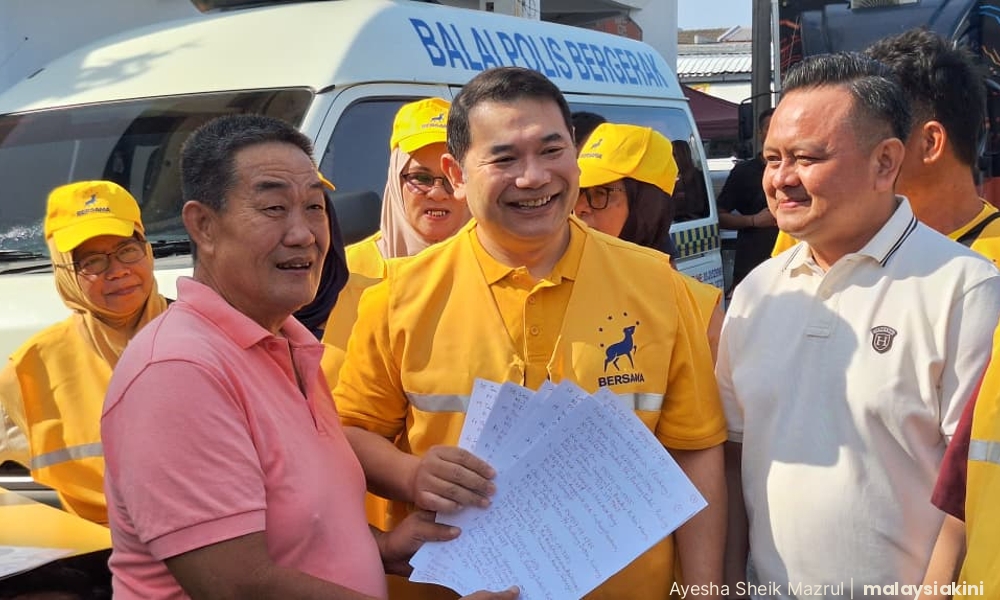
A start has been made, with membership exceeding 25,000 and a punishing itinerary which will take Rafizi, Nik Nazmi, and team across the country for many ceramah and public interactions.
The main strategies revolve around the following:
Planting seeds for the future
Rafizi and Nik Nazmi are focusing on young, competent leadership, grassroots voluntarism, and multiracialism to spearhead change going into the future, expecting results only in the long term.
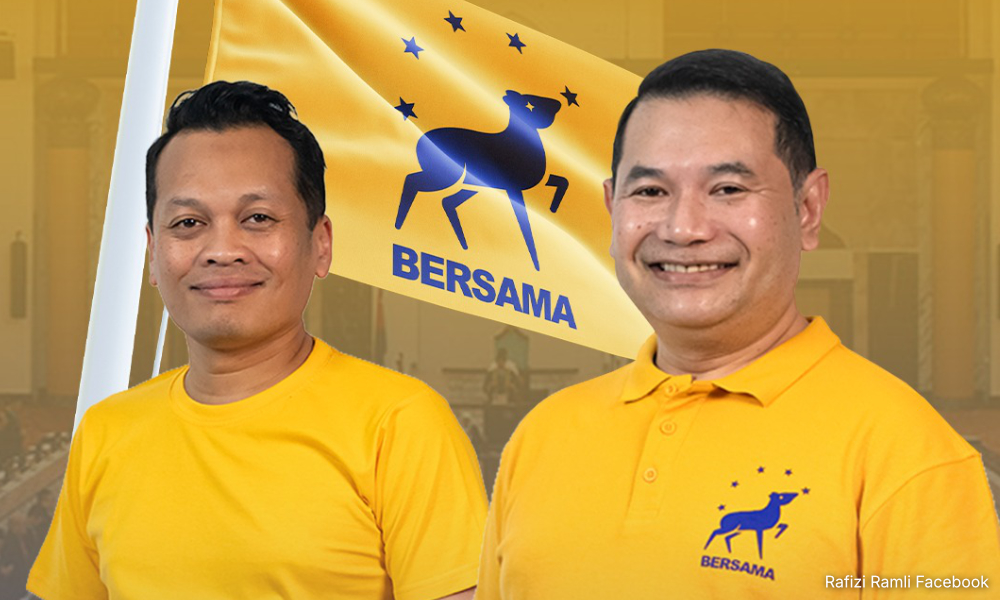
Rafizi describes it as “planting seeds” for a new era of politics, where citizens realise their own capacity to influence the national direction, independent of the established political heavyweights such as former premiers Dr Mahathir Mohamad, Muhyiddin Yassin, Ismail Sabri Yaakob, or Anwar Ibrahim and established parties such as Umno-BN, PKR-Pakatan Harapan, and PAS- Perikatan Nasional.
Focusing on everyone, especially the Malays
In his engagements, Rafizi constantly emphasises multi-racialism, bringing benefits to everyone. He reveals that the response from Malays to Bersama has been the most among the races, saying that it’s not surprising.
He said the Malays have voted for everyone - BN, PN, Harapan, and have had four prime ministers since 2018 (Mahathir, Muhyiddin, Ismail Sabri, and Anwar). None of them has helped or shown a clear path going forward.
“We are not just splitting non-Malay votes but all votes, including Malay votes. Malays have voted for all and seen them perform. None of them has helped the Malays,” Rafizi was reported saying.
One thing is certain: Bersama will disrupt the status quo. Rafizi reminds that no one will win power outright in the 16th general election and that even if Bersama wins some seats, it will mean a lot because the party can become a significant pressure group.
Targeting the youth and competency
The strategy explicitly targets the 30 to 40 age demographics, noting that 51 percent of voters are under 40, as election candidates.
The goal is to recruit competent individuals from all races, moving away from traditional party structures that Rafizi argues have failed to deliver meaningful change.
By inviting professionals to step forward, the movement hopes to build a platform that prioritises service over political manoeuvrings.
For those interested in participating, the movement has opened candidate applications, with a committee tasked to conduct due diligence on all applicants.
As Rafizi puts it, the goal is not just to win power today, but to set the stage for systemic change over the next five to 10 years.
A shift in funding and engagement
A cornerstone of this strategy is the rejection of the traditional “towkay” (wealthy patron) and business funding approach.
Instead, Rafizi emphasises voluntarism and crowdfunding, asserting that RM50,000 per seat is sufficient for a campaign, out of which a large portion will be raised by the candidate.
This model is designed to eliminate corruption and the culture of handouts, allowing the movement to remain independent and beholden only to its supporters.
He accepts the possibility of failure and has set expectations low. “If they don’t lose their deposits, they have achieved something, setting the stage for future fights.”
Empowering the viral citizen
One of the most distinct aspects of the strategy is the focus on “viral power”. Rafizi suggests that real power now lies in the hands of the electorate, specifically with the screens and fingers of citizens capable of driving viral content.
He argues that even without traditional representation, a cohesive digital voice can hold the government accountable and spark real change, even if a single seat is not won, citing examples of social media reports that have forced change.
A long-term vision
While the movement hopes for electoral success, Rafizi maintains a pragmatic view on immediate outcomes.
Even if they do not win a single seat, the aim is to avoid losing deposits, thereby establishing a foothold for future contests like the 17th general election and beyond.
How has the response been so far, and what will be some key standouts? Rafizi said the response has been better than during the 1MDB times, referring to the time from 2013 onwards, with public efforts to raise awareness of the huge corruption there ahead of the 2018 elections.
Voluntarism is the main thing to carry things forward, both for raising funds and getting help. Crowdfunding could be one main source. This ensures there is no corruption and that representatives are not beholden to any one person.
“Our problem is our thinking that we can’t do anything. But they (the incumbents) are afraid of viral power. Real power is with your screen and fingers.
“You can be powerful even without representation. If we have 10 MPs, we are really powerful.
“We hope to win. But even without that, we will be powerful.
“Give us five years, and we will have a good shot at GE17. We have been there, done it before. PKR now is different, did not satisfy me, so I had no choice but to leave,” Rafizi said.
‘Agenda Bersama’
The “Agenda Bersama” strategy overall represents a transition from traditional party politics to a decentralised, digital-first insurgency model with an injection of youthful, multi-racial, and competent vigour to lead the charge to a more hopeful future.
It is perhaps the only possible solution to our tiresome, long-replayed role of corruption, which is reinforced by racial and religious rhetoric, turning almost every issue into one that is charged in these terms to prevent a reasonable and rational solution to the myriad of problems facing Malaysia.
By capping campaign costs at RM50,000 per seat and rejecting wealthy funding, the strategy attempts to untether candidates from special interests. This could theoretically create a cleaner political environment.
The primary hurdle is the recruitment of professionals aged between 30 and 40 years old. Convincing high-performing individuals to drop everything to enter politics requires a level of ideological commitment that may clash with the economic realities at that career stage.
Relying on “viral power” as a substitute for traditional ground operations is a double-edged sword. While it allows for rapid, low-cost mobilisation, it lacks the institutional permanence and reliability of established party machines. It could get out of control.
The long-term goal of “planting seeds” and focusing on deposit retention for GE17 is a starkly pragmatic admission of weakness now.
It acknowledges that immediate electoral capture is secondary to building a durable, alternative infrastructure. That is as it should be.
This is an “insurgency” strategy. It is not designed to topple the system in one election cycle but to create a parallel political movement that will hopefully gain strength from public support year-to-year, eventually taking over.
Its success will depend on whether the youth of the right kind and “viral power” can be harnessed and converted into tangible voting blocks.
It will depend crucially too on whether the movement can survive the attrition of long-term political campaigning without the backing of traditional party financiers.
But one has to start somewhere, and this is as good a place as any to “Begin the Beguine,” as Cole Porter said in a song in 1930. Yes, Bersama has a chance - in the long term. - Mkini
P GUNASEGARAM would like to remind us of a wise old saying: Nothing ventured, nothing gained.
The views expressed here are those of the author/contributor and do not necessarily represent the views of MMKtT.

No comments:
Post a Comment
Note: Only a member of this blog may post a comment.