


What makes the Negeri Sembilan dispute so significant is not merely that it involves questions of custom, succession, or appointment.
More importantly, it touches the foundations of institutional stability that have formed part of Malaysia’s state structure since before independence.
The issue, therefore, extends beyond personalities and enters the broader realm of constitutional governance, public confidence, and the preservation of long-standing institutions.
History tends to repeat itself, although never in precisely the same form.
For that reason, any assessment of the succession dispute involving the royal institution of Negeri Sembilan must be approached with caution, respect for constitutional processes, and a clear distinction between political commentary and legal reality.
Perceptions
The central issue is not who supports whom, but whether the integrity of the institution can be preserved throughout the process.
Criticism surrounding the matter reflects wider concerns that political actors, former politicians, and various interest groups may be attempting to influence issues that traditionally fall within the jurisdiction of Negeri Sembilan’s customary and constitutional framework.

Regardless of whether such perceptions are accurate, the reputational risks remain substantial.
Royal institutions derive much of their authority from public trust, historical continuity, political neutrality, and constitutional legitimacy.
Any perception that political factions are influencing outcomes can weaken confidence in the institution itself.
References to the lengthy political journey of Rais Yatim - from Umno to Semangat 46, back to Umno, later to Bersatu, and through various political alignments - are frequently cited by critics as examples of either political adaptability or opportunism, depending on one’s perspective.
Political migration alone is not evidence of wrongdoing. Nevertheless, when individuals with extensive political histories become associated with highly sensitive institutional matters, public scrutiny becomes inevitable.
Particularly troubling from a governance perspective is the growing public perception that political rivalry is colliding with royal institutions and customary authority.
Reports and public commentary have highlighted concerns regarding the involvement of political figures, social media campaigns, and competing narratives surrounding the proclamation of a new Yang di-Pertuan Besar, while Tuanku Muhriz Tuanku Munawir remains on the throne and continues to be recognised by the federal government.
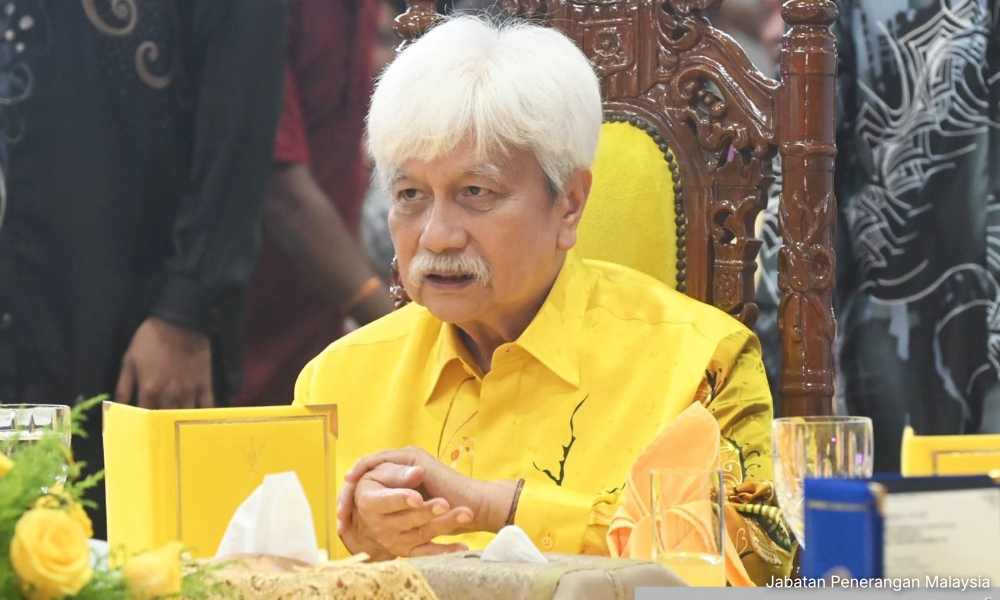
Questions have also emerged regarding procedural compliance. Critics point to constitutional provisions requiring specific processes, including the role of the menteri besar alongside the undang (territorial chieftain) in issuing and announcing proclamations.
These procedural issues now form the core of the dispute. The question is not whether customary authority exists, but whether all constitutional requirements have been observed.
The matter has also entered the judicial arena. The High Court granted an interim injunction involving the secretary of the Dewan Keadilan dan Undang and several parties connected to the dispute.
Legal arguments continue regarding meetings, authority, procedural validity, and the preservation of the administrative status quo.
Ultimately, while courts generally do not intervene in matters deemed final under custom, they retain jurisdiction to determine whether constitutional requirements have been complied with.
Subtle but wide-ranging consequences
The broader political-economic implications should not be underestimated.
Prolonged uncertainty serves no one. It affects Negeri Sembilan’s reputation, raises questions regarding institutional stability, and risks drawing the royal institution into partisan disputes from which it has traditionally remained separate.
Investors, citizens, and observers consistently value predictability, stability, and orderly governance regardless of the individuals involved.

The larger lesson is that institutions are often easier to damage than to rebuild. Politicians come and go, alliances shift, and parties rise and fall. Royal institutions and constitutions, however, are expected to endure across generations.
Those involved in such disputes should recognise that short-term political victories may produce far greater long-term institutional costs.
Experiences shared by former members of national advisory bodies also provide some useful perspectives.
One recurring lesson is the enduring importance of the royal institution as a source of public confidence. When citizens feel that public services, political leaders, or systems have failed to resolve their concerns, many continue to view the Malay rulers as a trusted final avenue of appeal.
Historical examples illustrate this role. Royal intervention has, on occasion, helped resolve community disputes, address administrative difficulties, and reduce tensions arising from political competition.
Such actions have reinforced the perception that constitutional monarchs serve as stabilising forces during periods of uncertainty.

No institution is perfect. Yet the Malay rulers have generally continued to perform their constitutional role and remain an important factor in Malaysia’s stability.
Any development that risks diminishing the dignity of these institutions should therefore be approached with wisdom and restraint.
Politics can unite communities, but it can also divide them when allowed to exceed reasonable limits.
History provides many examples of both outcomes. The true lesson from history is not to repeat the same mistakes, but to recognise familiar patterns early enough to prevent them from recurring. - Mkini
AZAM MOHD is an independent political and economic analyst.
The views expressed here are those of the author/contributor and do not necessarily represent the views of MMKtT.

No comments:
Post a Comment
Note: Only a member of this blog may post a comment.