
It’s all over now - Malaysia Airports Holdings Berhad (MAHB) is firmly in the hands of the Gateway Development Alliance (GDA), the group which made the takeover offer, but there’s a bitter taste about the way it all went and the strong-arm tactics used.
The thing to note is that this takeover could not be done without the consent of sovereign fund Khazanah Nasional Berhad and retirement fund Employees Provident Fund (EPF) - who before speculations over the offer jointly held well over 40 percent of MAHB.
Neither Khazanah nor EPF are hedge funds or private equity firms looking to make money at the expense of minority shareholders through strong-arm tactics.
They pretty much had it in their power to make any changes needed at MAHB, including the change in management if required.
The question is, why they did not do this when they had a clear and present opportunity for many years? Why did they indulge in privatisation which resulted in foreigners owning 30 percent?
Why GIP, Blackrock?
Why did they have to resort to a partnership with Global Infrastructure Partners (GIP), associated with controversial Blackrock, which manages airports but has not done a particularly great job of doing it, with MAHB having achieved a far better ranking in the past as I explained here?
GDA is led by Khazanah (40 percent), EPF (30 percent) and the remaining 30 percent between the Abu Dhabi Investment Authority (Adia) and GIP.
GIP is an arm of the famed, or infamous depending on who you talk to, Blackrock, the world’s largest fund manager with US$11.5 trillion in assets.
What is not disclosed is the exact role that GIP will play in the management of the airports. What will it charge for managing the airports and how much will be left over after that? Surely, they have those figures.
It has been reported that GIP will have an effective 25 percent stake in GDA, and given the value of RM18.4 billion of the takeover, this is worth RM4.6 billion.
What kind of return does GIP expect over the years? Some 50 percent at least in two or three years?
Land development
It will want a lucrative contract for airport management to boost returns. What form will the contract take, why is there no disclosure?
Did all shareholders have equal information when the takeover offer was made? Almost certainly not because the offerors were insiders.
And then there is the issue of thousands of acres of land. Were they reasonably assessed for these purposes?
Let’s look at this report in The Edge dated Nov 28, 2022, which I quote verbatim: “But in an announcement last week, the development of KLIA Aeropolis in Sepang was given a big boost when the government, through the Federal Lands Commissioner, agreed to grant development rights for 41 lots of land totalling 8,537.31 acres in Sepang to MAHB’s wholly-owned subsidiary, KLIA Aeropolis Sdn Bhd (KASB).
“The development rights for the 41 lots, which make up KLIA Aeropolis, are for 99 years commencing from Nov 17, 2022.
“In addition, Putrajaya agreed to carve out KLIA Aeropolis from its existing operating agreement (OA) with MAHB - effectively giving KASB the rights to develop the land much like a real estate developer.”
That means the 8,537 acres in Sepang can be used for development. How much would that be worth over the long term? There’s no disclosure and therefore, no clarity.

The offerors, of which the main ones are Khazanah and EPF, must be pretty certain that MAHB would be worth a lot more than that RM11 a share offer.
Why not opt for a deal where the minority shareholders would benefit from the upside instead of taking it private?
No reason to delist
Would that not make MAHB, a major infrastructure provider, more transparent and accountable to the public because it has to make regular detailed reporting?
Look at what happened to Malaysia Airlines when it was taken private - it continued to make losses for a long time but we did not even know why exactly - the disclosure was that bad.
And then there is that nagging question of how EPF sold down its shares in MAHB from around 15 percent to about five percent from some time in 2023 onwards to before the offer was made when MAHB was in a major transformation programme - which would add value in the years ahead as exemplified in the report by The Edge?
Did EPF lose RM500m?
Was EPF’s opportunity cost really RM500 million due to the sell-down and subsequent repurchase? And if it was, who was the beneficiary on the other side?
What transpired was a rather controversial takeover offer involving not hedge funds and private equity companies but a sovereign investment fund and a retirement fund in partnership with an infrastructure fund linked to Blackrock with many questions unanswered.
It’s worth repeating here that independent directors of MAHB said the offer was inadequate, citing plans already in place by MAHB which would create much value in future.
They came in for much, and sometimes undue criticism, by GDA.
Some questions
Here are some questions for the regulators - Securities Commission and Bursa Malaysia.
Was there impropriety in the trading of MAHB shares by EPF? Did EPF lose the opportunity to make money improperly? Who gained from it?
Was every effort made to inform all shareholders of the potential value of MAHB by management and investment bankers? What improvements will you make in future?
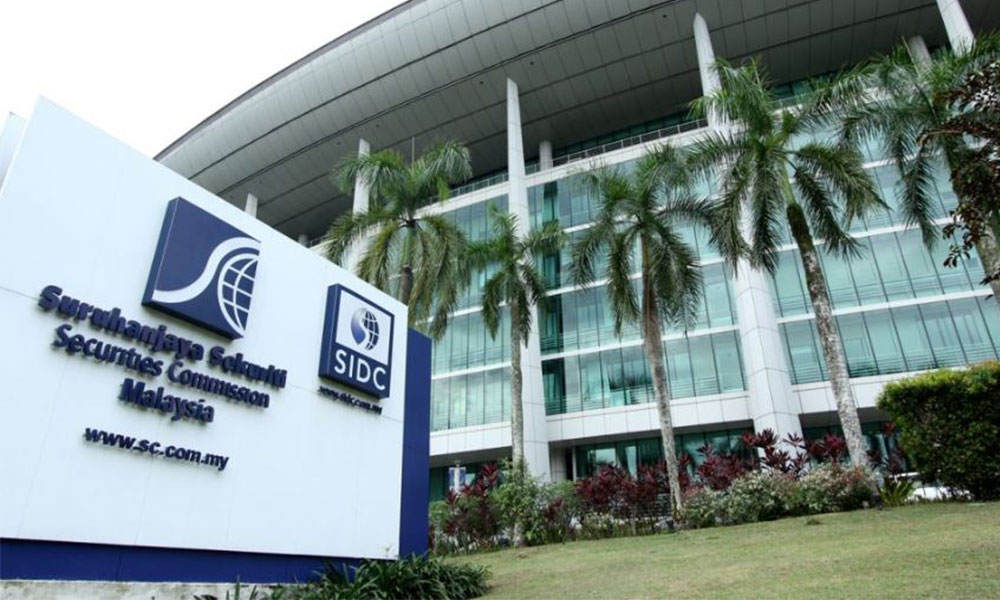
Was there pressure to do this deal even if it was not the best for minority shareholders, who were cajoled and threatened into the deal with the threat of delisting?
There are those who say the market has spoken. Ok, fair enough. But the market is not perfect - often not even close - and it is often not fair too.
There is a need to ensure that it is as perfect and as fair as it can be - but signs are it was not so here. There’s a whiff of arm-twisting and misinformation that’s disconcerting.
The unfortunate thing is that all key players - the CEO and board of Khazanah, EPF and MAHB cannot be there without the effective sanction of the government. That makes it easy for their positions to be compromised. Ultimately, this is the responsibility of the Madani government.
And here’s a question for the government which had pushed through this deal: Why was it necessary to go ahead with this deal when there were so many problems and unanswered questions?
And please don’t use the aerotrain and baggage handling excuse - that was there for ages and probably involved some deal as well which cannot be disclosed.
How else can one explain away that there has been no explanation for it after all these years? - Mkini
P GUNASEGARAM says it is a sad fact of life that many governance questions - corporate or otherwise - go unanswered in Malaysia.
The views expressed here are those of the author/contributor and do not necessarily represent the views of MMKtT.
No comments:
Post a Comment
Note: Only a member of this blog may post a comment.