
The management and monitoring of contracts by Kuala Lumpur City Hall (DBKL), including the awarding of business licences, is weak and "backward", failing to match the capital's development and international recognition, Berita Harian reported today.
These glaring yet "hidden" weaknesses risk enabling abuse and corrupt practices amongst enforcement officers and interested parties, the report said.
Chief amongst the problems is the absence of any monitoring committee to oversee high-value, long-term contracts awarded to private companies, the Malay daily reported.
The daily revealed that a prominent company contracted to monitor DBKL's business licences has itself been operating without any oversight from the local authority, meaning DBKL does not know the firm's performance or activities.
Compounding concerns, the company, which is part of the Greater Kuala Lumpur development programme, has received payments without verification that services were delivered.

MACC deputy chief commissioner Azmi Kamaruzaman told BH that these findings came from a recent review of agreements between DBKL and a company which was previously appointed by the council to monitor service contracts for business licenses.
"The agreements contained weaknesses in practice, systems, and governance. Most notably, the MACC detected that no oversight committee had been appointed to monitor the service delivery and contractor performance.
"We also found that DBKL did not use guidelines to verify the conduct of census work before payment recommendations were made by the company," he was quoted as saying.
Azmi also confirmed that the MACC is conducting a governance investigation into DBKL, as a result of these latest findings.
Azmi also highlighted that there are several other graft cases involving DBKL being investigated, and urged for remaining administrative weaknesses and loopholes be immediately addressed.
"This situation should not occur within a public body as large and influential as DBKL, as it can become a source of misappropriation and corrupt misconduct," he added.
Oversight committees
On Jan 19, Minister in the Prime Minister’s Department (Federal Territories) Hannah Yeoh announced the establishment of five oversight committees, chaired by Kuala Lumpur MPs, which would improve monitoring of development projects and provide advisory input to the mayor.

This, she explained, was because MPs previously had no access to DBKL’s internal processes and were often only made aware of development plans after approvals had been granted.
Last year, MACC investigated allegations of misconduct by a DBKL advisory board member, involving an RM4 million project which allegedly did not go through an open tender and bypassed governance processes.
At the time, then-Kuala Lumpur mayor Maimunah Sharif had confirmed an internal investigation following viral claims of a board member's misconduct on social media.
Maimunah had also confirmed that she had halted another project involving RM7 million as it was linked to the same board member who assumed the DBKL position last year.
In 2023, former DBKL deputy director Sabudin Salleh was sentenced to four years in prison and fined RM1 million by the High Court in Kuala Lumpur on two charges of obtaining bribes amounting to RM200,000 for issuing work permits to a subcontractor.
Local election debate
Azmi's statement came as the debate on a local council election in Kuala Lumpur gathered momentum.
On Feb 1, Yeoh had suggested that the mayoral election for Kuala Lumpur would be more practical than electing multiple city councillors through local council polls, explaining that the current administrative structure already involves “too many units”, with the capital overseen simultaneously by a mayor, MPs and DBKL’s advisers.
Following her remarks, Umno and PAS had pushed back against the move to conduct a feasibility study for such elections, claiming it would erode Malay power in urban areas where non-Malays are the majority.
At present, Kuala Lumpur and DBKL are under federal control, with the city administered by a government-appointed mayor.
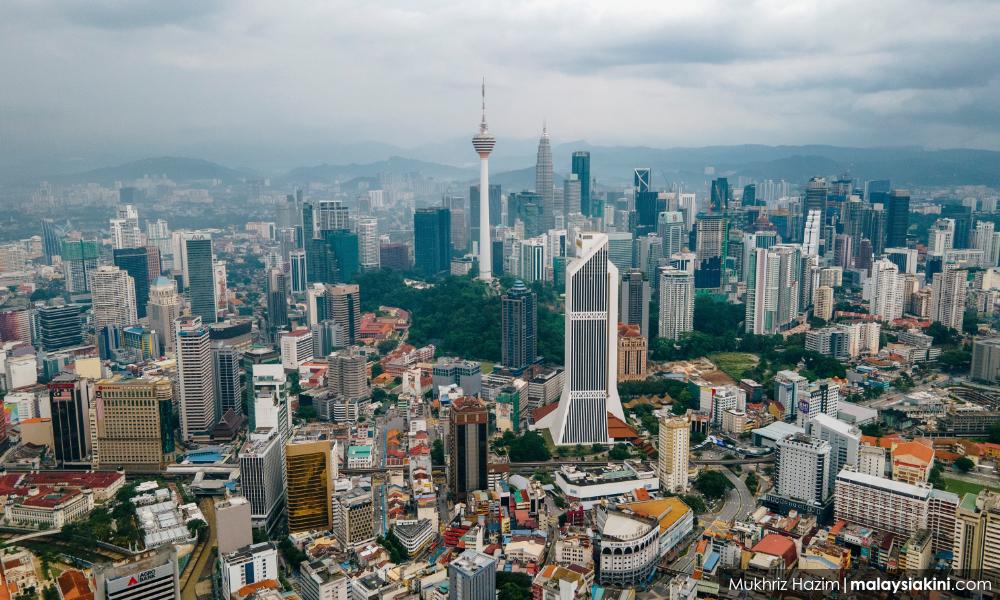
Calls to reinstate the local council election in Kuala Lumpur resurfaced in November last year following the abrupt end of Maimunah's tenure, who was then replaced by Fadlun Mak Ujud, with the approval of the Yang di-Pertuan Agong.
Mayoral powers
In November last year, seven Kuala Lumpur MPs submitted a Private Members’ Bill, seeking to amend the Federal Capital Act 1960, in what they describe as a long-overdue reform to curb the concentration of power in the hands of Kuala Lumpur’s mayor.
The government backbenchers sought the introduction of a councillor-based governance system for the nation’s capital.
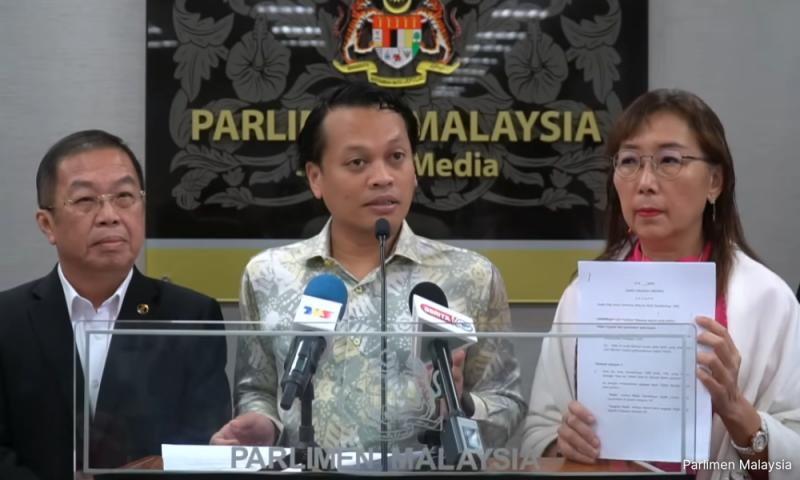
The MPs - Nik Nazmi Nik Ahmad (Setiawangsa), Teresa Kok (Seputeh), Zahir Hassan (Wangsa Maju), Tan Kok Wai (Cheras), Lim Lip Eng (Kepong), P Prabakaran (Batu), and Fong Kui Lun (Bukit Bintang) - said the bill follows the recommendations of the bipartisan Public Accounts Committee.
The recommendations, issued in August 2025, called for the city’s administration to be restructured to align with the Local Government Act 1976.
The MPs added that the proposed amendment would help fulfil Pakatan Harapan’s manifesto to “empower democracy and transparency in DBKL through systematic methods”, including ensuring representation that “reflects the interests of the people, not developers”. - Mkini
No comments:
Post a Comment
Note: Only a member of this blog may post a comment.