
It started as a policy issue about pig farming in Selangor, but quickly grew into a much larger constitutional and political controversy.
At first, federal leaders suggested pig farming could continue under stricter rules after discussions involving Prime Minister Anwar Ibrahim, the Selangor ruler, and the state menteri besar.
But soon after, the palace reaffirmed that the sultan did not consent to pig farming in Selangor.
Some Malaysians became confused. They asked, “Is pig farming still allowed under certain conditions?” because discussions had been centred on pig farming being located away from residential areas and waterways, with tighter environmental control, or was there a complete rejection?
The confusion came from the difference in messaging: the federal government sounded conditional, but the palace sounded absolute. This gap in messaging thus magnified the controversy.
The issue later escalated when DAP’s Seri Kembangan assemblywoman Wong Siew Ki raised constitutional concerns about pig farming in the Selangor assembly, despite the ruler already opposing pig farming in the state.

She argued that pig farming should not be treated differently from other types of livestock farming. Wong promoted regulated farming and modern technology to address concerns like pollution, hygiene, and odour.
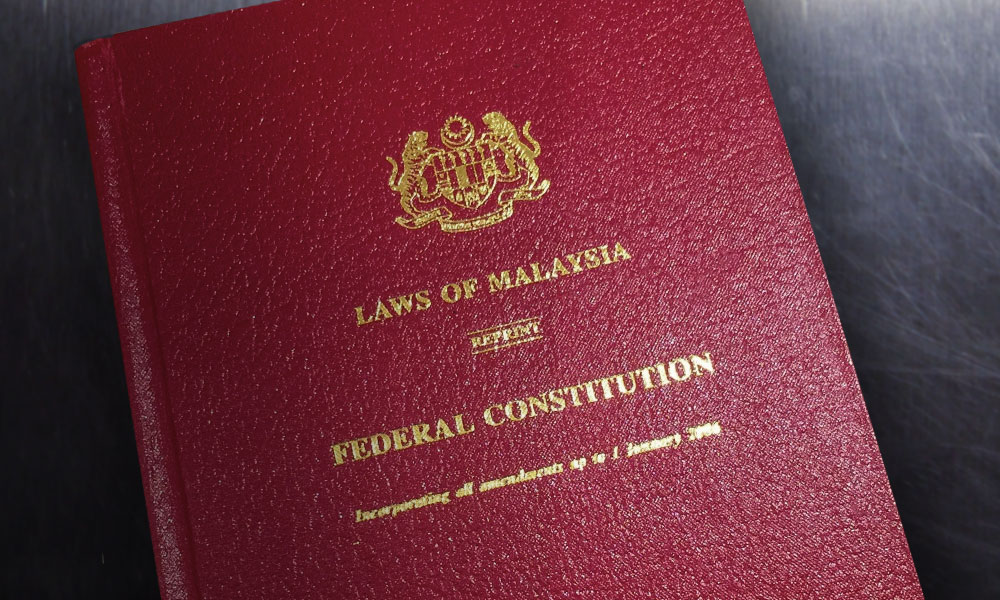
Citing Article 8 of the Federal Constitution, which touched on equality, Wong argued against singling out pig farming for a total ban.
Public anger, police reports
Some Malaysians claimed her remarks were disrespectful to the ruler, and public anger grew with numerous police reports lodged.
The turning point came when former MP Tony Pua said that constitutional monarchs cannot issue binding decrees on all aspects of public life.
This was when the debate shifted from pig farming to a wider constitutional and political issue.
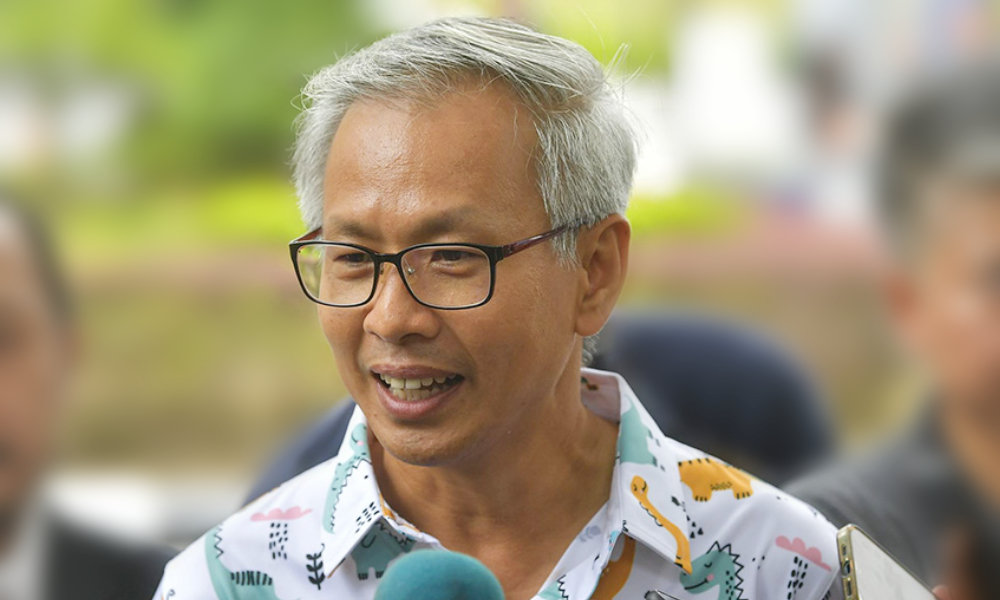
Discussion then touched on the limits of royal influence, the freedom to discuss public policy, and whether people can openly disagree with royal views without attracting consequences.
Unsurprisingly, police reports were lodged against Pua, investigations began, and tensions increased.
This would have been just another day in Malaysian politics, with a heady mix of royals, religion, and constitutional drama.
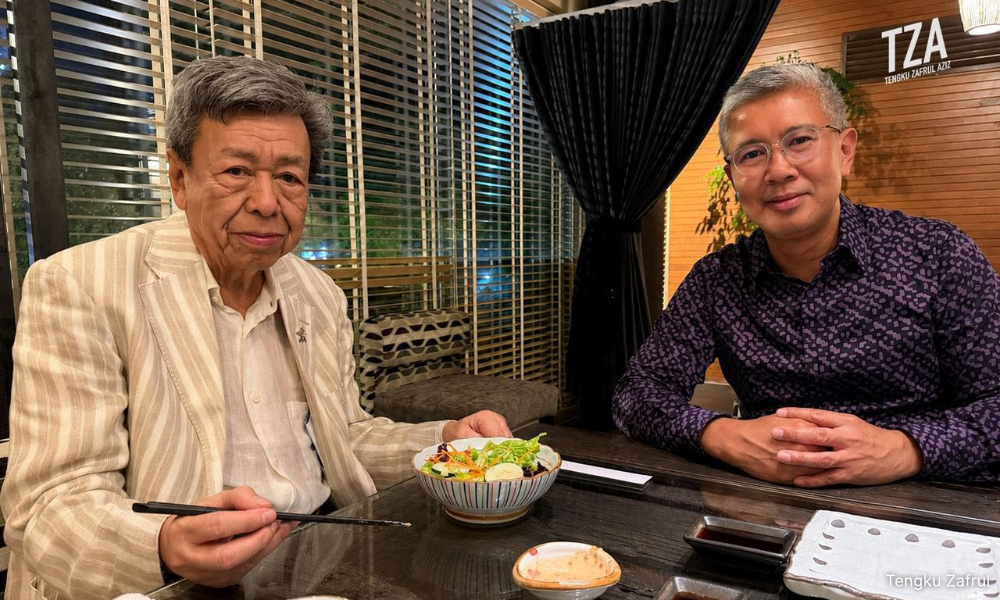
However, former minister Tengku Zafrul Abdul Aziz's intervention only muddied the waters further. He said that the ruler’s remarks were not a decree; yet Zafrul did not address the warnings against politicising the issue, the police reports, investigations, and pressure to stop debate.
So, if it was only advice, why did it feel enforced in practice?
He then mentioned “the framework of the constitutional monarchy system”, but did not explain what the ruler can legally enforce (binding power), what is just symbolic or ceremonial, and what is only advice or opinion. We are left unclear about the real limits.
His reference to “the wisdom of the royal institution” introduced the idea of moral authority, which is about respect, wisdom, and tradition.
However, Zafrul did not separate between moral influence, constitutional authority, and political impact.
So, what type of authority is actually meant?
Constitutional issues
Zafrul then drifted away from the “constitutional limits of royal influence” to unity, harmony, race, political stability, global instability, and the Rukun Negara.
He stopped focusing on the core question about constitutional issues.
There was no proper reconciliation of Malay unity vs multiracial equality. He presented the Malays and Islam as “pillars” of stability, but he also warned against marginalising other races. There was no explanation of how both ideas would work together in practice.
The ruler had mentioned “outside parties”, which again was not clearly defined, and was ambiguous. Outside of what group, or system, is a legitimate question, but overall, this vague term “outside parties” would allow for multiple interpretations.
Zafrul's remarks about West Asia and the global energy crisis felt extremely disconnected. He linked the West Asia conflict, the global energy crisis, with the need for “mature politics”, but then did not explain how these were connected to the current constitutional debate.
Moreover, his reference to “mature politics” was undefined. It is unclear what he meant by it. Is “mature politics” about avoiding disagreement? Or respecting institutions? Or limiting criticism? Or encouraging stability?
The phrase “mature politics”, in his article, functioned as a slogan rather than a clear argument. It sounded meaningful and important, but remained vague.
Lastly, despite his best efforts to clarify, Zafrul failed to resolve the core constitutional question. Loosely mixing constitutional, political, racial, and global frames without clearly separating them is why public confusion persists.
So, if royal remarks are only advisory within a constitutional monarchy, why does the rakyat feel discouraged from openly disagreeing?
Why does public criticism lead to police reports or investigations? Why is there social or political pressure not to challenge the remarks?
In other words, even if the Federal Constitution says royal remarks are non-binding, what practical freedom do people actually have to disagree in public without facing repercussions?
That is the constitutional tension people are actually debating, and until that question is addressed clearly, confusion and dissatisfaction will continue brewing. - Mkini
MARIAM MOKHTAR is a defender of the truth, the admiral-general of the Green Bean Army, and the president of the Perak Liberation Organisation (PLO). Blog, X.
The views expressed here are those of the author/contributor and do not necessarily represent the views of MMKtT.
No comments:
Post a Comment
Note: Only a member of this blog may post a comment.