
There was something endearing when I held her in my arms. She had fine wisps of black hair framing a round, expressive face, while her wide eyes, flecked with hints of brown, seemed filled with wonder at the world around her.
She was named Serena, which originates from the Latin word “serenus” for serene.
Her parents, grandparents, and both her maternal and paternal great-grandparents were born in Malaysia.
Yet, in certain circles, despite being a fourth-generation Malaysian, Serena, who is of mixed heritage, would be regarded as the offspring of a “keling” and “Cina babi”.
One can only wonder, albeit with deep scepticism, whether such attitudes would change within her lifetime and whether her presence in this nation would move beyond mere tolerance to genuine acceptance.
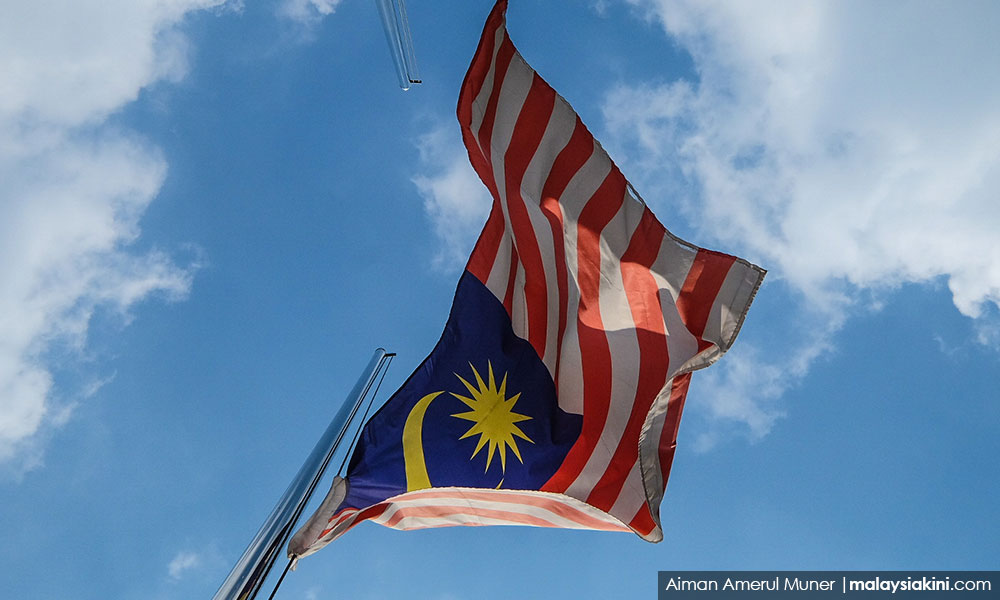
Or would she, like her parents, grandparents, and great grandparents, spend her life being reminded that she is a “pendatang” (migrant), and that if she takes issue with how things are, she should return to the homeland of her ancestors?
Would Serena be told that she needs to be grateful because the “landlords” have given her a place on their land through the jus soli citizenship policy?
Being biracial, would she be reduced to both a “botol kicap” - a crude racial slur used to deride the skin tone of Indian Malaysians - and a “Cina babi”?
And would she, in the same breath, be branded a “kafir harbi” (belligerent infidel)? Would her faith, culture and traditions be disparaged and belittled?
Here we go again
At the height of the controversy surrounding Hindu temples, I was forwarded a TikTok video in Tamil in which a woman claimed she had encountered a social media post advocating the forced sterilisation of Indians in Malaysia, language that aligns with eugenicist discourse.

The situation reflects decades of entrenched ethnocentrism and religiocentrism, which have cultivated a worldview of superiority that can dehumanise others, who are considered the children of a lesser God.
These slurs are nothing new, but they appear to have intensified under the current administration, and ever since DAP became part of the ruling government, certain politicians have created the impression that Malays have lost political power.
In reality, DAP leaders have been quieter than a church mouse, trying their best not to attract attention.
For the non-Malays, their status as second or even third-class citizens has rarely felt as deeply reinforced as it has over the past few years.
Compounding this sentiment is a government that, wary of upsetting the largest voting bloc, appears hesitant to act even when hundreds of police reports are lodged, including by members of the ruling coalition itself, but is seen as being quick to strike when the roles are reversed.
This is particularly disheartening given that Pakatan Harapan and its leadership once pledged to build a more egalitarian Malaysia, one in which the concerns and sentiments of minorities would be accorded equal weight in both policy and practice.
They spoke of a “new dawn” of reform and inclusivity that inspired considerable hope at the time.
That vision now appears increasingly distant, if not altogether eclipsed by political realities and compromises that have attenuated earlier proclamations.
A new hope, or old wine in new bottle?
Now, speculation is rife about a snap general election, alongside the emergence of a new alternative in the form of Parti Bersama Malaysia (Bersama), led by former minister Rafizi Ramli, which seeks to capitalise on the support of disillusioned non-Malays.
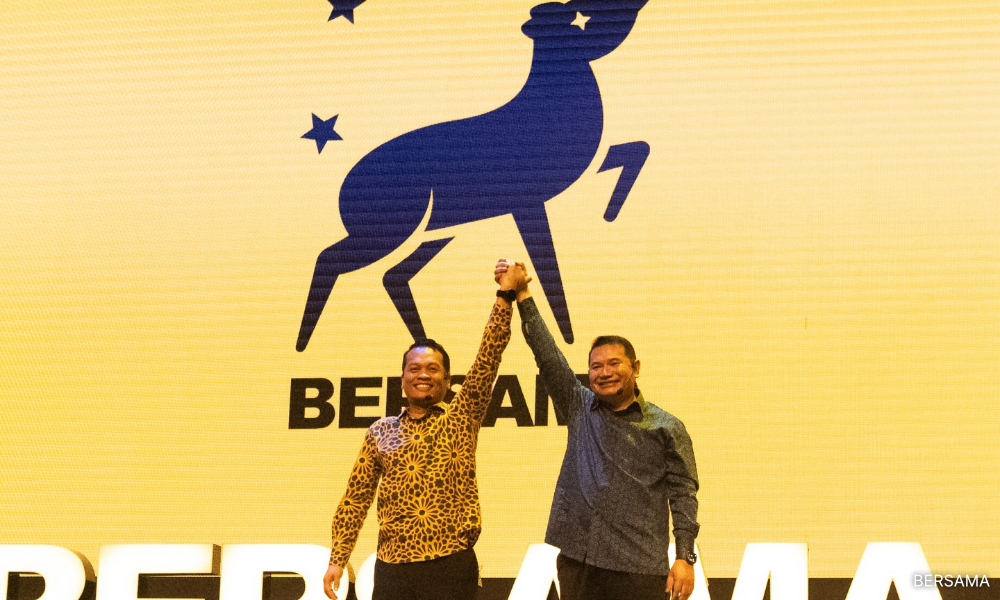
However, after 25 years dedicated to the struggle for a better Malaysia, I find myself at a crossroads.
Should I continue to believe, or simply accept that this is Tanah Melayu, and therefore step back from the expectation that the country’s political direction must be shaped collectively?
Would Bersama, which emphasises meritocracy, offer anything meaningfully different should it one day become part of the government?
And would Rafizi be bold enough to rein in inflammatory preachers with substantial followings, or to question decrees that certain segments perceive as unfair?
Politicians rarely possess the political will to do what is right when doing so risks costing them the votes that could determine their political survival or provoking the displeasure of the rulers, especially when the monarchs have now assumed the role of kingmakers.
I am sure the manifesto, much like Harapan’s, would be filled with lofty promises. However, in the end, it might still boil down to appeasement politics.
Hoping against hope
With the Malay population forming an increasingly dominant share of the electorate, what incentive is there for politicians to risk unsettling the status quo?
The common counter-narrative to those contemplating sitting out the next election is that such political apathy would pave the way for PAS and its theocratic agenda to gain power, potentially accelerating the erosion of non-Muslim rights.
But one cannot help but ask whether the so-called “Green Wave” has truly receded under the Madani government, or has instead continued to gather momentum.
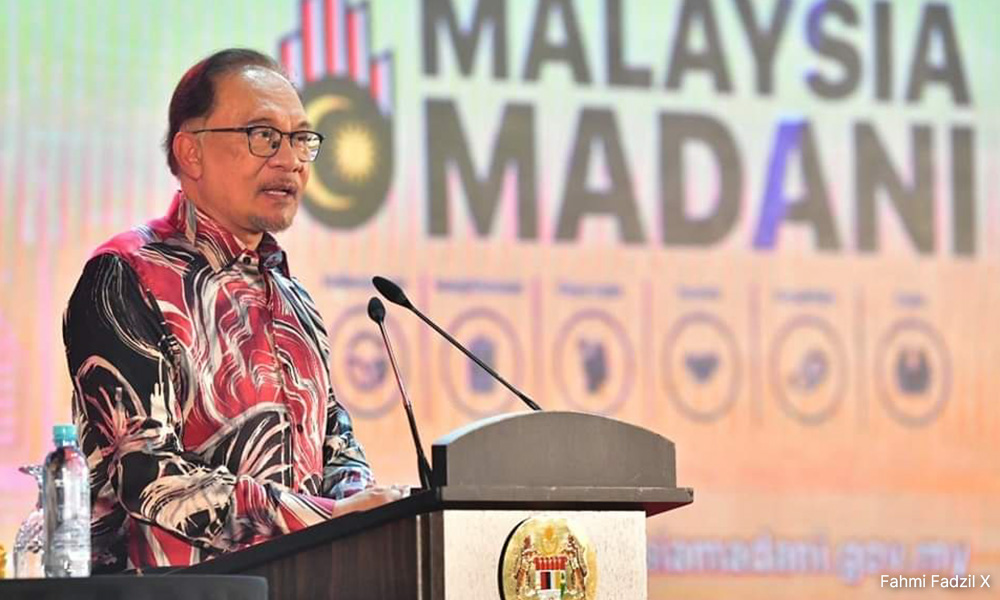
Given that no single party or coalition is likely to be able to form the next government on its own, it would not even be surprising if DAP and PAS come together for a third time in the name of political stability.
After all, the Malaysian political landscape is littered with promiscuous parties that have readily climbed into bed with one another when expediency demands it.
And so Malaysia could once again end up with a government nobody voted for, shaped by post-election bargaining rather than a clear electoral mandate.
Meanwhile, deep-seated racial rhetoric and prejudice continue to persist in everyday discourse as politicians continue to bury their heads in the sand.
For Serena’s sake, I can only hope. That is all I have left. - Mkini
RK ANAND is a member of the Malaysiakini team.
No comments:
Post a Comment
Note: Only a member of this blog may post a comment.