
The past few weeks have seen yet another reconfiguration of Malaysian politics, continuing a pattern we have become almost too familiar with.
Not too long ago, we were discussing the “reset” associated with Hamzah Zainudin. This time, the spotlight is on former PKR heavyweights Rafizi Ramli and Nik Nazmi Nik Ahmad, and their new party, Parti Bersama Malaysia (Bersama).
But let us not beat around the bush. There are many reasons why new parties emerge. Looking at Malaysian political history, almost every major party is, in one way or another, the offspring of an older one.
We could even argue that all Malay-based parties can trace their roots back to Umno in some form. So why do we keep needing new parties?
If we choose to believe in the better angels of our politicians, we might say that new parties are formed to correct what has gone wrong. A course correction, if you will. Established parties, after years in power or proximity to power, lose some of their original spirit.
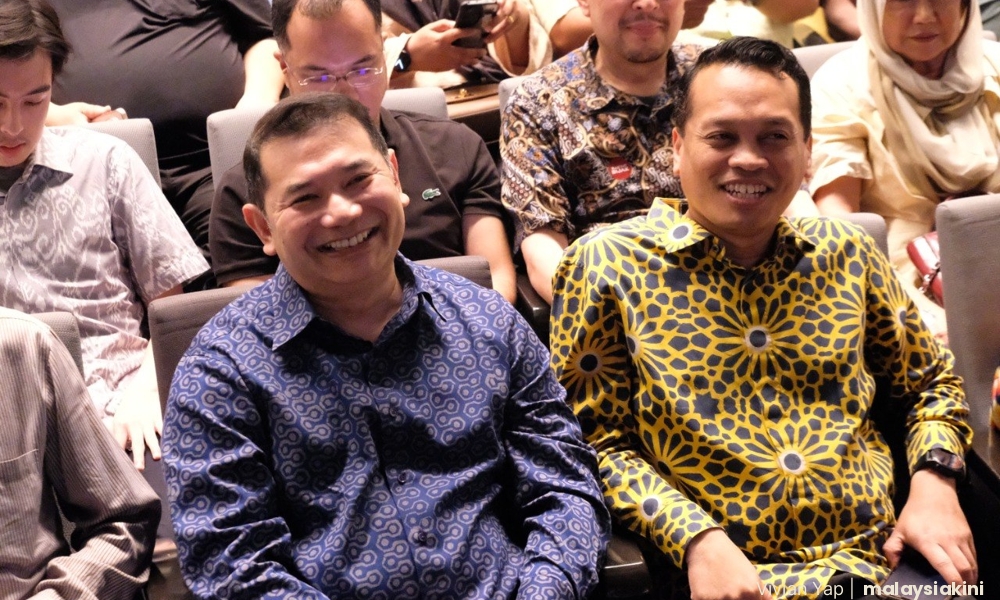
They become entangled in the messy compromises of governance and institutional survival. A new party then emerges to reinvigorate the base and convince voters that perhaps all is not lost.
The more cynical reading, of course, is that new parties are simply new homes for career politicians trying to remain politically relevant. This is not exactly far-fetched.
Look at our political class, and we find some figures who have survived several political eras - from the days when we had to memorise phone numbers to call people.
New parties, in this telling, are simply old politics in new packaging. Different logo, same blueprint.
Umno’s survival
With all the excitement surrounding Bersama, I cannot help but think of another party that once arrived with similar fanfare: Bersatu.
Bersatu itself was born out of a high-profile fallout between Umno’s president and deputy president, incidentally also the prime minister and deputy prime minister at the time.
Muhyiddin Yassin broke ranks over the 1MDB scandal and the governance concerns surrounding Najib Abdul Razak.
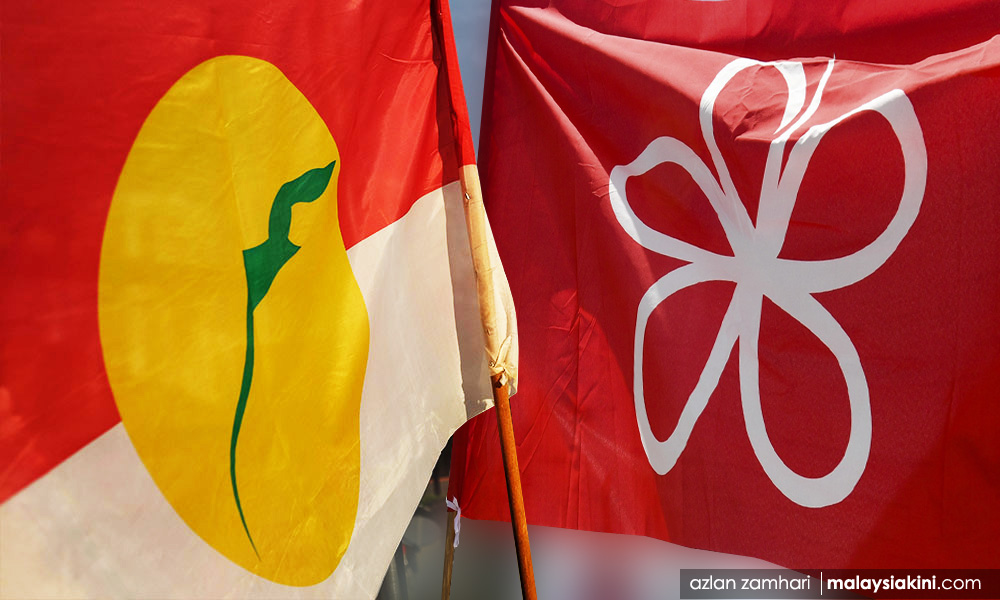
When 2018 came around, Bersatu was marketed as a cleaner, more principled version of Malay nationalism. Former Umno members joined in droves, particularly once Bersatu, alongside its partners in Pakatan Harapan, entered government.
At one point, people were openly asking how long Umno could survive. And honestly, it was not an unreasonable question.
Bersatu looked, for a moment, like a “new Umno” but supposedly less burdened by scandal. Add to that Umno’s declining fortunes since 2008, and many assumed its best days were behind it.
But look at Umno today.
Love it or loathe it, Umno has proven surprisingly resilient. In fact, it may well be one of the few parties genuinely prepared for an election to be called at any moment.
The party did not disappear into oblivion, partly because it was willing to relearn, regroup, and relaunch itself.
It has tried to speak more to younger voters through digital outreach, reposition itself through engagement with civil society and academia, and project a more reform-minded image through initiatives such as Musyawarah Nasional.
Even institutional reform efforts championed by figures like Azalina Othman Said complicate the narrative of Umno as simply frozen in time.
What happened to Bersatu?
Years later, Bersatu still struggles to convincingly explain how it is substantively different from Umno.
Its leadership consists largely of former Umno figures. It embraces Malay nationalism. It competes for roughly the same political constituency. That makes differentiation difficult.
More importantly, Bersatu can no longer comfortably campaign as “anti-Umno” because it has, quite literally, governed with Umno before. The decline in Bersatu’s fortunes is not simply electoral bad luck.
It reflects a deeper problem in which the party has struggled to carve out a clear identity beyond nostalgia for a political moment that feels, politically speaking, like a blue moon ago.
It has yet to convincingly evolve into a grassroots movement with a compelling reason for long-term loyalty.
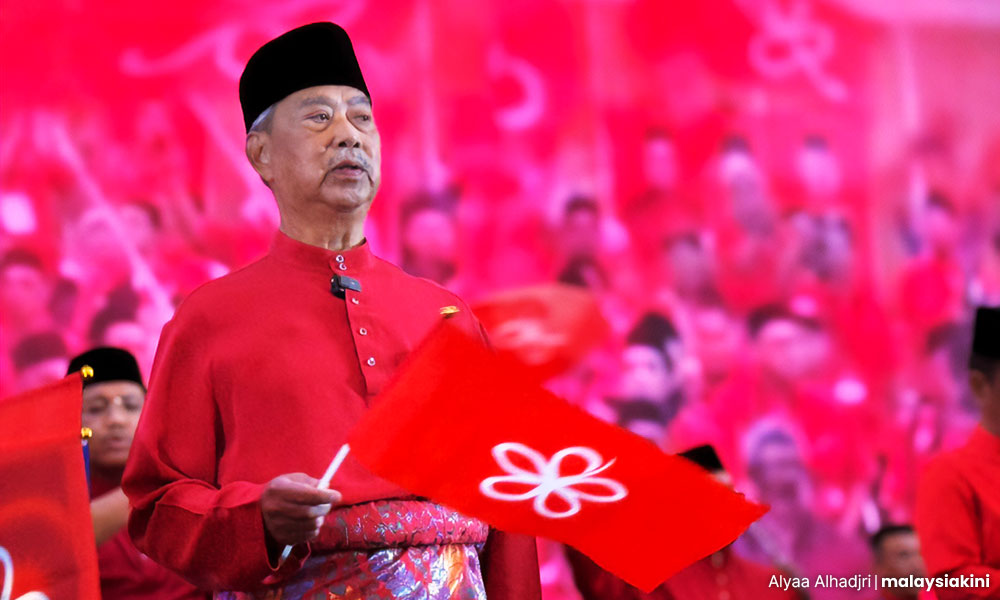
And this is precisely why Bersama should study Bersatu carefully.
Bersama's first challenge is differentiation. It is not enough to merely inherit today’s frustrated voters, particularly those disillusioned with the PKR leadership. Political memory is shorter than we think.
A few years from now, when frustrations with the current administration have faded, or when new frustrations emerge, what exactly would Bersama stand for? Another reform party?
What happens if PKR rebounds, much like Umno did, and successfully rebrands itself while reclaiming reformist credibility? Where would Bersama fit then?
This matters because PKR already occupies important political real estate. One of PKR’s longstanding strengths has been its claim to be Malaysia’s major multiracial political party.
Fairly or unfairly, DAP continues to be perceived as largely Chinese-based.
When Anwar Ibrahim became prime minister, many celebrated not simply Anwar the individual, but the symbolic arrival of a leader from a multiracial political platform.
PKR’s reform agenda, too, has long been anchored in institutional reform and justice shaped by the political persecution experienced by its leader.
So where does Bersama come in?
Looking at its 12-point agenda, I would argue that Bersama’s strongest selling point should be economic reform or, put differently, class politics.
Yes, it may continue to present itself as multiracial, but I am not convinced that should be its defining identity.
Instead, Bersama could position itself as a party of ordinary Malaysians against entrenched political and economic elites.
Less identity politics, more economic anxieties. Less elite bargaining, more bread-and-butter frustrations.
Of course, some might then ask how Bersama is any different from PSM? It is a fair question.
The difference, however, is that Bersama stands on the shoulders of two former ministers, and perhaps eventually, more political heavyweights should join.
That gives Bersama something parties like PSM, or even Muda, have struggled to fully establish: a governing track record.
My final point is for us not to sound the death knell for PKR just yet. This is, after all, a party that went from near irrelevance after the 2004 election to gradually rebuilding itself and eventually leading the federal government in 2022.
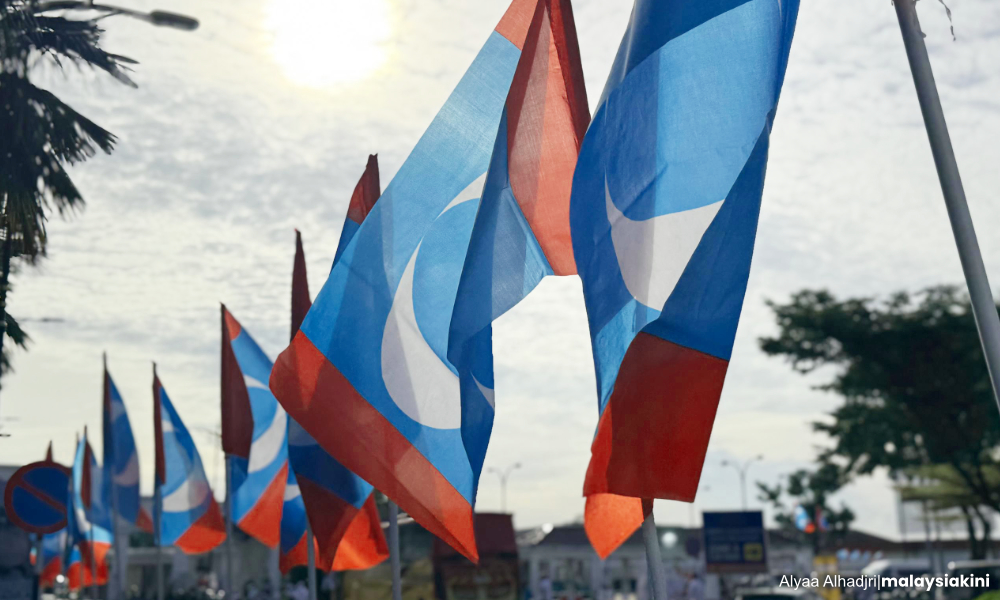
Even if PKR suffers from voter fatigue or frustration in the 16th general election, parties adapt. They learn. Sometimes painfully. If Umno can reinvent itself, PKR can try too.
The bigger question is if PKR succeeds in reclaiming and refreshing its reformist credentials, where exactly would Bersama stand?
That is why I suspect a clearer focus on class politics and economic grievances may offer Bersama a more sustainable political niche.
In the end, we will probably see more new parties emerge as Malaysia’s democracy matures. Do we really expect political competition to freeze in place forever?
Societies change. Political demands change. Voters change. Today’s winners may be tomorrow’s losers. Today’s political baggage may suddenly become tomorrow’s comeback story.
And that is okay. That is democracy. - Mkini
SYAZA SHUKRI is an associate professor in the Political Science and Madani Studies Department, International Islamic University Malaysia.
The views expressed here are those of the author/contributor and do not necessarily represent the views of MMKtT.
No comments:
Post a Comment
Note: Only a member of this blog may post a comment.