
INDIA’S evolving counter-terrorism strategy offers Malaysia valuable lessons, but not a blueprint to copy.
The challenge for Malaysia is not simply whether it has adequate security laws, but whether its institutions coordinate effectively, identify emerging threats and deliver measurable results while protecting fundamental rights.
India’s National Counter-Terrorism Policy and Strategy, known as PRAHAAR, was launched on Feb 23, 2026. It emphasises prevention, proportionate responses, whole-of-government coordination, human rights, international cooperation and societal resilience.
Its central message is that counter-terrorism must be a coordinated national effort rather than a series of isolated enforcement operations.
Malaysia already has counter-terrorism laws and a national action plan for preventing and countering violent extremism, MyPCVE 2024–2028.
The question is whether these mechanisms work effectively together. Are threat assessments shared promptly? Are terrorist-financing investigations coordinated across agencies?
Do rehabilitation programmes produce measurable results? And are exceptional security powers subject to meaningful oversight?

India’s experience, including the 2001 Parliament attack and the 2008 Mumbai attacks, demonstrates how major security incidents can expose weaknesses in intelligence coordination, emergency response and infrastructure protection.
The lesson is to examine operational shortcomings and address them systematically, rather than treating each incident as an isolated failure.
The legal comparison is also instructive. Malaysia’s Penal Code drew heavily on the Indian Penal Code tradition, although the two countries have developed distinct legal systems.
India replaced its original Penal Code with the Bharatiya Nyaya Sanhita in 2023, which came into force on July 1, 2024. Section 113 addresses terrorist acts, while the Unlawful Activities (Prevention) Act 1967 remains a key specialised counter-terrorism law.
Malaysia, meanwhile, relies on several instruments, including terrorism-related provisions in the Penal Code, the Security Offences (Special Measures) Act 2012 (SOSMA) and the Prevention of Terrorism Act 2015 (POTA).
These serve different purposes, from defining criminal offences to providing special procedures and preventive measures. Their effectiveness must be assessed within Malaysia’s own constitutional and institutional framework.
Five priorities deserve attention.
First, audit coordination across government. The police, intelligence authorities, Bank Negara Malaysia, the National Anti-Financial Crime Centre, immigration and cybersecurity agencies need clear protocols for sharing threat assessments and coordinating investigations.
The aim should be to identify delays, duplication and gaps before creating new institutions.
Second, review existing laws before adding new ones. Malaysia should assess whether current provisions are effective, proportionate and sufficiently clear.
Any amendments should address demonstrated operational gaps, with judicial oversight, access to legal remedies and protection for lawful political and religious expression remaining essential safeguards.
Third, strengthen financial and digital investigations. Authorities should pursue not only perpetrators but also financiers, recruiters and logistical facilitators.
Cooperation between financial institutions, regulators and enforcement agencies can help trace suspicious transactions and links between terrorist financing, money laundering and organised crime.
Digital investigations must also follow clear legal rules on privacy and access to information.
Fourth, measure prevention and rehabilitation outcomes. Malaysia’s MyPCVE action plan identifies the need for better coordination in deradicalisation and the reintegration of former detainees.
Cooperation among law enforcement, educators, psychologists, social workers and community organisations should be strengthened. Programmes should be evaluated for their effectiveness in reducing reoffending and supporting reintegration, without stigmatising communities.
Fifth, strengthen accountability. An annual public assessment, subject to legitimate security restrictions, could report on threat trends, prosecution outcomes, financial investigations, rehabilitation results and lessons from operational failures.
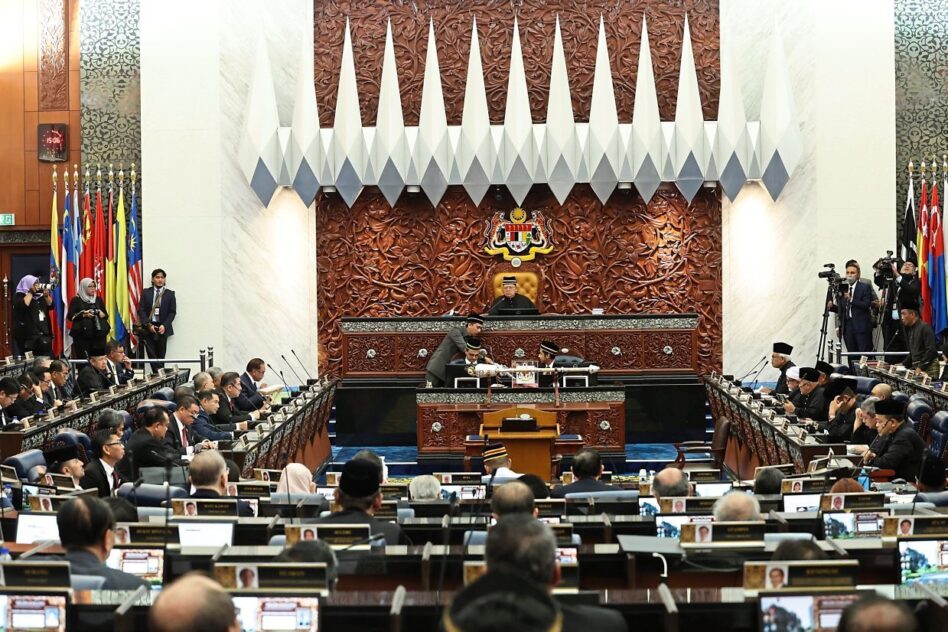
Parliament should receive enough information to scrutinise security powers without compromising sensitive intelligence.
Implementation should begin with an audit of laws, institutions and capabilities, followed by common operating procedures, specialised training and clear performance indicators.
Regional cooperation on terrorist financing, online recruitment, foreign terrorist fighters and digital evidence should complement domestic reforms.
PRAHAAR’s value for Malaysia lies in its principles, not its specific institutional arrangements. India’s population, federal structure and security environment differ considerably from Malaysia’s. Copying its policies wholesale would therefore be neither necessary nor appropriate.
Malaysia should instead use India’s experience to test its own assumptions, strengthen existing arrangements and close verified gaps.
Counter-terrorism should be judged not by the number of laws enacted or arrests made, but by the ability to prevent attacks, prosecute offenders fairly and sustain public confidence.
An effective security framework does not require a choice between public safety and the rule of law.
Malaysia’s priority should be to make its counter-terrorism system more coordinated, evidence-led and accountable, so that national security and constitutional safeguards reinforce each other.
R. Paneir Selvam is principal consultant at Arunachala Research & Consultancy Sdn Bhd (ARRESCON), a think tank specialising in strategic national and geopolitical analysis.
The views expressed are solely of the author and do not necessarily reflect those of MMKtt.
- Focus Malaysia.
No comments:
Post a Comment
Note: Only a member of this blog may post a comment.