
On Oct 13, a senior journalist from India’s The Republic Media Network, widely regarded as sympathetic to Prime Minister Narendra Modi and his Bharatiya Janata Party (BJP), travelled to Putrajaya to meet Zakir Naik.
The Indian-born Muslim preacher, who resides in Malaysia, remains a wanted man in India, where he faces allegations that have fuelled a protracted legal and diplomatic saga between the two countries.
The journalist, Anirudda Bhakat, claimed that Zakir, his associates, and family members occupy the entire 21st floor of a condominium tower.
The Republic described the meeting between its journalist and the preacher as a “sting”.
Their conversation appeared to be secretly recorded, and the subsequent report portrayed Zakir as sympathetic to India’s opposition All India Congress Party and supportive of demonstrations in New Delhi.
The demonstrations were organised by the youth-led Cockroach Janta Party (CJP), a satirical political movement that has since grown into a wider campaign against the government.

The movement has been at the forefront of protests over alleged manipulation of voter rolls and calls for the resignation of India’s chief election commissioner.
'BJP goes first'
Asked by the journalist when he intends to return to India, Zakir was blunt about what needs to happen first.
“After BJP goes… Before that, if I come home, I won’t be able to come out of the country,” he said.
Addressing the allegations against him, including money laundering charges and hate-speech cases, the preacher maintained that they were baseless.
“They are allegations. There is no proof,” Zakir said, adding that he was willing to provide a witness statement via video, but Indian authorities insisted that he do so in person.
“If I come in person, I won’t come out... I will be inside only; they won’t give me (a) trial,” he added.

Turning to the protests sweeping India, Zakir said mounting public anger would spell trouble for the ruling BJP.
“I don’t think BJP will survive till the next elections. If it survives, it won’t win (the elections). Inshallah. Elections are due in 2029; they may go before that also. Next year,” he said.
Asked whether he hoped Congress would return to power, Zakir said the party led by Rahul Gandhi was preferable to the BJP.
But he stopped short of offering an unqualified endorsement of Rahul’s leadership, describing him as not yet a “seasoned or experienced” politician.
“But he is better than Modi. He is one person who is honest; he is not corrupt, and he doesn’t cheat. That simple.
“The country is in a very bad situation, economically, financially... too much unemployment… the rupee has devalued a lot,” he added.
Towards the end of the conversation, Zakir told the journalist that he expected to deliver his next sermon in Bangladesh soon.
It remains unclear whether the preacher knew he was speaking to a journalist, as the circumstances surrounding their meeting were never made clear.
Permanent resident
Zakir was granted Malaysian permanent resident status in 2015.
His relocation to Malaysia came amid mounting scrutiny in India over his sermons and the activities of his Islamic Research Foundation, which Indian authorities declared unlawful in 2016.
Indian authorities subsequently pursued money laundering allegations against him and sought his extradition.
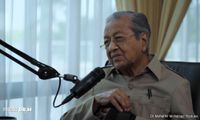
In 2018, then prime minister Dr Mahathir Mohamad defended Malaysia’s decision not to send Zakir back, saying the country had the right to refuse extradition. The government’s position was that he could remain as long as he did not cause problems in Malaysia.
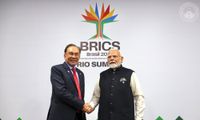
Last month, Prime Minister Anwar Ibrahim said he had discussed Zakir’s extradition with representatives from India.
According to Indian news site New Delhi Television, Anwar confirmed that engagements on the matter had been held in “private discussions” believed to have taken place in New Delhi.
“We thought we should keep it very private to protect the interests of both nations. But we, of course, put it on the priority list for building trust and relationship between our countries,” he was quoted as saying.
He added that any potential action on India’s extradition request must be done “very cautiously”, in a way that respects the rule of law and the importance of bilateral relations. - Mkini
No comments:
Post a Comment
Note: Only a member of this blog may post a comment.