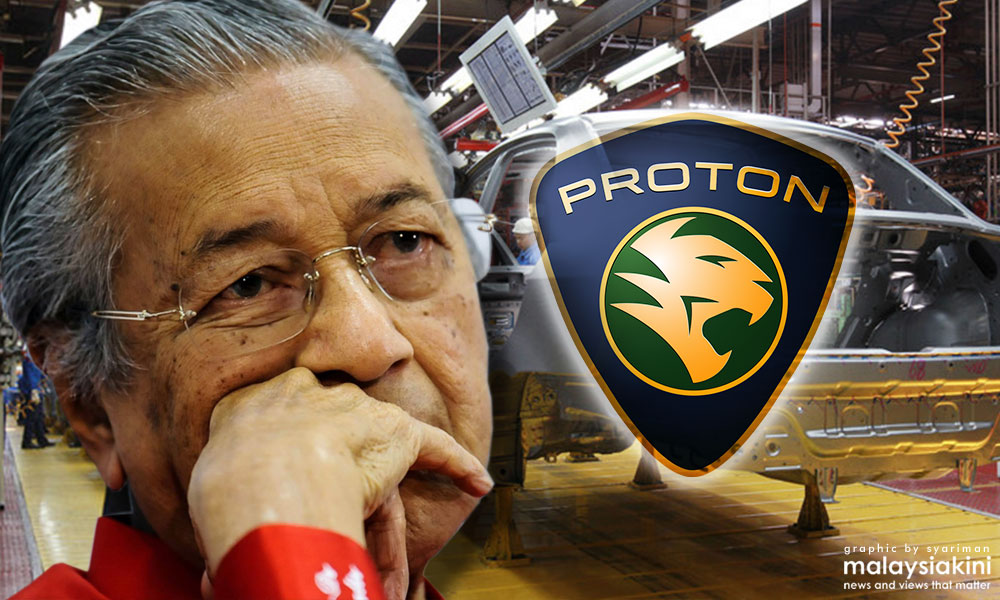
QUESTION TIME | One of Prime Minister Dr Mahathir Mohamad’s huge failures during his previous, rather long 22-year tenure was the country’s first national car project, Proton. This left Malaysians paying ridiculously high prices for substandard cars because of massive tariff protection and losing several hundred billion ringgit through these higher prices paid for cars.
Thus, his new national car idea is a colossal mistake. This is especially so because Proton is still a national car project, and there is a second car project already which is Perodua. “I would say, if I cannot get Proton (back), I have some idea about starting another automotive (company), remembering of course, that the idea of building a national car is not just for the sake of having a national car, but as a catalyst for growing our engineering know-how and capability,” he said.
Proton currently is 49.9% owned by Zhejiang Geely of China and 50.1% by DRB-Hicom Bhd, a company majority controlled by tycoon Syed Mokhtar Al-Bukhary.
Mahathir is fond of saying that Proton had been sold to China which is not strictly accurate. His idea of a national car project is one where all technology is indigenous and Malaysian developed. That is fallacious and Proton’s failure before has been largely due to a poor product because of a lack of technological collaboration.
The Geely deal is expected to provide Proton with a better product as well as manufacturing and distribution processes by tying up with a successful car company which Geely is.
Thus, although China’s Geely owns a 49.9% stake, Malaysia through DRB-Hicom holds the majority stake and Proton is entitled to all tariff exemptions given to national cars. On top of that, Syed Mokhtar is still very close to Mahathir and during the latter’s first tenure as prime minister, the former benefited from many business deals with the government including power stations under Malakoff and rice monopolies under Bernas.
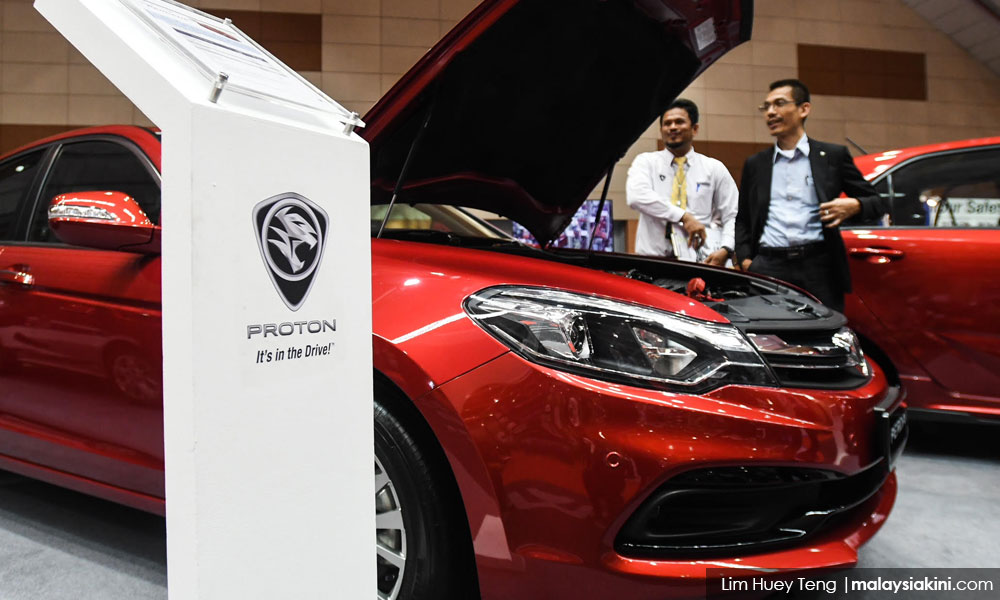
If Mahathir’s crazy idea goes through, we will have a third national car project and Malaysians will have to wait a long time before they can pay lower prices for cars because now a third car project has to be subsidised via higher taxes for another long period of time.
As a matter of urgency, one of the new policies of the Pakatan Harapan government should be to forge ahead with a phased rationalisation of the car industry so that there will be no taxes on cars. This was done in Australia several years ago. This article explains it in more detail.
That helps to ensure that customers - that’s you and me - can obtain the best choice of cars available from anywhere in the world at the cheapest possible prices. And if that can’t be done locally, then let anyone import these cars from anywhere without any import taxes and without the need for the notorious approved permits or APs.
Mahathir and former trade and industry minister Rafidah Aziz used APs to distribute patronage to government cronies, some of whom became billionaires as a result.
If Mahathir needs any confirmation and advice that this revived national project will not be a success, he only needs to consult Jomo Kwame Sundaram, the noted economist who is on the Council of Eminent Persons. Way back in the early 1980s, when Proton was being pondered, Jomo’s view was that this project was bad economics and should not go ahead. Some 33 years later, the same economics still hold.
Up to RM360b lost
Here is why Mahathir’s idea is crazy. As is well-known by everyone in the industry, car manufacturing and selling is a high-volume business and you need economies of scale - large numbers of units sold will bring down unit costs.
This needs decades to be built up. Proton had initially teamed up with Mitsubishi of Japan for technology assistance in 1985. With tariff protection, Proton became profitable quite quickly but it was basically a Japanese car with a national badge.
Problems arose when Proton tried to come up with its own models. Production costs were expensive because there were no economies of scale, reliability was poor because the technological base was limited and the public paid outrageously high prices for poor products.
The second national car, Perodua, had technology from Daihatsu, a Toyota subsidiary. Although prices remained high because of tariffs, prices were more competitive than Proton and reliability much higher. Perodua outstripped Proton in terms of both prices and quality and became a clear winner in the marketplace, breezing past Proton in terms of market share. Perodua continues to be profitable but Proton is still losing money.
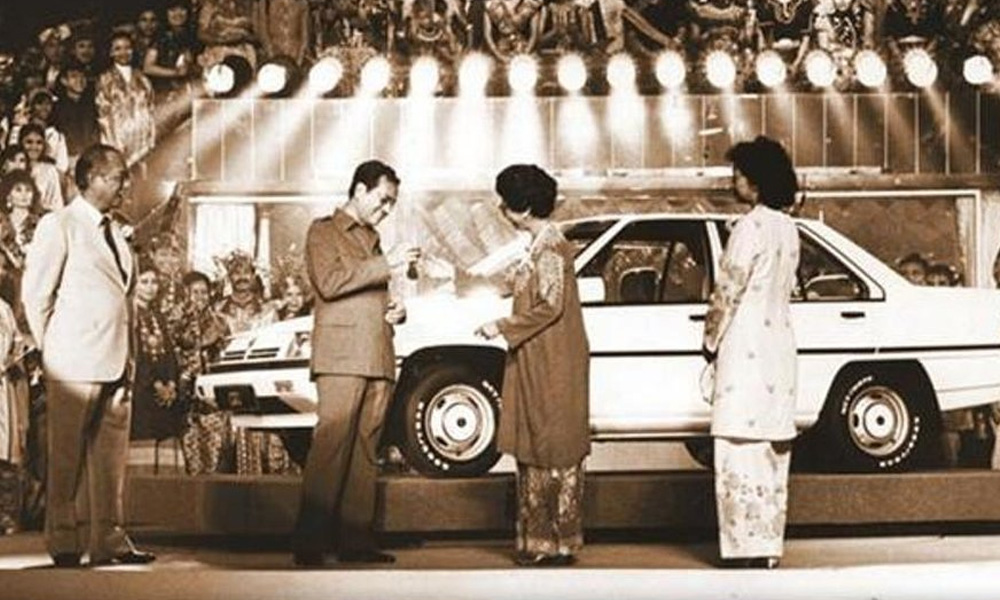
Over the last 33 years of Proton’s existence, it is estimated that Proton buyers could have lost as much as RM360 billion - and there’s still no sign of tariff rollbacks.
I have used estimated sales of some 12 million vehicles between 1985 and 2016 of which some four million vehicles sold were Protons. I have estimated, conservatively, that the average price per vehicle was RM30,000 higher because of protective barriers.
Multiply this by 12 million vehicles for RM360 billion. You may disagree with the exact figure but there can be little doubt that the order of magnitude is in the hundreds of billions of ringgit.
When Proton was conceived, the original intention was to reduce tariffs progressively but this never happened. Thus non-national cars in Malaysia can cost sometimes more than twice the price in other countries, placing a huge burden on Malaysian car buyers, perhaps the highest in the world.
If Mahathir re-introduces another unnecessary national car project which is bound to bleed money without tariff protection, it will delay by several decades a badly needed rationalisation of the car industry which will involve, amongst others, the dismantling of tariffs and APs and to encourage industry players from anywhere to set up operations here.
The way forward to increased competitiveness is to open up - rather than put up - barricades and become competitive in some key areas of industry and services. That was how Thailand made its car industry larger than ours in a short space of time.
For the sake of the country, Mahathir must once and for all lose his long, irrational infatuation for a national car which has already cost so much to the Malaysian public. And one hopes that includes his other previous pet peeves and loves such as heavy industries and privatising projects to cronies via lopsided deals. He needs to move forward with the times.
P GUNASEGARAM says the test of a good deal is whether it eventually results in a better deal for the public at large. Proton was a really bad deal which still hurts. Email: t.p.guna@gmail.com -Mkini
No comments:
Post a Comment
Note: Only a member of this blog may post a comment.