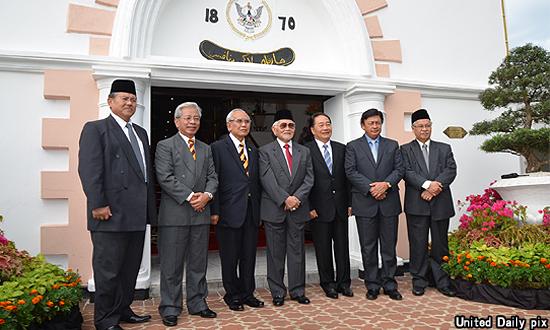
Today is no ordinary day for Sarawakians.
It will be an important day to mark as state BN parties will deliberate and set to announce their decision on whether or not they will stay with the coalition.
The four component parties led by Parti Pesaka Bumiputera Bersatu (PBB) are widely expected to make their way out of BN, setting a new path to form a state-based coalition.
Speaking to Malaysiakini, University of Tasmania's Asia Institute director James Chin opined that the party leaders have already decided, since May 10 when they saw Umno fall out of power at the federal level.
Chin pointed out that the state parties owe no loyalties to Umno and BN as they only want to remain in power.
"It is easy for them to dump BN since Umno is not present in Sarawak. They think BN as a brand can no longer 'sell' in next state election. It is better to recast themselves as MA63 (Malaysia Agreement 1963) nationalists," Chin (photo) said.

Political analysts Madeline Berma and Faisal Hazis both agreed that the parties took about a month since the general election, as they needed time to get inputs and feedbacks from their grassroots members on their positions in the coalition.
"They needed some time to discuss and get a consensus with component party members on the decision to pull out from BN or setting up a new coalition.
"The new Sarawak-based coalition needs to do a massive rebranding exercise and function itself as a new opposition political party in a 'New Malaysia'," said Madeline, who is currently an associate professor at the Universiti Kebangsaan Malaysia (UKM).
Faisal, who is the head of the Centre of Asian Studies at the Institute of Malaysian and International Studies (Ikmas) in UKM, pointed out that Chief Minister Abang Johari Openg is not a confrontational leader.
"He is not the kind of person who is really outspoken like Adenan Satem. He is not of that character and he is not willing to take the risk. Abang Jo is very calculative in terms of what he is going to do. The character of a leader will basically determine the kind of response that Sarawak BN will take.
"Secondly, the parties have been in the coalition for more than three decades. Certainly, making a decision to back out from a coalition is not an easy thing to do. I'm sure that they took some time to think about it. They did not expect that kind of response from the people," he said.
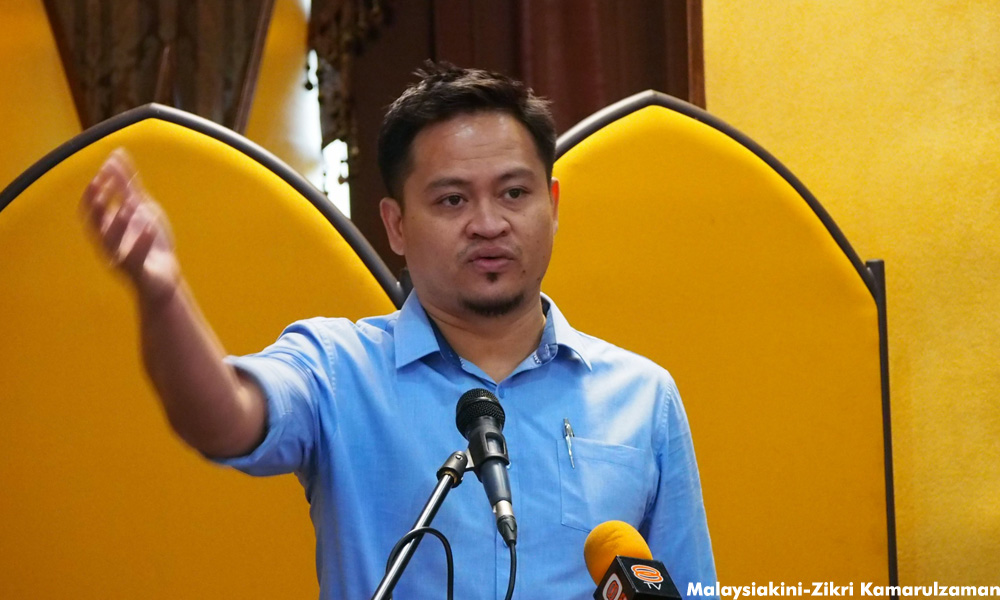
Faisal (photo) articulated that Sarawakians in general, and BN supporters in particular, wanted the leaders to leave BN.
He said Abang Johari was pushed to the corner and realised that the only way not to undermine their goal to regain autonomy and to safeguard state's interests is to leave the coalition.
Reforms inevitable, can't avoid elephant in the room
Just days after hitting the first month in power, the Pakatan Harapan administration has introduced various measures and reform policies at the federal level.
It is almost impossible for the state government to remain status quo if they choose to be a Harapan-friendly coalition, said Faisal.
"They can't be supporting Harapan with their reform agenda but remain status quo on how they do things in the state. If there are strong institutional reforms from the federal government and if the state government refuses it, there will be a strong pressure from the outside.
"Some of the federal agencies, like MACC, are not under the purview of the state government. They can investigate as they wish. This could also involve some of the state leaders.
"They can't pick and choose what they want from the manifesto. I think, in spirit, if they support this Harapan government, they will have to respect the institutional reform promised in the manifesto," added Faisal.
He also said Sarawak needs institutional reforms and Sarawak BN needs to realise that being Harapan friendly is not enough to survive the next state election, if they choose not to reform.
"Like it or not, PBB is basically just like Umno for the coalition in Sarawak. It has become a party for the elitist and lost the sense of understanding the pulse of the people. There is an alleged abuse of power, problems with the rule of law and bureaucracy is heavily politicised. There are so many structural problems."
Faisal also pointed out another problem for Harapan if they are co-opting Sarawak BN - they might be ignoring the elephant in the room.
One of the things that Harapan has been challenging is the abuse of power and the accusation of corruption, especially against former chief minister Abdul Taib Mahmud.
"If Mahathir is co-opting Sarawak BN and if he wants to introduce reforms in Sarawak seriously, you cannot deny the elephant in the room because Taib represents 'corruption' in the state.
"They need to take action against him and this is the challenge on the part of Mahathir. You can't be selective in terms of enforcing the rule of law."
However, James Chin disagreed that the reforms may have an impact in Sarawak.
"Under the old BN, federal money goes to state government even if it is a federal project.
"In the old days, the projects were awarded via Sarawak ministers at the federal level. Now, Sarawak Harapan ministers will not play ball with these group of cronies," Chin said. -Mkini
No comments:
Post a Comment
Note: Only a member of this blog may post a comment.