
Why am I not surprised that there are ministers who do not abide by the instructions of Prime Minister Ismail Sabri Yaakob?
Because if you give silly, unnecessary and not well-thought-out instructions or directives, do not expect your subordinates to blindly follow them.
This is the case everywhere, not just within the top level of government. That is usually the problem when the guy at the top is not known to be an effective or visionary leader. Lack of respect for a leader is one key factor for insubordination.
On March 1, Government Backbenchers Club (BBC) chairperson Tajuddin Abdul Rahman claimed that some ministers did not abide by the prime minister’s instructions.
“Letters from the prime minister have not been taken into account. I have strong evidence that the prime minister’s orders are sometimes ignored,” Tajuddin told Malaysiakini.
I believe Tajuddin’s claim. He has no reason to make this up. Probably, as the BBC ‘trouble shooter’, Tajuddin could also have been asked to bring up the matter publicly.
Whatever it is, here’s my take on the matter. If I were a minister in Ismail Sabri’s cabinet today, I would have great difficulty in following his recent directive to use Bahasa Malaysia (BM) at all functions abroad.
On Feb 26, it was reported that the prime minister has directed Malaysian representatives to only speak Bahasa Malaysia when representing the country at functions overseas.
Ismail Sabri said that there should be no problems in using the national language outside the country as there is existing technology that can handle translation in real-time.
I was actually taken aback upon reading the story. What on earth was the prime minister thinking? Although he qualified later that other languages could also be used, he wanted Malaysians to prioritise the usage of BM abroad.
I do not see the prime minister’s logic in hoping the directive would encourage BM usage among Malaysians.
Hello, Mr Prime Minister, we can popularise BM at home. How can requesting our representatives to speak at official functions in BM overseas help to promote the language? The audience at foreign events most probably are not interested to know or learn BM.
Similarly, I think it would be ridiculous to have a dignitary from Pakistan speaking in Urdu in an event in Kuala Lumpur. Tell me, how many Malaysians are keen to know or learn Urdu?
Makes no sense
I’m glad that I’m not the only one who disagreed with the PM’s latest directive. Two of my fellow Sarawakians also spoke up on the issue.
SUPP Youth leader Michael Tiang felt that Malaysian representatives should be allowed to use their discretion when speaking at official functions abroad instead of being restricted to only using BM.
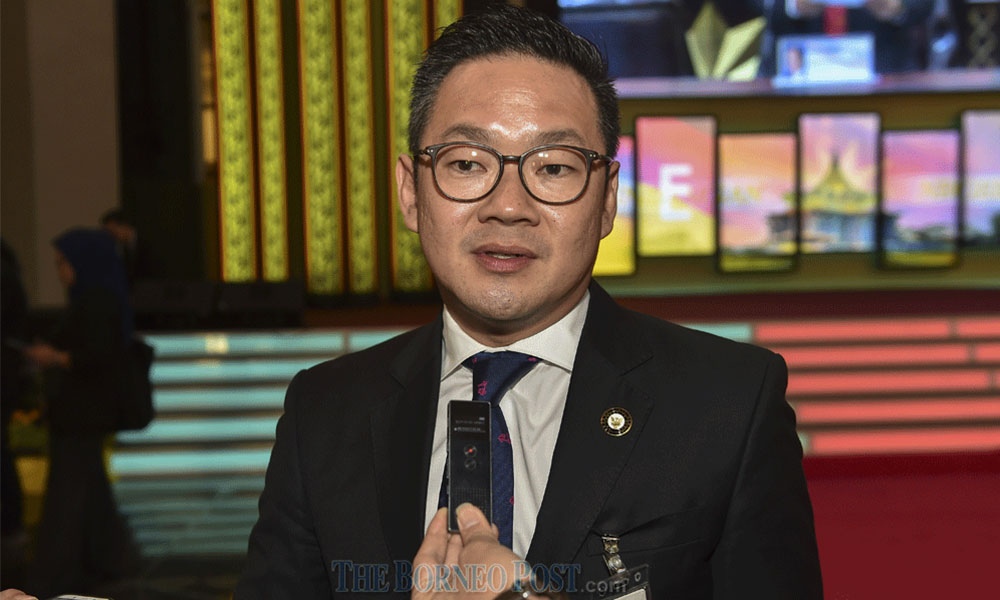
Tiang opined that the prime minister’s recent directive was unnecessary and impractical as language is a means to communicate. He pointed out that if one could communicate effectively regardless of language, the choice of language should not be an issue.
“From Sarawak’s perspective, English is one of our official languages. Such a directive from Putrajaya will be unnecessarily restrictive to Sarawak when representing Malaysia overseas,” said Tiang who is also Sarawak’s deputy minister for public health, housing and local government.
It’s not difficult to see where the Sarawak politician is coming from. Malaysians, including Sarawakians, are known to be good English speakers. Thus, using English would be to our advantage in engaging the international community.
Tiang is right. Why restrict ourselves by insisting that we use BM now when we already have an advantage in English? Seen in this light, Ismail Sabri’s directive does not make sense.
“We understand Putrajaya has never put a language directive in place. We do not think there is a necessity to have one now,” Tiang rightly stressed.
I’m also glad that former Miri mayor Lawrence Lai also weighed in on the matter, asking whether Sarawak was also expected to follow the PM’s directive.
“If so, then what happened to English as an official language of Sarawak? What happened to Sarawak as an equal partner in the federation of Malaysia?” he asked.

Lai, a Miri-based lawyer and political analyst, was blunter and told the prime minister sarcastically that “we can understand if you tell us that some of your ministers are not that fluent in English and will need time to polish up their command of the international language”.
“Please don't spin and use nationalism and patriotism to distract us from the mediocrity of your cabinet colleagues,” he added.
There is something that prime ministers must bear in mind before issuing instructions and directives. Consider the interests of the whole nation, not only Malaya. All too often, Sabah and Sarawak were conveniently forgotten.
It’s not that East Malaysians are not interested to promote BM. On the contrary, BM is also an official language in the two Borneo territories.
Federal leaders must also be reminded that throughout the years, Sarawak leaders have stressed that English is an integral language of Sarawakians and intends for it to remain an official language, apart from BM.
So, dear Ismail Sabri, you can use BM in your speeches overseas if you so wish but we, Sarawakians, choose to use our discretion.
When a SUPP leader speaks in Shanghai to a predominantly Chinese audience, it only makes sense for him to use Mandarin.
A PBB leader, speaking in a business forum in London attended by Europeans would surely use English.
Please, Mr Ismail Sabri, don’t issue silly, unnecessary and impractical instructions and directives to us. We can do without them. - Mkini
FRANCIS PAUL SIAH is a veteran Sarawak editor and heads the Movement for Change, Sarawak (MoCS). He can be reached at sirsiah@gmail.com
The views expressed here are those of the author/contributor and do not necessarily represent the views of MMKtT.
No comments:
Post a Comment
Note: Only a member of this blog may post a comment.