
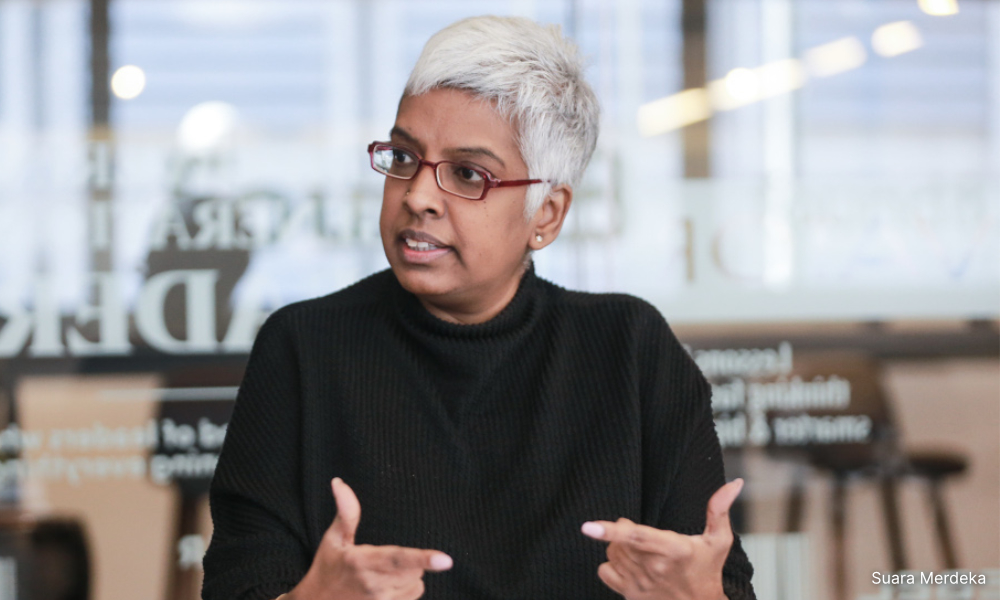
The banning of romance novels over morality concerns is a symptom of the patriarchal system here in Malaysia, said the Centre for Independent Journalism.
Its executive director Wathshlah Naidu said this was the first time she had seen basic romance novels being targeted for such a ban.
"I won't even go into the male-female dynamics. It's really about the patriarchal society, about romance, love, and our bodies. It is a system in itself, not the persons.
"And all these have been institutionalised through not just our laws, which enable us to do this, but it's the practice, because it's the person behind all these decisions who's also being influenced by these patriarchal ideologies.
"At some point, I feel as if this is another form of colonisation, because you are now imposing dominant thoughts and wielding power over certain narratives," she told Malaysiakini.
On Tuesday (May 27), the Home Ministry banned seven books over concerns of their impact on public morality and order, including a famous romance-comedy novel, “Love, Theoretically” by bestselling author Ali Hazelwood.
Five other books that were banned for allegedly posing “potential moral harm” are:
“Tuan Ziyad: Forbidden Love” by Bellesa
“Darlingku Mr Cold Mafia” by Nur Firsha Nadia Mohd Noor Kusairi
“Mischievous Killer” by Aira Syuhairah Noradzan
“Kougar 2” by Shaz Johar
“The American Roommate Experiment” by Elena Armas
Another book, “Suhuf Abraham”, was banned over its alleged potential to cause “harm to public order”.
The ministry said the bans were gazetted under the Printing Presses and Publication Act (PPPA) 1984 and had come into effect between April 15 and 17.
Stifling intellectual growth
Commenting further, Wathshlah said she had grown up reading books from popular romantic fiction publisher Mills and Boon.
"My generation, and some of my younger generation, read them too. I won't say any of us are morally corrupt as a result of reading these books.
"What it has done, I could say, (is) it has enhanced vocabulary, instilled in many people a very keen interest in reading, and it's also opened our eyes up to a world outside our schools and our country.
"So as I said, we are actually stifling intellectual growth and creating these little Malaysians who are going to be the yes-sayers," said Wathshlah.
She also asked what sort of message the government is hoping to send with this ban.
The idea that a reader would act out what they read is an example of narrow thinking as well as a reductionist and linear thought process, she added.
Further, such books not only exist physically but also digitally, she said, asking whether the government will proceed to wield the Communications and Multimedia Act 1998 to prevent electronic consumption.
"How much of censoring, moderation and control of the online spaces are you then moving towards? It's a false promise we are starting on," said the activist.
Repeal PPPA
Article 19 senior programme officer Nalini Elumalai also shared a similar sentiment over the ban, urging the government to repeal the PPPA.
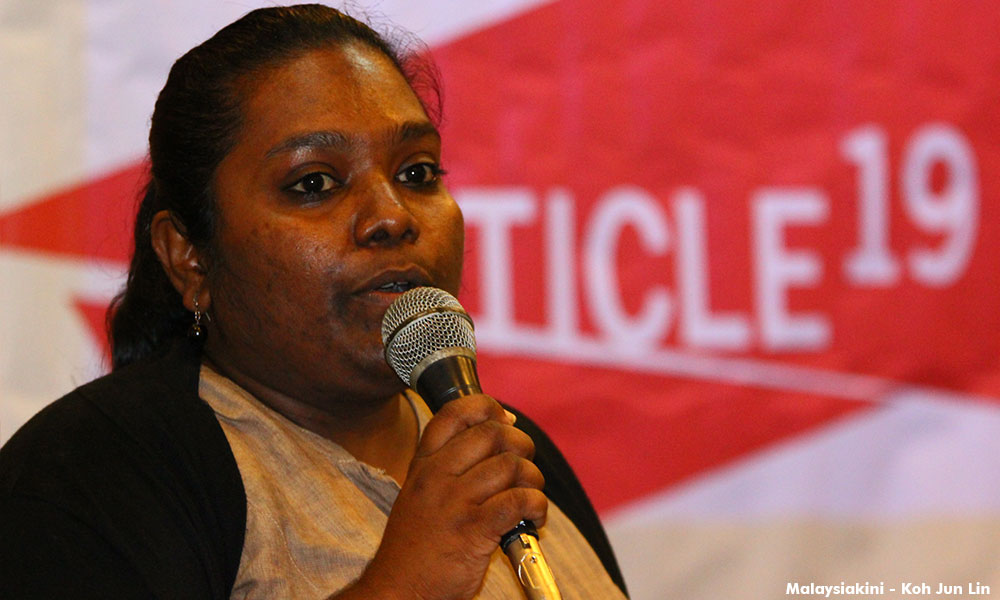
The ban is an example of the PPPA's use in breaching international human rights law, she said, highlighting how Malaysian authorities continue to use the act to censor content that the public has a right to access freely.
“The continued use of the PPPA to dictate what Malaysians can or cannot read based on overly broad concepts is deeply troubling and undermines the fundamental need for open discourse essential to any democratic society.
"Such measures infringe on freedom of expression and highlight an increasing intolerance towards diverse perspectives within society," she said.
It is already popularly known that the PPPA is used arbitrarily, often to suppress voices critical of the government and repress freedom of expression, she added.
“The Madani government still has the chance to make right what was promised to the people and restore its human rights agenda.
"This means repealing this law, as well as other archaic laws such as the Sedition Act 1948, to reverse long-standing restrictions on free speech and create an enabling space for Malaysians to express themselves without fear," said Nalini. - Mkini
No comments:
Post a Comment
Note: Only a member of this blog may post a comment.