
As cryptocurrency trading gains traction in Malaysia, the country’s law enforcement bodies are seeing red over how the facilities are open to abuse by criminals.
They warn that the anonymity offered by digital asset platforms makes combating criminal activities more challenging, especially in investigating money laundering and tracing the movement of illicit gains.
“The use of this method is more difficult for authorities to detect, as it does not involve any financial service agencies registered in Malaysia that have reporting obligations to the Malaysian authorities,” said the MACC in an email to Malaysiakini.
“Furthermore, the use of cryptocurrency methods is evolving very rapidly over time, making it increasingly complex to detect and enforce regulatory action.
“The transfer of cryptocurrency from one wallet to another can be carried out within just a few minutes, as easily as using a mobile phone.”
The MACC added that it has seen more money laundering cases involving bribes being conducted through digital asset platforms since 2020.

Law enforcement and regulatory bodies were contacted over Malaysia’s cryptocurrency regulations, as part of a global investigative journalism project led by the International Consortium of Investigative Journalists (ICIJ).
The collaborative reporting project, called “The Coin Laundry”, published its reports last month, exposing how cryptocurrency companies have enabled a shadow economy that profits lavishly from crime.
In a recent high-profile case, MACC found a senior anti-vice police officer in Kuala Lumpur had failed to declare wealth, including cryptocurrency worth RM80,000 and over 700g of digital gold.
“We expect this trend to continue increasing in the future,” warned the agency.
It also suggested increasing the reporting responsibility for crypto platforms.
“We are of the view that there is a need to enact legislation to require cryptocurrency platforms and operators in our country to report to the authorities when there are grounds to suspect the existence of a Suspicious Transaction Report (STR) or a Cash Transaction Report (CTR) on their platforms, in a manner similar to the practice adopted by Bank Negara Malaysia for conventional financial transactions.”
Struggling with growing crypto fraud
The Securities Commission (SC) in its 2023 Annual Report said it observed a new modus operandi: “The use of e-wallet and cryptocurrency as the mode of payment involving investment scams, as compared to mule bank accounts which were used previously.”
This may be designed to avoid easy detection and intervention by enforcement agencies, it said.
Similarly, the federal police have also seen an uptick in criminal cases involving cryptocurrency transactions, especially related to scams.
Statistics compiled by the Bukit Aman Commercial Crime Investigation Department (CCID) revealed a significant increase in scam cases involving cryptocurrency between 2023 and October 2025, involving losses of over RM375 million.

During the same period, the department also recorded eight other cases of face-to-face scams that involved cryptocurrency transactions where victims sustained over RM32.5 million in losses.
Its director, Rusdi Isa, said cryptocurrency is posing a huge challenge to investigators due to four factors:
Cryptocurrency transactions are pseudonymous in nature, where only wallet codes are shown, not the owner’s identity.
Transactions do not pass through local financial institutions.
Criminals commonly use overseas and unlicensed cryptocurrency exchange platforms.
Differences in data protection laws and jurisdictional issues make it difficult to identify the true owners of crypto wallets and to trace cross-border financial flows.
“These factors caused difficulties for authorities to identify users because cryptocurrency platforms that are based overseas are not subject to local laws, and some refuse to cooperate.
“The decentralised nature of cryptocurrencies is also making it difficult to trace transaction chains, while rapid cross-border fund transfers enable criminals to conceal the flow of money more easily,” Rusdi said.
While existing laws, such as the Penal Code, provide police with legal capabilities to deal with crypto-related crimes such as cheating, criminal breach of trust, money laundering, and terrorism financing, he stressed that the provisions need to be updated and strengthened.
Digital asset laws need updates
Cryptocurrency is not recognised as legal tender in Malaysia, but it is legal to own and trade through digital asset exchanges (DAX) that are approved by the SC.
An amendment to the Capital Markets and Services Act in 2019 has prescribed digital currency and digital tokens as securities, empowering the statutory body to regulate their markets. As of Dec 3, 2025, the SC has registered only six market operators for DAX in Malaysia.
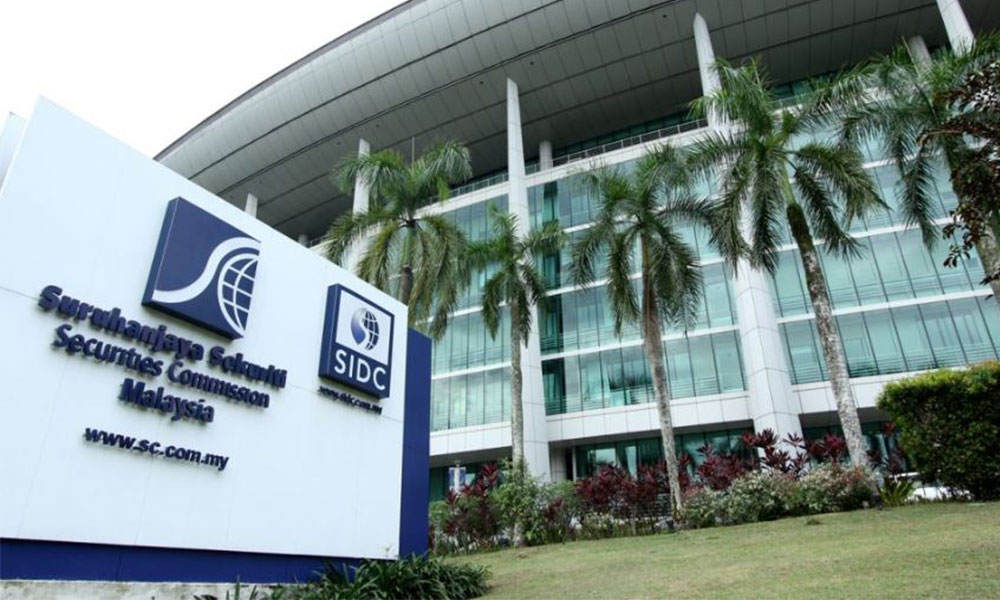
However, while licensed operators have to undergo stringent checks, unregistered cryptocurrency platforms are still accessible and pose risks, especially in relation to scams, according to the National Anti-Financial Crime Centre (NFCC).
“Among the main issues identified is the anonymous and difficult-to-trace nature of blockchain technology, which in turn makes it easier for scammers to abscond with money without leaving a clear trail.
“In addition, the existence of unregistered crypto platforms that serve as mediums for fraud without strict supervision by the authorities further increases the risk.
“Cyber regulations and security laws related to crypto transactions also still require comprehensive updates so that they are clearer, more effective, and more relevant in efforts to trace illegal transactions and related data purchases,” said NFCC, which is the central body in charge of coordinating operations with law enforcement agencies over financial crimes.
According to the centre, the SC is in the process of introducing a slew of amendments to existing laws to ensure they stay relevant with technological advancements.
They include laws allowing the recording of statements via video calls, laws to allow the seizure and gaining of access to computers, programmes, data, records, or accounts, as well as to request passwords or decryption codes to interpret data.
“It is also proposing to amend the relevant laws to increase punishment penalties to commensurate with the seriousness of crimes involving digital assets,” NFCC added. - Mkini
No comments:
Post a Comment
Note: Only a member of this blog may post a comment.