
Unfortunately, we live in a reality in which police violence isn’t shocking anymore.
Videos of the abuse faced by Wan Muhammad Daniel, a recent victim of police violence, show what many already fear: unchecked force, brutality, and the pain of those with no power to defend themselves.
When the police themselves declare someone innocent, yet proceed to violently subdue them, and then try to hide it - we have to ask: what institution is really protecting us?
We’ve been pushed to the extreme. First, the news cycles blur past the story of three men shot dead, with families and recordings contradicting the official narrative that they were an imminent threat.
Weeks later, we hear about Daniel, allegedly beaten, body battered with bruises, a lighter flame near his genitals - remnants of torture no one should ever normalise.
One would think this would only happen in places like Israeli prisons, Guantanamo Bay, not somewhere close to home.
Dignity in the agency
Where is the dignity in the agency that was built to protect us?
And let’s be clear: this isn’t isolated - it’s systemic. In 2024 alone, 25 people died in police custody, more than the year before.

This is despite the police having a special unit supposedly set up to investigate deaths in custody.
If the system works, the numbers would be going down. They aren’t.
And this isn’t a recent failure. Between 2011 and 2021, 430 people died in custody across enforcement agencies.
That’s not a series of accidents anymore; it has become a pattern. A system that keeps killing people and calling it “procedure”.
On Jan 17, 2025, Suhakam was blocked from carrying out its lawful investigation into alleged violence against inmates at Taiping Prison, despite prior approval from the Prisons Department.
For the first time in its 25-year history, Malaysia’s human rights commission was denied access, which became a clear attempt to obstruct independent oversight and silence accountability.

So the question remains: when an innocent civilian is beaten into submission or dies in custody, who do we rely on to deliver justice? Who watches the watchers?
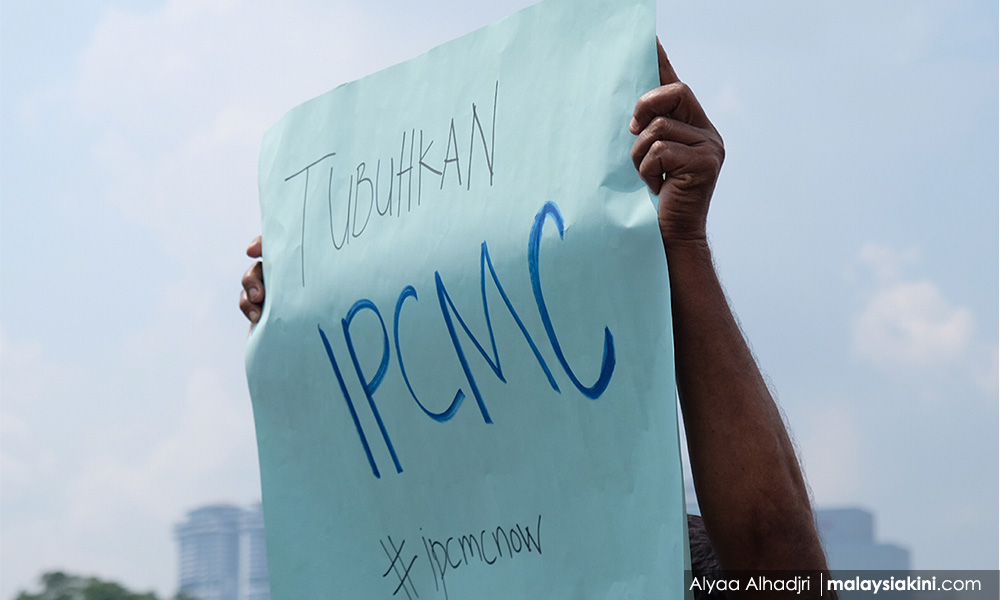
IPCMC
We need an Independent Police Complaints and Misconduct Commission (IPCMC). Here’s Why:
1. End self-policing
Police cannot keep investigating themselves. Internal probes are a built-in conflict of interest, and the IPCMC is the only mechanism that allows independent investigations into abuse, deaths in custody, and systemic misconduct - without interference.
2. Transparency, not cover-ups
Justice can’t happen behind closed doors. IPCMC would make findings public, expose how decisions are made, and stop misconduct from being buried in internal reports no one ever sees.
3. Real consequences, real deterrence
When abuse carries no consequences, it becomes routine. IPCMC introduces enforceable sanctions, ensuring misconduct is punished, not excused, delayed, or quietly dismissed.
We deserve institutions that protect rights - not protect themselves.
Police violence, custodial deaths, and the obstruction of independent human rights investigations can’t be brushed off as “unfortunate incidents”.
They are symptoms of a system that refuses accountability. - Mkini
RASHIFA ALJUNIED is a Muda central committee member.
The views expressed here are those of the author/contributor and do not necessarily represent the views of MMKtT.
No comments:
Post a Comment
Note: Only a member of this blog may post a comment.