
The coming week is pivotal for jailed former prime minister Najib Abdul Razak as the courts are set to rule on his bid for house arrest and his 1MDB criminal case.
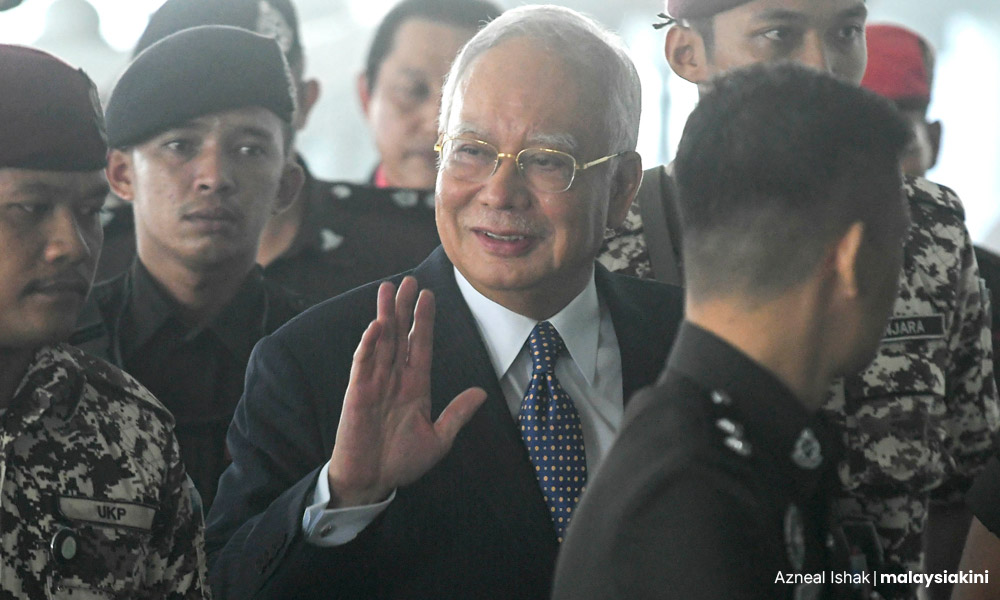
Tomorrow, the Kuala Lumpur High Court is expected to deliver its verdict on Najib’s royal addendum. A favourable ruling could allow him to serve the remainder of his SRC International sentence under house arrest.
Court records show that judge Alice Loke is scheduled to deliver her decision at 9am.
Najib’s lead counsel, Shafee Abdullah, told reporters on Dec 18 that the former Pekan MP must be immediately granted house arrest if the court rules in his favour.
Royal addendum case
Najib’s house arrest bid began in 2024, following his judicial review application filed on April 1. This came after the Pardons Board’s February announcement halving his 12-year SRC International sentence and reducing his RM210 million fine to RM50 million.
The sentence stems from convictions for abuse of power, criminal breach of trust (CBT), and money laundering involving RM42 million from SRC International, a former subsidiary of the 1MDB sovereign wealth fund.
Najib, in his application, claimed that there was a supplementary royal decree, dated Jan 29, that allowed him to serve the remainder of his sentence under house arrest, in addition to the main royal decree that discounted his sentence.
This encountered a roadblock in the Kuala Lumpur High Court when judge Amarjeet Singh dismissed his leave application to pursue the case on July 3. The decision was overturned by the Court of Appeal on Jan 6 this year and upheld by the Federal Court on Aug 13.
At the case hearing, the court was told that the 16th Yang di-Pertuan Agong is not bound by the Pardons Board’s advice as the king is not part of the board as a chairperson but was only presiding over its meeting as per Article 42(8) of the Federal Constitution.
It was also submitted, in reference to the board’s meeting minutes that were tendered as evidence by the Attorney-General’s Chambers (AGC), that the king had initially wanted to grant Najib a full pardon, despite considering advice from the board’s committee.
At the same time, Najib also filed a contempt application against former attorney-general Ahmad Terrirudin Salleh on May 23 this year. Najib claimed that Terrirudin had direct knowledge of the royal addendum and refused to enforce it.
His application was later denied on Sept 4 as the judge, Loke, said Najib failed to establish any prima facie to warrant a permission to cite Terrirudin for contempt.
1MDB case
Meanwhile, on Dec 26, Najib would learn his fate over his 1MDB-related case involving RM2.3 billion, in which judge Collin Lawrence Sequerah is scheduled to deliver his verdict at 9am at the Palace of Justice, Putrajaya.
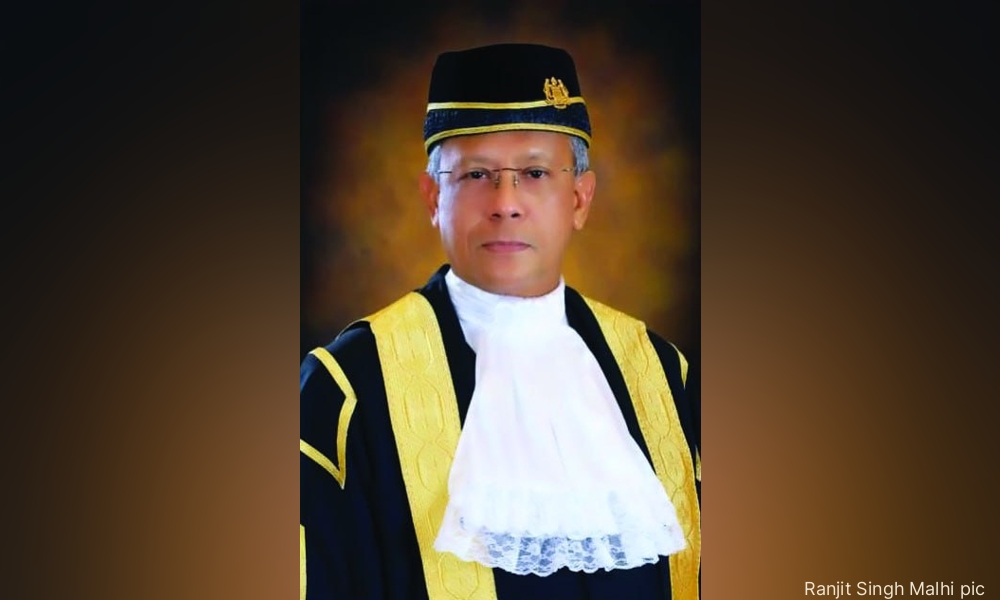
Collin had recently been elevated to the Federal Court. However, he would be delivering his final High Court criminal verdict in his capacity as a High Court judge.
If Najib is successful in his house arrest bid but is convicted in the 1MDB case, he would technically be allowed to return home to serve house arrest.
This is because the house arrest is regarding an entirely separate sentence - the SRC International case.
If he is convicted in the 1MDB case, he can automatically appeal against the verdict and apply for a stay of sentence execution pending his appeal.
Najib, 72, was accused of four counts of power abuse and 21 money laundering charges in 2018. The trial began the following year.
The former premier had allegedly used his position to obtain gratification totalling RM2.3 billion of 1MDB funds between Feb 24, 2011 and Dec 19, 2014, at the AmIslamic Bank Berhad branch on Jalan Raja Chulan in Bukit Ceylon.
For the 21 money laundering charges, he is accused of committing the offence at the same bank between March 22, 2013 and Aug 30, 2013.
His power abuse charge was framed under Section 23(1) of the MACC Act 2009, which is punishable under Section 24(1) of the same Act, carrying 20 years imprisonment and a fine of either five times the amount of the bribe or RM10,000, whichever is higher.
While his money laundering charges were framed under Section 4(1)(a) of the Anti-Money Laundering and Anti-Terrorism Financing Act, which provides a maximum fine of RM5 million and imprisonment of up to five years or both.
He was ordered to defend himself against the charges on Oct 30, 2024, after Collin found the prosecution had established a prima facie case against him.
Other cases
Apart from the SRC International case, which was disposed of in 2022, and the 1MDB case, Najib previously faced three other high-profile corruption cases. However, he was granted a discharge not amounting to an acquittal (DNAA) on two and fully acquitted on the remaining one.
Najib was previously charged on Feb 3, 2019, with three money laundering charges involving RM27 million of funds linked to SRC, dubbed the SRC 2.0 case.
He was alleged to have received the money through his three AmPrivate Banking accounts at AmIslamic Bank Berhad, Ambank Group Building, Jalan Raja Chulan, on July 8, 2014, and his charges were framed under Section 4(1) of the Anti-Money Laundering and Anti-Terrorism Financing Act 2001 which carries a maximum fine of RM5 million, up to five years’ imprisonment, or both.
The former Pekan MP was granted a DNAA on June 20 this year after judge K Muniandy found the prosecution failed to show that they could proceed with the case.
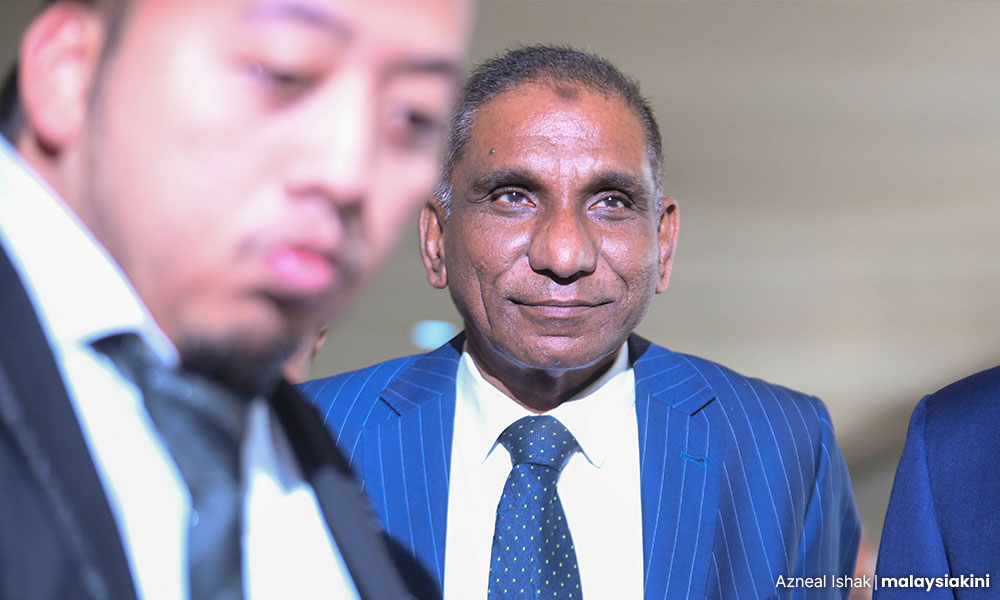
Najib and 1MDB’s former chairperson Irwan Serigar Abdullah were charged together, under their capacity as finance minister and the ministry’s secretary-general of treasury, respectively, on Oct 25, 2018, where they were accused of six counts of criminal breach of trust involving RM6.6 billion of government funds allegedly used as payments to the International Petroleum Investment Company (IPIC).
They were alleged to have committed the offences at the Finance Ministry complex in Putrajaya between Dec 21, 2016 and Dec 18, 2017
The charges, under Section 409 of the Penal Code for CBT by a public servant or agent, carry a maximum of 20 years’ imprisonment, caning, and a fine.
However, the High Court allowed their bid for DNAA on Nov 27 last year, following the prosecution’s failure to hand over several classified documents that were crucial for them to prepare their defence.
Najib was charged on Dec 12, 2018, of allegedly using his position to order amendments to the 1MDB audit report before it was tabled to the Public Accounts Committee (PAC) to avoid any action against him.
The charge was framed under Section 23(1) of the MACC Act 2009, which provides for imprisonment up to 20 years and a fine of not less than five times the amount of gratification, or RM10,000, whichever is higher.
He was accused of committing the offence at the complex of the Prime Minister’s Department in Putrajaya between Feb 22 and 26, 2016.
At that time, 1MDB’s former CEO Arul Kanda Kandasamy was charged under Section 28(1)(c) of the MACC Act 2009 for abetting him. They were jointly tried in 2019.
However, the High Court fully acquitted them at the end of the prosecution’s case after finding there was no prima facie case against them. - Mkini
No comments:
Post a Comment
Note: Only a member of this blog may post a comment.