
The Madani government emerged from the 15th general election as a political necessity rather than a coherent ideological project. It stitched together long-standing adversaries under the language of stability, reform, and national reconciliation after a hung Parliament left no single bloc with a clear mandate.
While this arrangement succeeded in averting political paralysis, it also produced a coalition built on compromise rather than conviction. Nearly two years on, those compromises have hardened into structural fault lines.
Among all its component parties, DAP has become the most visibly weakened: politically constrained, strategically isolated, and repeatedly targeted, particularly by Umno, with little meaningful defence from its own Pakatan Harapan partners, PKR and Amanah.
This weakening is not accidental nor episodic. It is the cumulative outcome of sustained political pressure, much of it publicly orchestrated, revolving around Malaysia’s most sensitive fault lines: race, religion, language, education, and identity.
In a functional coalition, such issues are debated internally, managed discreetly, and resolved through negotiated compromise.
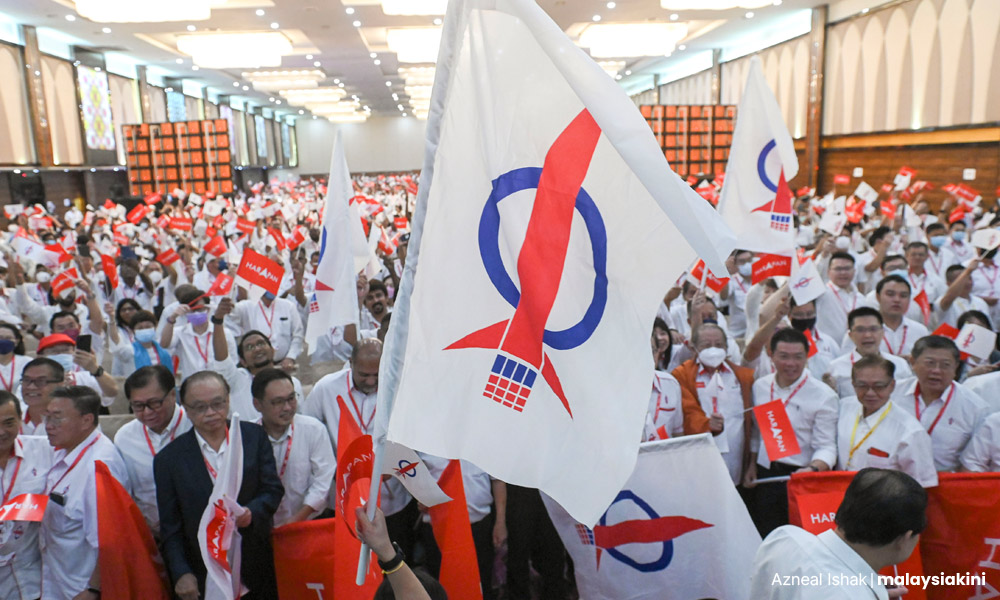
Under Madani, however, these matters are repeatedly escalated into public confrontations, often with DAP cast as the antagonist, allegedly threatening Malay-Muslim primacy. The consistency of this framing suggests deliberate strategy rather than coincidence.
Umno leaders, particularly from its youth wing, have played a central role in driving this narrative.
Figures such as Umno Youth chief Dr Akmal Saleh have repeatedly deployed racially and religiously charged rhetoric aimed squarely at DAP leaders and representatives. These interventions are not fringe outbursts.
Their persistence, timing, and confrontational tone point to tacit approval, if not outright endorsement, from Umno’s senior leadership. In Malaysian politics, silence from the top in the face of inflammatory rhetoric is rarely accidental; it functions as political permission.
This strategy serves several objectives simultaneously. First, it reassures Umno’s traditional base that the party has not diluted its ideological core despite governing alongside Harapan. Umno’s presence in Madani is thus framed not as a compromise but as containment: containing DAP, containing reformist impulses, and containing challenges to Malay political dominance.
Second, it keeps DAP permanently on the defensive. Forced to respond to allegations, clarify positions, or distance itself from perceived provocations, DAP expends political capital simply to survive. Third, it signals clearly who defines the limits of acceptable discourse within the Madani government.
Coalition’s silence
What magnifies the political damage is the conspicuous restraint, if not avoidance, by PKR and Amanah. Both parties derive tangible benefits from DAP’s strength: its parliamentary numbers, disciplined machinery, financial resources, and loyal voter base.
Yet, when DAP leaders are publicly cornered or targeted, PKR and Amanah’s responses are muted, cautious, or absent. Calls for “restraint” and “unity” replace principled defence. Coalition solidarity, once a defining feature of Harapan’s identity, has become selective and conditional.
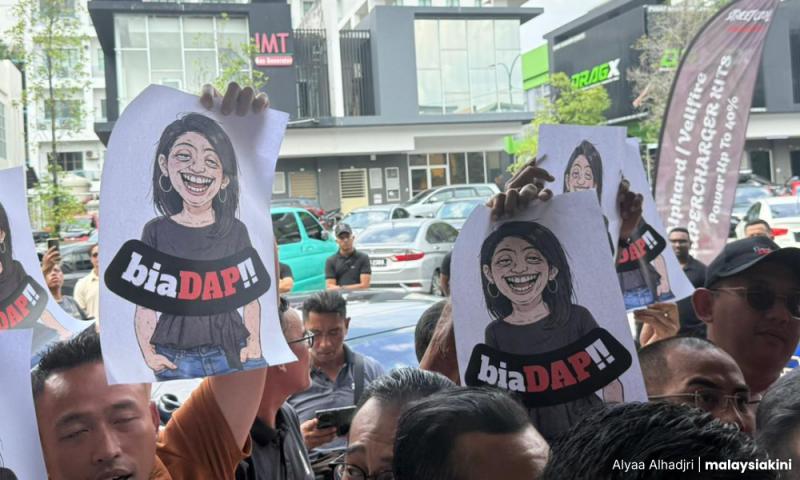
This silence is not politically neutral. In coalition politics, silence under attack is itself a form of alignment. It allows Umno’s framing to dominate the public narrative while DAP absorbs the political cost.
Over time, this asymmetry reshapes internal power relations, not through formal decisions or written agreements, but through repeated patterns of public humiliation, retreat, and constraint.
For seasoned observers, the parallels with BN are unmistakable. Umno perfected this model over decades by marginalising MCA, MIC, and Gerakan. These parties were permitted cabinet positions and symbolic representation, but their autonomy was steadily hollowed out.
Whenever they asserted positions that conflicted with Umno’s racial or ideological priorities, they were publicly contradicted, sidelined, or disciplined. The long-term outcome was predictable: loss of credibility, erosion of voter trust, and eventual political irrelevance.
DAP now risks being subjected to a similar process, albeit in a different historical context. Unlike MCA or Gerakan, DAP commands a large, ideologically anchored base and holds the largest number of parliamentary seats within Harapan.
Its supporters are politically conscious and less forgiving of perceived capitulation. Weakening DAP, therefore, is not merely about discipline or message control; it is about recalibrating the coalition’s internal balance of power ahead of the next general election.
PKR’s calculus
This brings us to an uncomfortable but increasingly unavoidable question: is PKR merely tolerating DAP’s marginalisation, or is it quietly complicit?
As the party holding the prime ministership, PKR possesses the authority and legitimacy to enforce coalition discipline and mutual respect. However, it has consistently chosen caution over confrontation, prioritising short-term regime stability over long-term coalition equity.
PKR’s calculus is understandable but dangerous. By allowing Umno to dominate racial and religious narratives while DAP absorbs repeated political blows, PKR risks transforming Harapan from a values-based coalition into a purely transactional arrangement governed by ethnic arithmetic.

The more DAP is weakened and delegitimised, the easier it becomes to imagine a coalition future without it.
This is not an abstract concern. Malaysian politics is fluid, opportunistic, and deeply pragmatic.
Coalitions are not sacred; they are instruments. Parties reposition, realign, and recalibrate long before election campaigns officially begin. As GE16 approaches, the sustained pressure on DAP increasingly resembles political preparation rather than incidental friction.
The central question, therefore, is no longer whether DAP is being weakened. The question is whether this weakening is a deliberate part of a broader effort to reshape Malaysia’s governing coalition into something narrower, more ethnically consolidated, and more electorally “manageable.”
If so, the implications extend far beyond DAP. They strike at the credibility of Madani itself and at Malaysia’s claim to have moved beyond the politics of dominance disguised as cooperation.
In that sense, DAP’s siege is not just a party problem. It is a warning signal about the direction of power, the limits of reform, and the future architecture of Malaysian politics as GE16 draws closer. - Mkini
R PANEIR SELVAM is the principal consultant of Arunachala Research & Consultancy Sdn Bhd, a think tank specialising in strategic national and geopolitical matters.
The views expressed here are those of the author/contributor and do not necessarily represent the views of MMKtT.
No comments:
Post a Comment
Note: Only a member of this blog may post a comment.