
Former prime minister Najib Abdul Razak’s dream of coming back home and being together with his beloved wife seemed to have shattered into pieces.
This was after High Court judge Alice Loke dismissed his judicial review application for him to serve the remainder of his jail sentence under house arrest, after finding that the addendum order issued by the then Agong was constitutionally invalid and thus indefensible.
In essence, the judge ruled that despite the fact that the Agong has the royal prerogative to exercise mercy, the act must be exercised within the constraints of the apex law, particularly Article 42 of the Federal Constitution, which deals with the power of pardons.
In her judgment, Loke also indicated that “Whilst the power of clemency is a royal prerogative, the Federal Constitution has provided for it to be exercised within the framework of the Constitution.”
Was there anything unusual in the said decision? As expected a microphone-friendly lawyer, Najib’s counsel Shafee Abdullah, lamented that the aforesaid decision has taken away the fullest prerogative of mercy that can be exercised by the Yang di-Pertuan Agong and the Malay rulers.
Constitutional supremacy, not absolute monarchy
There would have been some merit to such an argument if Malaysia were to adhere to the credo of absolute monarchy, but the fact remains that the country has been holding on to the doctrine of constitutional monarchy, duly enshrined in the black letters of our Federal Constitution.
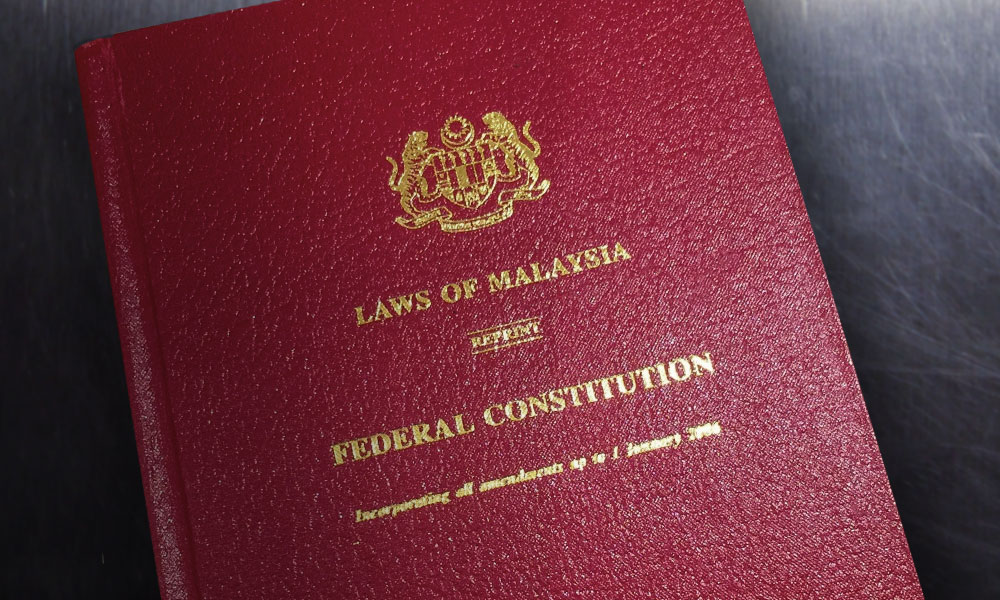
Since Malaysia equally subscribes to the principle of constitutional supremacy, such prerogative powers of our king, with the utmost and greatest respect, ought to bend to the principle of constitutional supremacy.
Constitutional experts argue that both principles - constitutional supremacy and constitutional monarchy - are part of the indigenous elements of our Federal Constitution.
Anyway, it does not mean that the Agong has no sole prerogative at all in exercising his discretionary power under the Constitution. Such absolute prerogative powers do exist in our supreme law.
Nonetheless, they are, with the greatest respect, rather limited. Such powers can only be exercised if they are duly recognised and sanctioned by the Constitution itself.
Selangor ruler’s wisdom
Be that as it may, what the learned High Court judge did was simply reaffirming such an embedded doctrine. In actual fact, she did nothing extraordinary - at least under the law.
At the risk of unnecessary repetition, Shafee may want to pore over a categorical statement made by Selangor ruler Sultan Sharafuddin Idris Shah, prior to this, where his majesty reiterated that a royal pardon should not be granted arbitrarily for the sake of certain parties.
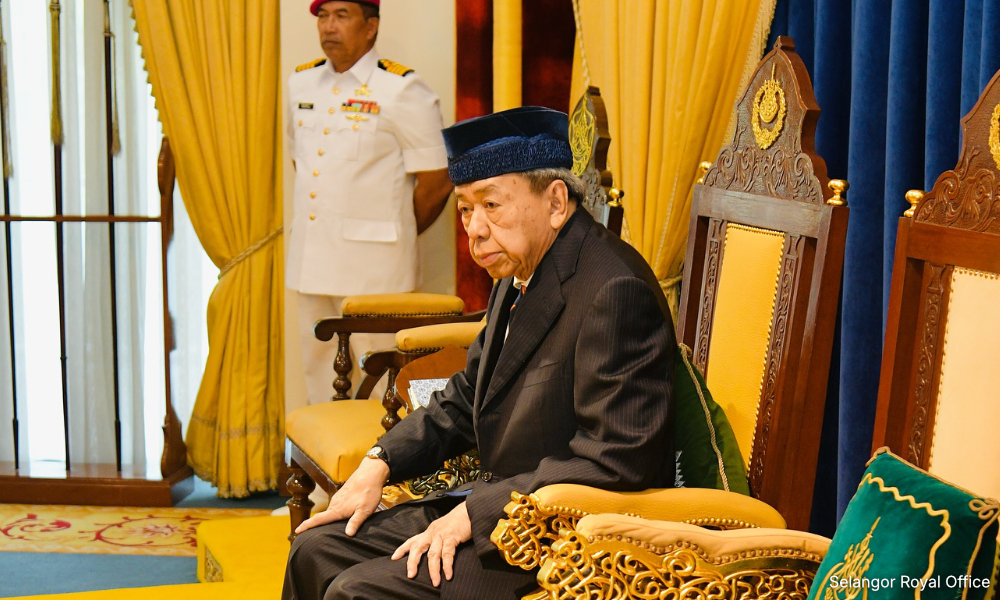
Sultan Sharafuddin also said the people should understand that the pardon process has to be done in accordance with the law, as enshrined in the Federal Constitution and other existing legislation.
Najib and his die-hard supporters might be extremely unhappy with Loke’s decision, but they may not realise perhaps how happy and jovial the majority of Malaysians are. - Mkini
MOHAMED HANIPA MAIDIN is former deputy law minister.
The views expressed here are those of the author/contributor and do not necessarily represent the views of MMKtT.
No comments:
Post a Comment
Note: Only a member of this blog may post a comment.