
Recent political manoeuvring suggests that Malaysia may already be witnessing the early formation of a new governing alignment: one that quietly transcends the formal boundaries of the Madani government.
The evidence does not lie in dramatic announcements or formal declarations, but in patterns of behaviour that, taken together, point toward a strategic recalibration of power.
Umno’s sustained pressure on DAP, PKR’s strategic silence, PAS’ calculated restraint, and the quiet normalisation of cross-party cooperation all suggest that a new coalition logic is being tested in real time.
PAS’ conduct is particularly revealing. Despite positioning itself as the principal opposition force following the 15th general election, PAS has noticeably softened its rhetoric against the Madani government and Prime Minister Anwar Ibrahim.
The party’s attacks are selective, restrained, and often focused more on symbolic issues than on direct challenges to federal authority. This restraint should not be mistaken for moderation. It reflects strategic calculation.
PAS-governed states continue to receive substantial federal allocations, development funding, and administrative cooperation. In practical terms, PAS is benefiting materially from the Madani government while maintaining just enough opposition posture to preserve its identity.
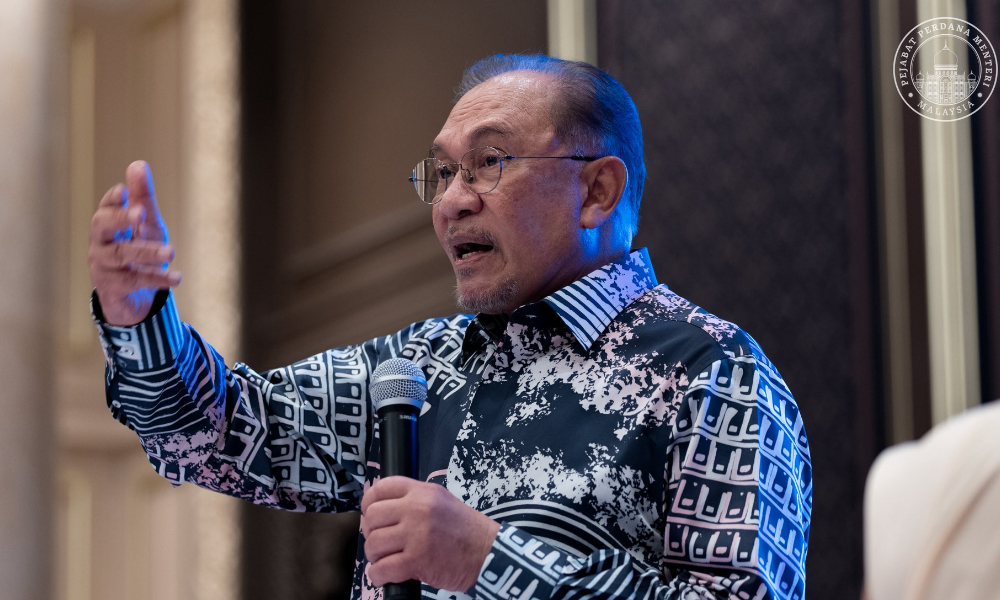
This arrangement points to an emerging understanding: opposition does not necessarily mean exclusion from resources. In Malaysia’s political culture, access to federal largesse often matters more than ideological consistency.
PAS appears to have concluded that outright confrontation with Anwar carries fewer benefits than calibrated engagement. This pragmatic posture also positions PAS as a viable future partner rather than a permanent adversary.
Anwar’s political history
To understand why such accommodation is possible, one must consider Anwar’s political history. As a former president of the Malaysian Islamic Youth Movement (Abim), Anwar built networks that cut across ideological and party boundaries long before today’s alignments solidified.
Many figures who once shared that formative Islamist-reformist space now occupy senior positions across PKR, Umno, and PAS. These informal relationships, rooted in shared experiences rather than party platforms, facilitate back-channel communication, trust, and compromise.
In Malaysian politics, these personal networks often lubricate realignments long before they become visible at the institutional level.
Against this backdrop, Umno’s aggressive posture toward DAP, particularly through its youth leadership, takes on deeper strategic meaning. The sustained “DAP-bashing” of recent months appears far too systematic to be dismissed as spontaneous populism.

Youth leaders such as Dr Akmal Saleh have repeatedly invoked racially and religiously charged narratives that frame DAP as hostile to Malay-Muslim interests. The absence of firm rebuke from Umno’s top leadership suggests that these attacks serve a broader purpose.
The objective is not merely to weaken DAP electorally, but to delegitimise it as a coalition partner. By repeatedly associating DAP with cultural threat, religious insensitivity, or political disruption, Umno helps create an environment where DAP’s continued presence in government becomes a liability rather than an asset.
This is a familiar method in Malaysian coalition politics: parties are rarely expelled outright. Instead, pressure is applied until withdrawal appears “voluntary,” justified, and even necessary for stability.
Studied silence
This approach also explains PKR’s studied silence. As the anchor party of the Madani government, PKR has both the authority and the incentive to intervene. Yet its reluctance to defend DAP robustly suggests a strategic choice.
By allowing Umno to take the lead on identity politics while keeping PAS engaged through material cooperation, PKR preserves flexibility. It avoids alienating Malay voters while keeping open a possible future realignment that does not depend on DAP.
Amanah’s position in this evolving equation is even more precarious. As a splinter group from PAS, it lacks PAS’ grassroots discipline and Umno’s institutional depth. It commands neither dominant rural Malay support nor decisive urban backing.

In a coalition increasingly shaped by ethnic arithmetic rather than ideological pluralism, Amanah becomes surplus to requirements; too weak to anchor Malay support, yet insufficiently distinct to mobilise non-Malay voters.
The emerging alternative is a Malay-dominated coalition anchored by PKR, Umno, and PAS. Each party brings complementary strengths. Umno retains extensive institutional memory, administrative experience, and entrenched local networks.
PAS commands a disciplined base in rural areas and has steadily expanded its appeal among conservative urban Malays. PKR provides national leadership legitimacy, international acceptability, and a reformist veneer that softens the coalition’s image.
Such a configuration could plausibly dominate Peninsular Malaysia’s Malay-majority constituencies. From a purely electoral standpoint, it offers a powerful arithmetic advantage. In this structure, DAP is not merely inconvenient, but it is structurally incompatible.
Its multiracial ideology, strong non-Malay base, and insistence on institutional accountability complicate efforts to consolidate Malay support under a single narrative. Removing DAP simplifies messaging, voter targeting, and coalition management ahead of GE16.
East Malaysian parties further ease this realignment. Gabungan Parti Sarawak (GPS) and Gabungan Rakyat Sabah (GRS) have consistently demonstrated ideological flexibility.

Their operating principle is pragmatic: support whichever coalition can form the federal government while safeguarding state autonomy and access to resources. Their participation is not anchored to Pakatan Harapan, BN, or Perikatan Nasional, but to power itself.
This makes them natural stabilisers in any future coalition configuration.
Volatile times
All of this makes the current political moment particularly volatile. With GE16 projected for 2027, there is ample time for recalibration, defections, and gradual repositioning. Malaysian politics rarely waits for election cycles to enact change. Realignments are often completed long before voters are called to the polls.
For DAP, the challenge is existential. Can it remain relevant within a coalition increasingly shaped by ethnic pragmatism rather than multiracial principle? Or is it being manoeuvred toward an exit that allows others to consolidate Malay power while discarding the complexity of pluralism?
For Malaysia, the implications are even more profound. The erosion of Harapan’s multiracial character risks normalising a return to race-based governance: rebranded, but fundamentally unchanged.
If Madani was meant to represent a departure from old political habits, the current trajectory suggests continuity rather than transformation.
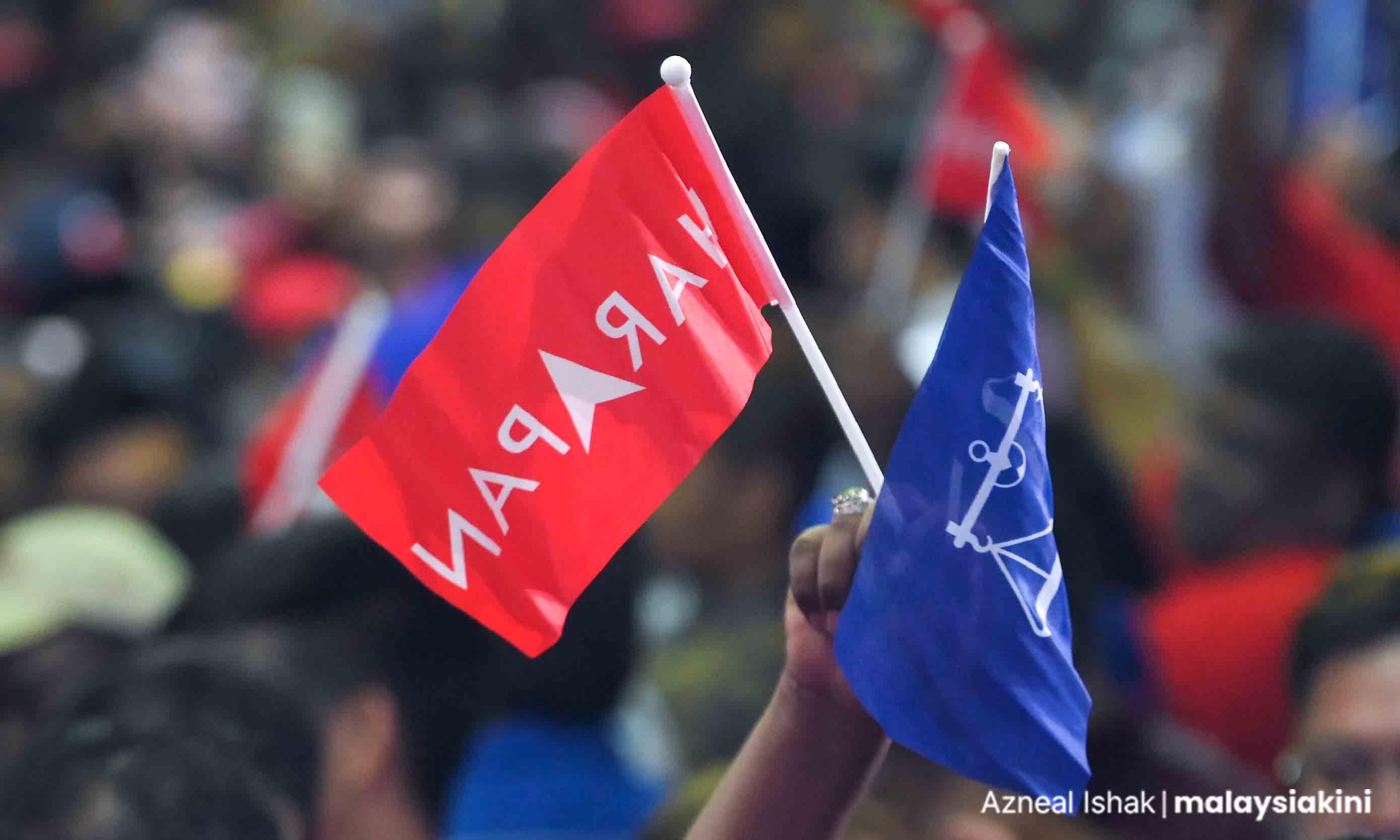
The coalition map is being redrawn not through press conferences, but through calculated silences, selective confrontations, and strategic restraint.
In Malaysian politics, these signals often matter more than formal statements. Taken together, they suggest that the real contest for GE16 may not be waiting in the future, as it may already be unfolding. - Mkini
R PANEIR SELVAM is the principal consultant of Arunachala Research & Consultancy Sdn Bhd, a think tank specialising in strategic national and geopolitical matters.
The views expressed here are those of the author/contributor and do not necessarily represent the views of MMKtT.
No comments:
Post a Comment
Note: Only a member of this blog may post a comment.