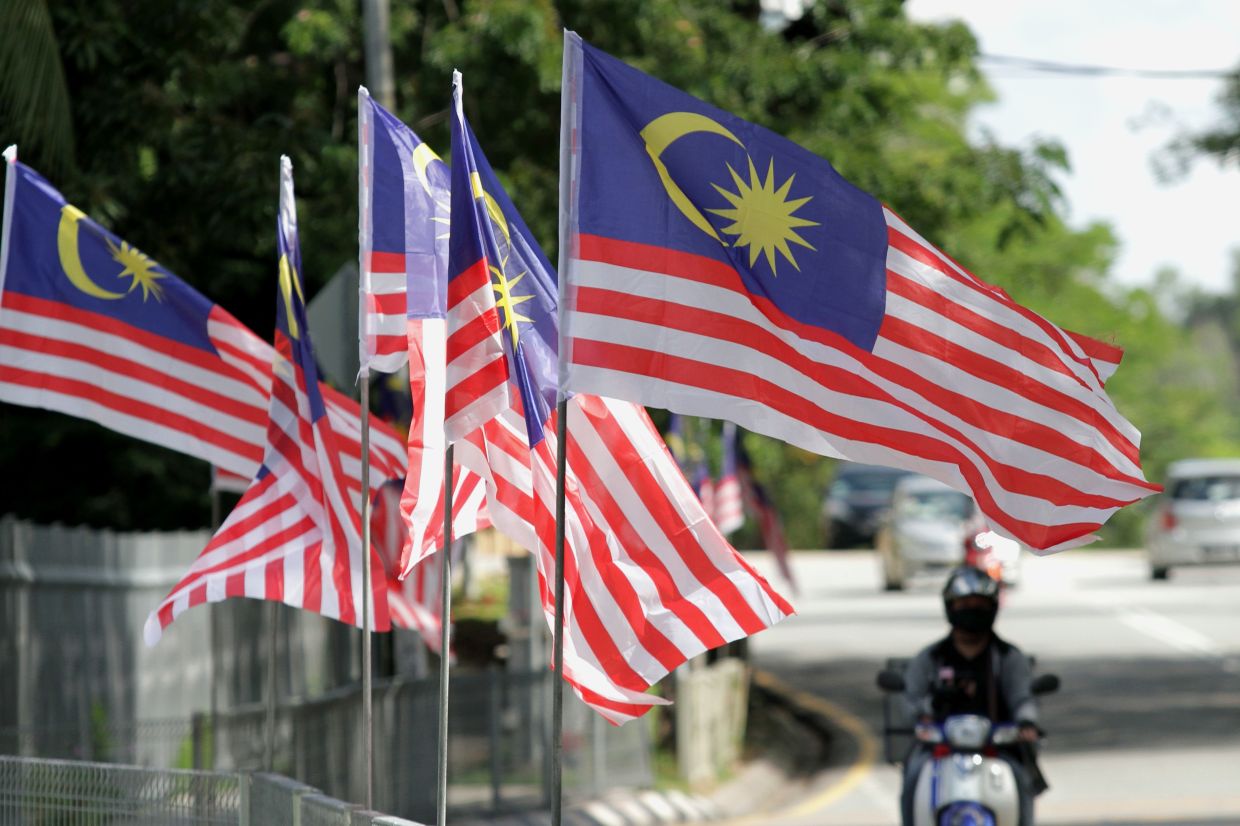
BY far the most consequential political development anticipated in 2026 is the series of state elections expected in Johor, Melaka and Sarawak.
In the last Johor and Malacca state elections, UMNO secured convincing victories under the leadership and shadow of Datuk Seri Najib Razak.
However, that political reality no longer exists—Najib is now incarcerated and following repeated and decisive defeats in court, it is increasingly clear that he is likely to spend the remainder of his life behind bars.
With their once-winning general removed from the battlefield, UMNO now faces an existential question: will the party be galvanised by Najib’s downfall and fight to reclaim his legacy, or will it be so demoralised that it collapses under the weight of his absence?
Sarawak: The election that matters most
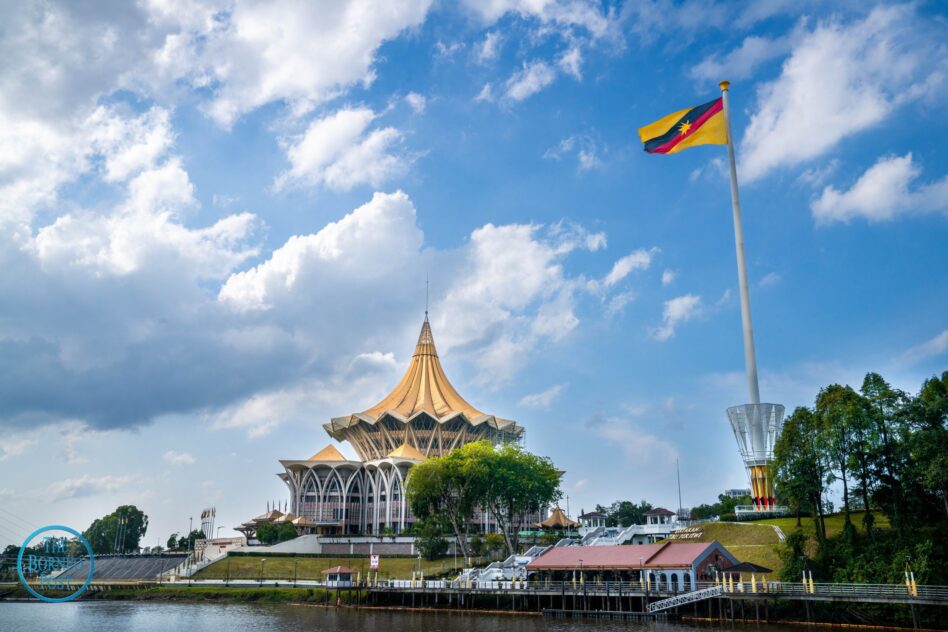
The outcome of the Sarawak state election will speak volumes—not only about the future of the Pakatan Harapan (PH)-led government but also about the long-term cohesion of the Malaysian federation itself.
After suffering a heavy defeat in Sabah, Putrajaya simply cannot afford to lose Sarawak. Yet the uncomfortable truth is this: Putrajaya does not appear to have a realistic chance of winning there.
Sabah’s recent political revolt was driven by the “Sabah First” ideology—an idea originally inspired by Sarawak’s own “Sarawak First” doctrine. If the imitator was able to inflict such a decisive defeat on the federal government, it is difficult to imagine the original being any less brutal.
Should Putrajaya lose Sarawak by a margin equal to or worse than its loss in Sabah, that defeat is likely to generate political momentum that carries through to the next general election, projected for 2027, potentially precipitating the collapse of the PH-led government.
The probability of the Madani government fracturing
Almost every major component of the unity government has, at one point or another, threatened to walk away but will any of them actually do so?
Following its poor showing in the Sabah election, a visibly panicked DAP issued an ultimatum: recognise the UEC, or DAP would leave the unity government within six months.
However, public response to the ultimatum was tepid at best. After Datuk Seri Anwar Ibrahim announced a cabinet reshuffle—and after the government firmly rejected the idea of recognising the UEC—DAP has since grown noticeably quiet.
Whether DAP will honour its ultimatum or quietly pretend it never happened remains an open question—one that may only be answered by mid-2026.
DAP’s tensions with UMNO extend beyond policy. UMNO leaders have expressed anger over the way certain DAP politicians—most notably Puchong MP Yeo Bee Yin—appeared to celebrate Najib’s court verdict.
Najib’s subsequent conviction in the 1MDB case, which added another 15 years in prison and billions in fines, further inflamed UMNO’s grassroots, reigniting calls for the party to exit the unity government in protest.
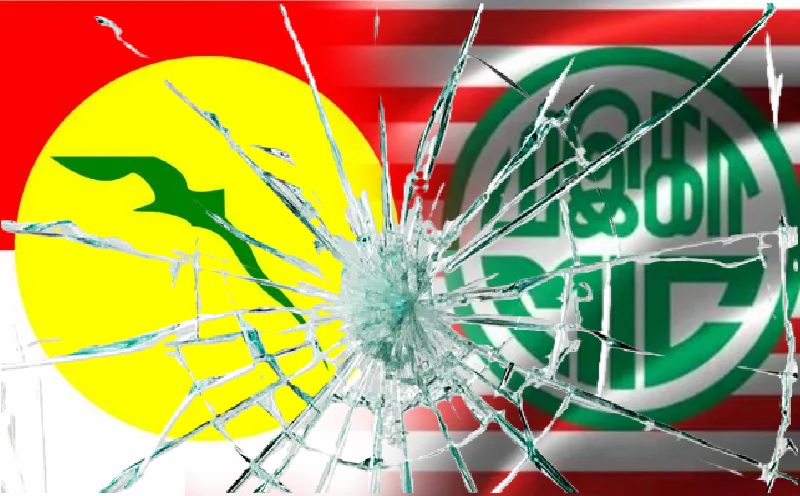
On a smaller but still relevant front, MIC—which has openly discussed leaving Barisan Nasional (BN) and the unity government for months—appears increasingly likely either to exit or be forced out in early 2026.
MCA, another minor coalition partner, may also finally be compelled to decide whether it wishes to remain within the unity framework.
Whether these threats are genuine or mere political posturing remains unclear. But if a sufficient number of parties do leave, the critical question becomes unavoidable: Can the unity government survive if everyone threatens to leave—and some actually do?
A change of guard in the Opposition
Perikatan Nasional (PN) has long struggled to sustain a coalition that runs against the natural order of politics. Why is it against the order of nature?
Because PN is led by its weaker partner.
Bersatu, which insists on leading PN, is weaker than PAS by nearly every meaningful metric: party machinery, grassroots reach, ideological clarity, leadership depth, membership size, and overall public support.
Yet Bersatu remains unwilling either to improve itself sufficiently to justify leadership or to humble itself and accept PAS as the coalition’s natural leader.
This unresolved contradiction has strained Bersatu-PAS relations for years. The latest manifestation of that strain surfaced in the Perlis Menteri Besar dispute, where Bersatu attempted to wrest the MB post from PAS, its own coalition partner.
Rather than strengthening itself by confronting its political opponents, Bersatu chose to cannibalise its ally. That act has almost certainly pushed the relationship to the brink of irreparable damage.
The coalition still holds—for now—because neither party has a viable alternative. But politics is fluid, and circumstances inevitably change. When they do, it is difficult to see how Bersatu and PAS can continue pretending that this betrayal never occurred.
Will Zahid still lead UMNO?
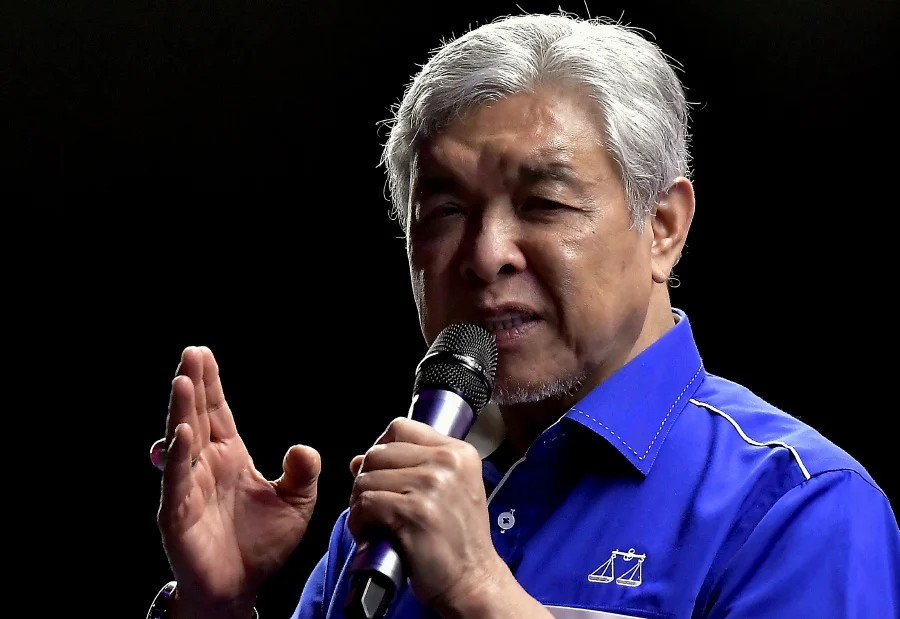
UMNO’s party election in March 2026 will answer one of the most pressing questions in Malaysian politics: will Datuk Seri Ahmad Zahid Hamidi remain UMNO president?
Zahid is deeply unpopular within the party. It was his decision to call the November 2022 general election that transformed what could have been a manageable outcome into a devastating defeat.
Prior to that election, UMNO had momentum, winning both Melaka and Johor while Najib’s imprisonment had stirred sympathy and mobilisation among the grassroots.
But Zahid squandered that momentum. Despite UMNO’s collapse, he emerged not weakened but elevated, securing the position of deputy prime minister while also receiving discharge not amounting to an acquittal (DNAA) decisions on 47 corruption-related charges.
This stands in stark contrast to Najib, the party’s more popular figure, who has faced relentless legal defeats.
Since UMNO’s last internal election in 2023, Zahid’s leadership has taken the party from bad to worse. He retains power largely because he enjoys the support of Anwar, and because he has systematically neutralised potential challengers such as Khairy Jamaluddin and Datuk Seri Hishammuddin Hussein.
Whether Zahid can continue clinging to the UMNO presidency—despite the party’s deteriorating condition—will be one of the most closely watched political dramas of 2026.
If 2026 has a defining theme, it is this: Survival, fragmentation, and reckoning.
State elections, coalition fractures, opposition realignments, and leadership battles will converge to determine not just who governs but whether Malaysia’s current political architecture can endure at all.
Nehru Sathiamoorthy is a roving tutor who loves politics, philosophy and psychology.
The views expressed are solely of the author and do not necessarily reflect those of MMKtT.
- Focus Malaysia.
No comments:
Post a Comment
Note: Only a member of this blog may post a comment.