
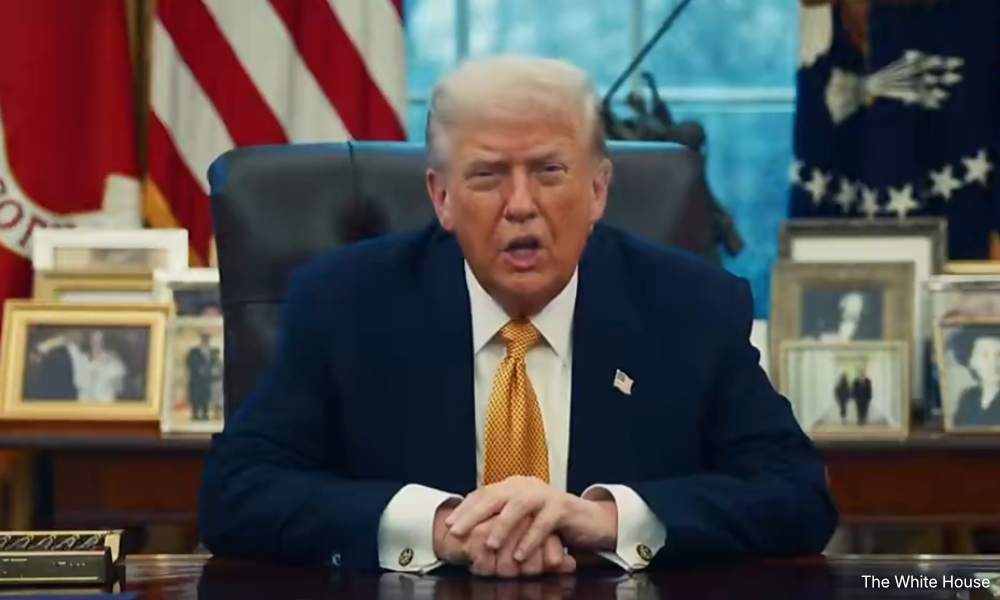
United States President Donald Trump reportedly told New York Times journalists that he “did not feel constrained by any international laws, norms, checks, or balances”.
And by saying the only limits on his ability to use American military might were “my (his) own morality” and “my (his) own mind”, this prompted a response from the Iranian Foreign Minister who said, “international law is dead!”.
It is therefore extremely challenging, at least at this juncture, to discuss this conflict strictly from the international law paradigm.
Nonetheless, one of the lingering questions revolves around the legality of Iran’s strikes on US bases located in Gulf states under international law.
It’s definitely a legal minefield. When people ask me if these strikes violate the sovereignty of the Gulf states, the answer seems to depend on which lens you’re looking through. It also depends on who pulled the trigger first.
Yes, the answer is not as straightforward as it may appear in political rhetoric.
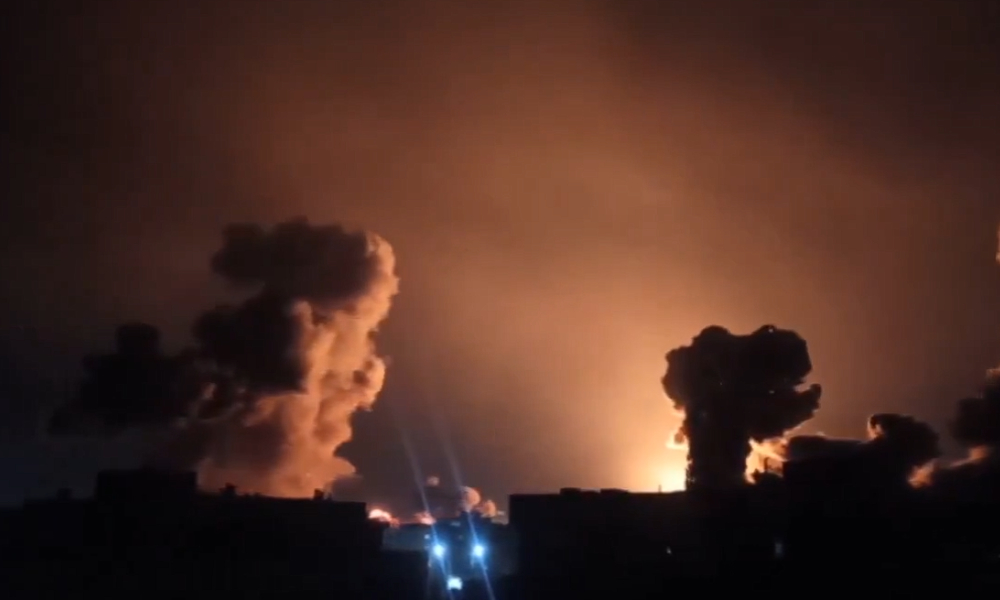
On Feb 28, 2026, tensions between Iran and the US-Israeli alliance erupted into a direct military confrontation after coordinated strikes targeted Iranian infrastructure, military facilities, and civilian targets. In response, Tehran launched a large-scale counter-offensive.
Iranian operations, nonetheless, have not been confined to Israeli or US forces, which directly engaged in the illegal aggression against Iran.
The expansion of the battlefield beyond the immediate combatants has duly triggered a major legal debate: If US forces launch attacks on Iran from bases located in other countries, does international law permit Iran to strike those bases in return?
Legally speaking, the US-Israel attack against Iran is clearly illegal and unlawful under international law as it violates Article 2(4) of the United Nations Charter. It is a slam-dunk case of aggression, thus violating the Rome Statute.
To be fair, Iran has every right to be utterly frustrated with Trump because the state was attacked while still holding a negotiation with the US.
The Omani foreign minister rightly remarked, “Whatever your view of Iran, this war is not of their own making.”
Even former CIA chief John Brennan defended Iran by saying, “Iran was not a threat to America for which a war should be started. The Trump administration started the war by lying.”
Enabling acts of aggression
Let us dive into the issue by referring to the UN General Assembly Resolution 3314 (1974), which defines acts of aggression in several forms.
Article 3(f) states that aggression includes: “The action of a State in allowing its territory, which it has placed at the disposal of another State, to be used by that other State for perpetrating an act of aggression against a third State.”
Needless to say, from a legal standpoint, this provision carries significant implications. If a Gulf state allows its territory to be used as a launch platform for attacks on Iran, legal experts believe it is not simply hosting foreign forces.
Au contraire, it may be considered legally responsible for enabling an act of aggression. In such a scenario, the host state may risk losing the legal protections normally associated with neutrality. Instead, it could be seen as a participant in the conflict, even if indirectly.
Another relevant concept envisaged by international law is that of co-belligerency. Once a state knowingly allows its territory to be used for offensive military operations against another country, it may be considered to have effectively entered the conflict itself.
And under such circumstances, its legal status as a neutral party - under the legal framework established by the Hague Conventions governing neutrality in war - may be seriously challenged.
This is because by providing bases, airspace, or logistical infrastructure for military operations, the host state may be seen as placing its territory and resources at the disposal of one side of the conflict. Ergo, once that threshold is crossed, the theatre of war may legally extend into that state’s territory.
Becoming legitimate targets
It seems to me that the aforesaid interpretation significantly complicates the narrative that Gulf states are merely passive hosts for foreign military deployments.
Some lawyers argue that the responsibility for the widening battlefield does not lie solely with Tehran. They are of the view that the expanding war between Iran, the US, and Israel is raising complex legal questions about sovereignty, neutrality, and the limits of self-defence.
It is a trite that under international law, states cannot provide their territory as platforms for military operations against any sovereign state while simultaneously claiming the protections reserved for neutral actors.
Hence, if foreign military forces are allowed to conduct attacks from bases located within their borders, those bases may become legitimate targets at least under the logic of self-defence.
And as duly expected, Iran has sought to argue that its military attacks against the US, including some US military bases located in Gulf states, are legally justified under the doctrine of self-defence duly enshrined in Article 51 of the UN Charter.
Iran has taken a position that, under the strict lens of international law, several Gulf states, such as Saudi Arabia, UAE, Kuwait, Bahrain, Qatar, and Jordan, cannot be allowed to supply the instruments of war while expecting the privileges of peace. - Mkini
HANIPA MAIDIN is a former deputy minister of law.
The views expressed here are those of the author/contributor and do not necessarily represent the views of MMKtT.
No comments:
Post a Comment
Note: Only a member of this blog may post a comment.