Letter to Editor
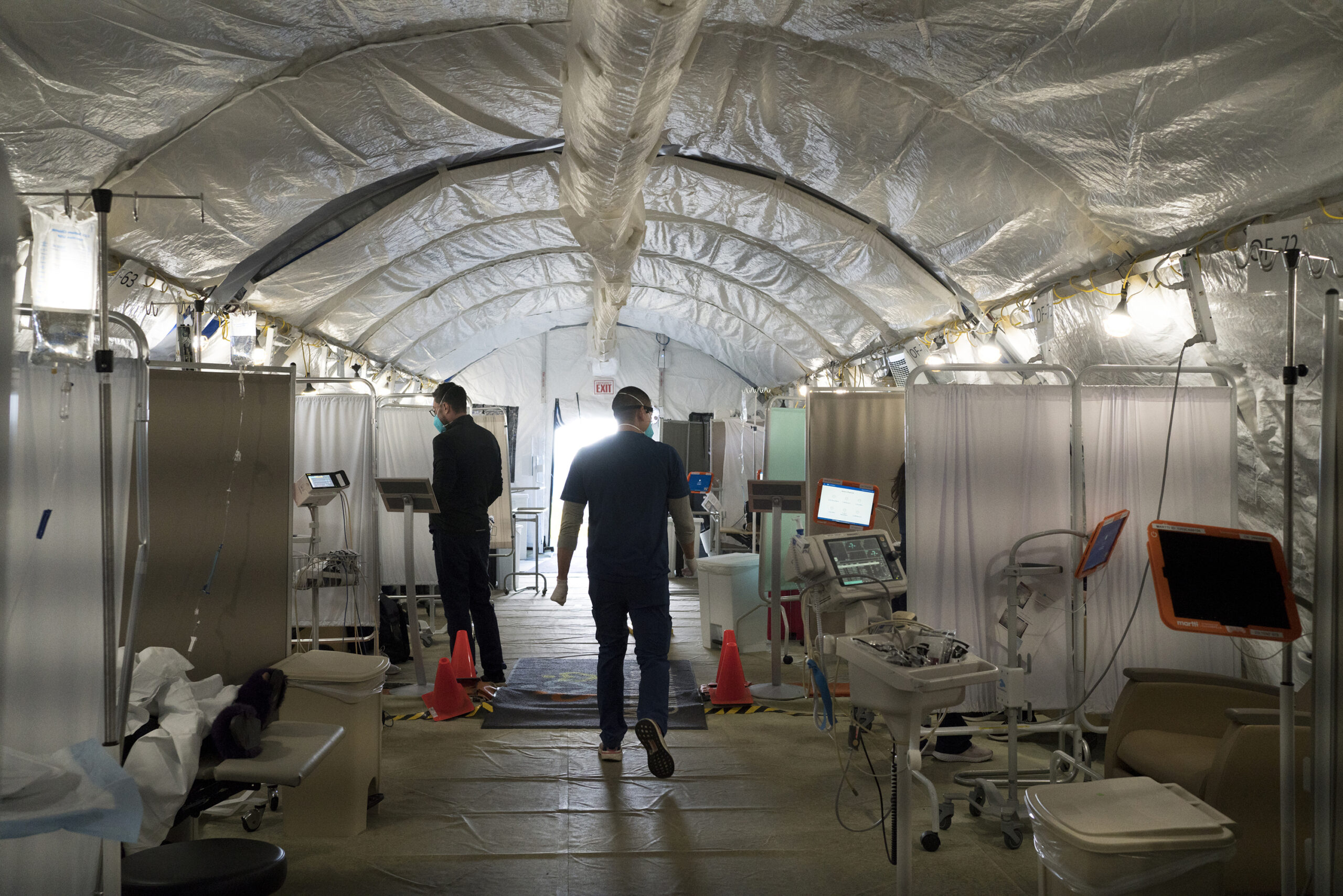
MALAYSIA’S healthcare system is approaching a critical crossroads. If you have visited a public hospital lately, you are probably familiar with the scenes such as crowded hallways, weary faces and waiting areas packed to capacity.
According to Ministry of Health Malaysia, public hospitals often operate at over 83% bed occupancy, with some wards reaching 100%.
While our healthcare professionals work tirelessly, the data reveals a harsh reality where merely adding more beds can no longer accommodate the patients.
Hospitals must function as a coordinated system rather than a collection of departments. To do this, we can look at a place that manages chaos with precision, which is the airport.
Most of us have been to an airport at least once. Thousands of individuals work in this high-stress environment which also have tight schedules and strict safety protocols.
However, they still can function smoothly. Have you ever wondered why? It is not because airports have more space, but because they are design as a system of flow.
At a first glance, it may be hard to relate airports and hospitals. One is for travel while the other is for life and death. However, both involve complex systems that coordinate people, equipment and time under constant uncertainty.
Even the outcomes are different, the operational challenges of logistics, queues and resource allocation are similar. However, in Malaysia, the “Airport Model” has rarely move beyond theory into reality.
Think about the last time you took a flight. As soon as you entered the terminal, you looked at a large screen, which is the departure board.
It told you exactly where to go and if there was a delay. This information helps to ease your mind and helping you plan your journey.
Now, compare this to the experience in a Malaysian hospital. A patient arrives at the clinic, often wandering through the lobby unsure of which department matches their symptoms.
Without clear guidance, their medical concern quickly turns into a confusing and exhausting maze. Shortages of staff worsen the problem.
Malaysia’s nurse-to-patient ratio, currently at 1:20, remains below the World Health Organization (WHO) recommendation of 1:8, leaving nurses unable to provide constant updates.
If hospitals implemented digital patient-flow tracking, similar to how airports track luggage, patients and staff could see real-time updates on queue lengths, bed availability and estimated waiting times.
This system reduces stress, improves communication, and allows healthcare workers to focus on care rather than logistics.
The ‘reactive’ vs. the ‘predictive’
The issue in our hospitals is not about lack of medical expertise but is in system design and operational intelligence. Airports use modern Airport Management Systems (AMS) to predict congestion before it happens.
Hospitals, in contrast, often respond “reactively.” We often wait for the fire to start before we look for water. Airports, however, use data to make sure the fire never starts in the first place.
Predictive modelling and simulations, as used in airport design, could be applied to patient flow in hospitals, identifying peak times and optimizing staff schedules in advance.
Some people may worry that making a hospital efficient like an airport will make it feel cold. In fact, efficiency and empathy can coexist.
When a hospital system function smoothly, staff spend less time answering repetitive questions or managing queues.
This allows doctors and nurses to focus on patients, listening carefully and providing personalized care.
For example, by using digital dashboards to allocate beds and track patient flow, a nurse can spend five extra minutes with each patient rather than updating charts or guiding patients manually.
Efficiency in this case creates space for empathy. An automated system can be cold, but it creates the space for healthcare to be warm.
The path forward
In Malaysia, we often prioritize buying the latest expensive medical equipment over designing the flow of the building. Patient flow issue is often neglected although it is a solvable engineering problem.
A simulation of passenger flow is often conducted before a new airport is built and bottlenecks are fixed before construction. Biomedical engineers and healthcare planners must adopt the same approach.
Hospitals should be treated as systems where workflow, spatial layout, and digital integration are as important as machines.
Pilot programs can be implemented in one department, testing predictive software and patient-flow dashboards before scaling across the hospital.
Malaysia does not just need more hospitals, it needs smarter ones. By investing in digital systems, hospitals can reduce waiting times and prevent crises before they occur.
Hospitals that integrate predictive analytics could see average waiting times drop by 30%, while staff would have more time for patient care, improving satisfaction and safety.
Hospitals do not need to become airports. A hospital will always be a place of healing. But by adopting the airport’s mastery of flow and information, we can make our hospitals safer, more dignified and ultimately, more humane for all.
Nur Qhamarina Ahmad Sanusi is a final year student at the Department of Biomedical Engineering, Faculty of Engineering, Universiti Malaya.
The views expressed are solely of the author and do not necessarily reflect those of MMKtT.
- Focus Malaysia.
No comments:
Post a Comment
Note: Only a member of this blog may post a comment.