Lawyer Salim Bashir says it would be ‘preposterous’ if a public prosecutor is able to discontinue proceedings after a prima facie case has been established.

Criminal practitioners also called for clear limits on the public prosecutor’s powers, particularly as regards the discontinuance of criminal proceedings that have advanced to the defence stage.
They said granting unrestrained power to the office holder would deprive trial judges of any real discretion when the public prosecutor applies either for a full discharge or for a discharge not amounting to an acquittal (DNAA).
Lawyer Salim Bashir said it would be “preposterous” to allow the public prosecutor to seek a discontinuance after a prima facie case has already been made out against an accused.
“The trial judge would have painstakingly scrutinised all relevant evidence and facts using the maximum evaluation approach to determine whether the prosecution has proven every ingredient of the charge,” he said.
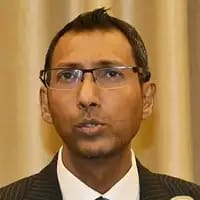
Salim said a discontinuance at the defence stage would show scant regard for the court’s judicial efforts and result in a waste of witnesses’ time and taxpayers’ money.
“Currently, the only option available to the judge is whether to grant a DNAA or order the unconditional acquittal of an accused when a case is withdrawn, irrespective of the trial stage,” he said.
Salim was commenting on the Constitution (Amendment) (No. 2) Bill 2026, which seeks to transfer wholesale the unfettered prosecutorial powers of the attorney‑general to the newly created office of public prosecutor, including the power to discontinue ongoing criminal proceedings under Article 145(3) of the constitution.
The bill, which also addresses the appointment, remuneration and tenure of the public prosecutor, is expected to be debated in the Dewan Rakyat in June.
Lawyer A Srimurugan said the existing discretion vested in the public prosecutor to decide whether to bring charges against a suspect after reviewing investigation papers should be retained.

“That option must be available to him on grounds of public policy. It would be better if he explains his decision in high‑profile public interest cases,” he said.
Srimurugan agreed that the public prosecutor should only be allowed to exercise his absolute power to withdraw charges before the close of the prosecution’s case.
He said, once the defence is called, any discontinuance should be subject to the trial judge’s discretion.
“Otherwise, the withdrawal would be interpreted as the public prosecutor overruling the court’s decision that a prima facie case has been made out against an accused,” he said.
Lawyer K A Ramu said criminal trials are brought on behalf of the public against an accused person, with each party playing a distinct role.

“The public prosecutor is the custodian of law and order whose role is to ensure that nobody is above the law,” he said.
Ramu said the prosecution is obliged to prove its case beyond a reasonable doubt to secure a conviction, while the accused must raise a reasonable doubt to earn an acquittal.
Both the accused and the public are entitled to justice, he said, adding that once the defence has been called, the public has a legitimate expectation that a criminal case will be seen through to its conclusion.
Ramu also called for the amended law to require the public prosecutor to submit an annual report to Parliament. - FMT
No comments:
Post a Comment
Note: Only a member of this blog may post a comment.