
The Thean Hock Keong temple in Penang tried to host a Hari Raya open house but found that the event was blocked. The reason offered? Authorities claimed it could “confuse Muslims”.
The temple had gone out of its way to be accommodating: all food was halal, local mosque leaders were consulted, promotional materials were revised, and every effort was made to respect sensitivities.
However, the authorities treated the Malay community as if they were incapable of distinguishing hospitality from religious threat.
Many Malaysians realise that this is not an isolated incident. It is part of a long-standing pattern in Malaysia, where the majority Malay-Muslim population is routinely treated as fragile, childlike, and in need of constant supervision.
Are we at risk of becoming a religious nanny state, whereby harmless words, gestures, meals, and symbols are policed under the guise of “protection” and “preventing confusion”? A few will claim that we have become one.
Here are a few “confusing” incidents that have accumulated over the years:
A cross outside a church was removed because it might “confuse Malay youths”.
Malay-language Bibles, used by indigenous Christians in Sabah and Sarawak for generations, have been seized or restricted.
The word “Allah”, a centuries-old term in Malay Christian worship, has been banned in publications.
Greetings, like “Merry Christmas” or acknowledging Valentine’s Day, have been flagged as potentially confusing.
Food and dress are not exempt: hot dogs, or root beer, gymnastic leotards or one-piece swimsuits have been treated as potential dangers.
I also learned from a friend that a school Parent-Teacher Association dinner at a halal Chinese restaurant was criticised because some Malay parents feared that the waiters’ hands might have touched pork at home.

Why are the names of some foods, words, symbols, and even a simple dinner, treated as dangerous? In every instance, there has been no evidence of mass confusion, conversion, or social collapse.
The Malay population is being infantilised, treated as if incapable of understanding nuance, reasoning responsibly, or distinguishing harmless cultural gestures from religious threats.
Control mechanisms
Let us be blunt: this is not about faith or protection. This is about control.
Control over language. Control over religious symbols. Control over what Malays can see, say, or do in public spaces. Control over interaction with other communities. Ultimately, control over political power.
The majority Malay-Muslim population forms the political bedrock of the ruling elite. Any loosening of boundaries, however benign, is perceived as a threat to this structure.
By repeatedly framing Malays as fragile or easily misled, authorities justify constant oversight. They cast themselves as guardians of morality, while treating ordinary citizens like children who cannot be trusted. This is systematic patronisation disguised as care.
The long-term consequences of these control mechanisms are profound. Children risk growing up in a world where every word, gesture, and meal is scrutinised. This will internalise fear and rigidity.
They will become adults who see difference as dangerous, who distrust those outside their immediate community, and who accept extreme restrictions as normal. Today’s “protection from confusion” is tomorrow’s ultra-conservative, intolerant society.
Islam, like most major faiths, emphasises reason, personal responsibility, and trust in human capacity. However, this system treats Malays as incapable of discernment or judgment. It replaces trust with control and faith with fear, and this cannot be right.
The real problem
The irony is clear. Authorities encourage Bahasa Malaysia as the national language, yet when Malay-speaking Christians, like the Ibans, use it in worship, they are “confusing”.
They insist on strict halal observance and monitoring of meals, yet a simple gesture of hospitality is treated as a potential threat.
They claim to protect faith, but the real aim is to keep people in line, maintain social predictability, and protect political dominance.
True unity, tolerance, and understanding cannot be achieved through fear, restriction, or moral policing. They are nurtured when people are trusted to engage, reason, and coexist. If a shared meal, a word, a cross, or a greeting can “confuse” Malays, the problem is not the interaction itself.
The real problem lies in the persistent, patronising mindset of control that refuses to treat citizens as capable, informed adults.
As a child, my experience was that inter-ethnic life in schools was more organic. At break time, Malay, Chinese, Indian, and Eurasian students often shared food. There was a simple understanding of boundaries; pork was not offered to Muslim classmates, and beef was not shared with Hindu friends. Interaction was open and natural.
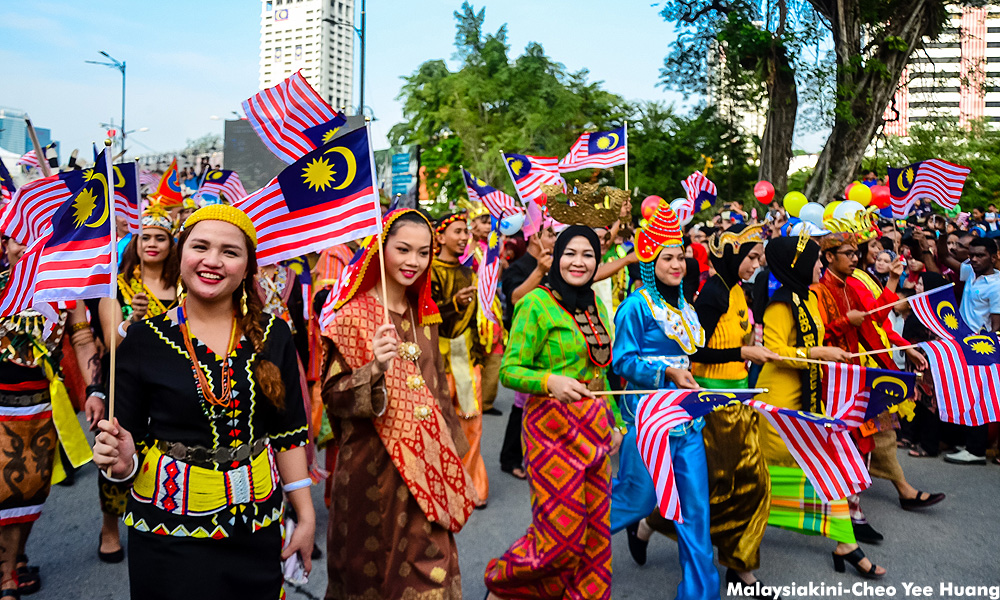
That environment required little regulation, and as children, we learned through everyday experience how to balance differences with respect. The resulting generation grew up broadly tolerant, adaptable, and comfortable with diversity.
Social cohesion
Today, those interactions that were once handled naturally through social understanding are increasingly subject to scrutiny and official control. What was once built through trust is now often conditioned by rules and oversight.
The issue is not whether sensitivities should be respected, because they always were, but whether replacing everyday trust with increasing control strengthens cohesion or slowly erodes it.
Malaysia cannot hope for genuine social cohesion while its leaders treat its majority population like children to be supervised at every step. The real danger is not cultural interaction, but a religious nanny state that masks power and control as concern and protection.
Until we confront this truth, walls will continue to rise, suspicion will deepen, and the very unity that authorities claim to protect will remain elusive. - Mkini
MARIAM MOKHTAR is a defender of the truth, the admiral-general of the Green Bean Army, and the president of the Perak Liberation Organisation (PLO). Blog, X.
The views expressed here are those of the author/contributor and do not necessarily represent the views of MMKtT.
No comments:
Post a Comment
Note: Only a member of this blog may post a comment.