
Media reports that the Court of Appeal has dismissed a preliminary objection by the Attorney-General’s Chambers (AGC) and, in turn, held that the Malaysian Bar’s appeal for leave to challenge the AG’s decision to secure a discharge for Deputy Prime Minister Ahmad Zahid Hamidi from his corruption case will proceed.
The Bar’s argument via lawyer Ambiga Sreenevasan hits on a massive legal and ethical nerve in Malaysia. By calling the decision a “betrayal”, she’s pointing to the sheer amount of work and tax-funded resources that went into the case before it was pulled.
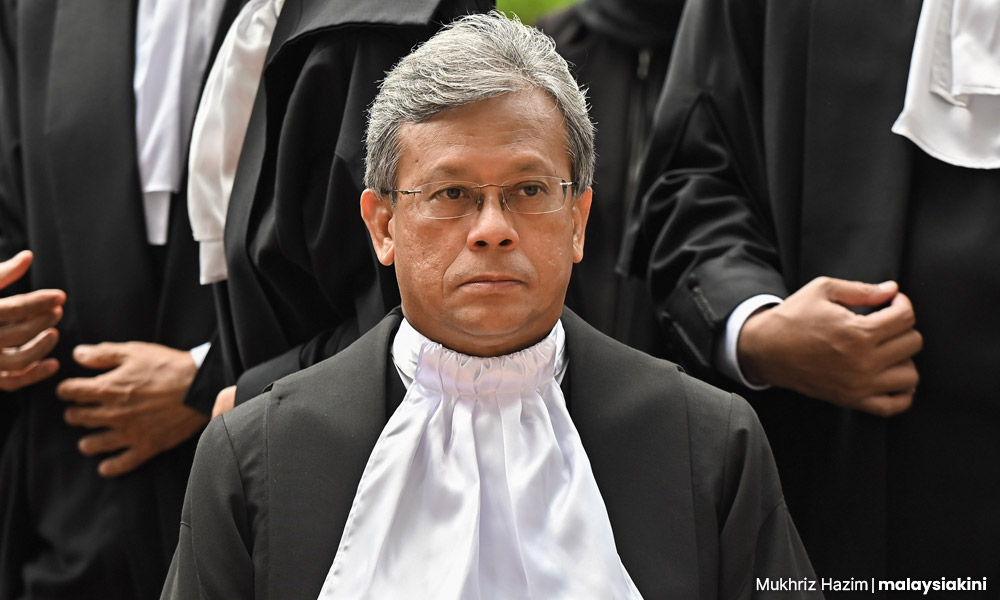
It is very hard not to agree with Ambiga on this point. After all, Zahid was called for defence for his 47 criminal charges involving several crimes, including corruption, when the trial judge Collin Lawrence Sequerah was fully satisfied that the prosecution managed to establish a prima facie case against all 47 criminal charges against Zahid.
Under criminal law, in calling any accused person for a defence, the judge has to undertake a maximum evaluation of all the evidence presented by the prosecution team at the prosecution stage.
Only upon such a maximum evaluation exercise, the judge will rule whether the prosecution has managed to establish a prima facie against the accused person, such as Zahid.
Enough credible evidence
When Sequerah ordered Zahid to enter his defence in 2022, he legally ruled that the prosecution had produced enough credible evidence to convict him on all 47 counts if that evidence went unrebutted.
Assuming Zahid elected to remain silent, he would have been found guilty as charged. But Zahid elected to enter the defence by giving sworn testimony and calling several witnesses on his behalf.
By the time the AGC pulled the plug, the trial had consumed 77 days of court time. With 99 prosecution witnesses and 15 defence witnesses already on the record, the judge was very close to having everything needed to make a final ruling of "guilty" or "innocent."
While the trial judge categorically stated that the court did not question the AG’s powers as public prosecutor to institute and discontinue proceedings under Article 145(3) of the Federal Constitution and Section 254(1) of the Criminal Procedure Code (CPC), he nonetheless remarked that much precious judicial time and significant public funds would be wasted if the prosecution were to decide in the near future not to proceed with the charges.
Yes, people expected Zahid to be recharged because the verdict is a discharge not amounting to an acquittal (DNAA).
‘Insufficient evidence’
Nonetheless, on Jan 8, the AGC dropped a new bombshell by indicating that the Yayasan Akalbudi case involving Zahid had been classified as requiring no further action (NFA) due to insufficient evidence following MACC investigations.
Needless to say, the reason proffered by the AGC in issuing NFA due to insufficient evidence is, with due respect, laughable. How can evidence be "insufficient" for a trial that a High Court judge had already ruled was strong enough for Zahid to be called for defence?
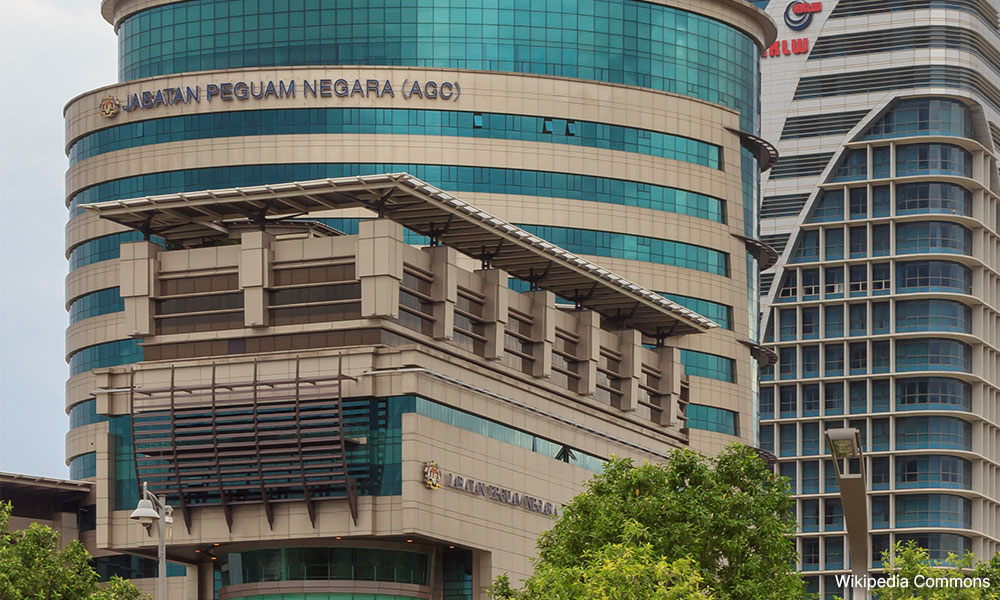
Sequerah had already legally certified that the prosecution's evidence against Zahid on all 47 charges was solid. By issuing an NFA, the AGC is essentially contradicting a sitting High Court judge’s assessment of that same evidence.
If the evidence was truly insufficient, it shouldn't have taken 99 witnesses and three years of trial to figure that out. To claim a lack of evidence after the prosecution rested its case feels like a revisionist take on the trial's own records.
or the public and the Bar, the "insufficient evidence" label feels like a convenient exit ramp rather than a legal reality. It definitely ignores the fact that the prosecution had already surpassed the highest hurdle in a criminal trial - the prima facie stage.
Anyway, the Court of Appeal’s latest decision yesterday is a major pivot point. By dismissing the AG’s preliminary objection, the court has officially cleared the way for the Bar to argue the merits of their challenge against Zahid’s DNAA.
The Court of Appeal has scheduled April 15, 2026, to hear the full merits of the Bar’s appeal. If they win this, the High Court will be forced to hear the judicial review it originally dismissed in 2024.
Assuming the judicial review eventually succeeds, the court could quash the AG’s decision to discontinue the case. This would effectively "reset" the clock, potentially forcing Zahid back into the dock to face the trial exactly where it left off - at the defence stage. - Mkini
HANIPA MAIDIN is a former deputy minister of law.
The views expressed here are those of the author/contributor and do not necessarily represent the views of MMKtT.
No comments:
Post a Comment
Note: Only a member of this blog may post a comment.