A switch can fail. A sensor can malfunction. But wider operational safeguards are supposed to prevent a single failure from escalating into a derailment.
From Wan Agyl Wan Hassan
A train derailment in the middle of Kuala Lumpur’s rail network should never become an event that Malaysians view as “normal”, because modern rail systems are built with one important assumption: individual components may occasionally fail.
What matters is whether the wider safety architecture is strong enough to prevent that failure from escalating into a dangerous incident.
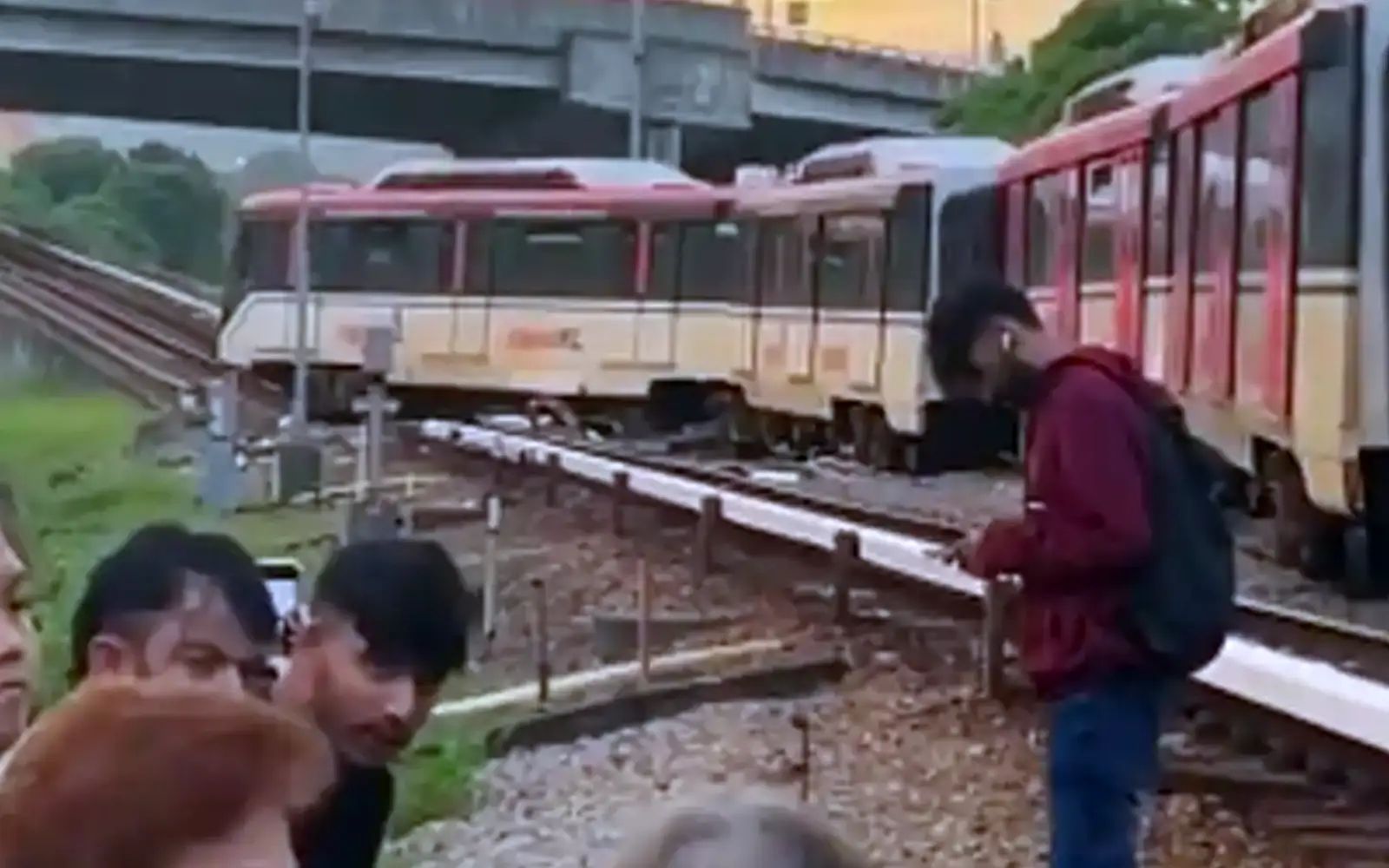
According to Rapid KL’s official statement, the derailment on the Ampang-Sri Petaling Line near the Chan Sow Lin station occurred after the train encountered a “track switch malfunction” while passing through a switch zone. Thankfully, all passengers on board were safely evacuated without injuries.
Preliminary public explanations suggest there may have been a mismatch between train movement authorisation and track switch alignment.
If investigations ultimately confirm this sequence, the issue would extend beyond a single faulty component to the broader question of operational synchronisation and fail-safe protection.
For ordinary commuters, these technical terms may sound distant or overly engineering-focused. But they matter because every day, millions of passengers step into trains trusting that the invisible safeguards behind the network are functioning exactly as intended.
That trust is the foundation of every modern public transport system.
In railway operations, switch zones are among the most safety-critical parts of the network because they control how trains move between different track alignments. In simple terms, the train, the signal, and the physical track must all “agree” with each other at precisely the same moment.
If that coordination breaks down, the risks increase immediately. This is why rail networks are designed around fail-safe principles and multiple layers of protection.
A switch can fail. A sensor can malfunction. Software can experience faults. But the wider operational safeguards are supposed to prevent a single failure from escalating into a derailment.
After this incident, the more important question might not simply be “What failed?”, but rather “Why didn’t the other protection layers stop the failure from escalating?” This distinction matters because Malaysia’s urban rail ecosystem is becoming increasingly complex as networks grow larger, busier, and more interconnected.
The concern is not that one component may have failed, but whether increasingly complex rail operations are evolving faster than the maintenance discipline, engineering resilience, and operational safeguards designed to contain failures safely.
This challenge is not unique to Malaysia. Singapore’s MRT system underwent major maintenance reforms after the 2011 disruptions exposed the pressures of operating an increasingly dense and ageing rail network.
London Underground continues investing billions not merely to expand its services, but to modernise signalling systems and renew ageing operational assets to maintain reliability under intense daily demand.
Globally, the lesson is consistent: major rail incidents rarely emerge from one isolated issue alone. They usually occur when multiple layers of coordination, resilience, or protection weaken simultaneously.
To the government’s credit, the immediate formation of a special task force and the strong public emphasis on accountability show recognition that this incident cannot be treated as “business as usual.”
But accountability alone is not enough. In my view; Malaysia must now strengthen focus on:
- systems resilience,
- predictive maintenance,
- signalling and interlocking assurance,
- engineering capability,
- operational redundancy,
- and long-term asset lifecycle governance.
Public confidence in rail systems is not built through announcements or megaproject launches alone. It is built on the belief that even when something goes wrong, the wider network is still resilient enough to protect passengers safely.
Once passengers begin questioning whether those invisible safety layers are still dependable, rebuilding public confidence becomes far harder than repairing tracks or replacing equipment. - - FMT
Wan Agyl Wan Hassan is the founder and senior adviser of MY Mobility Vision, a transport think tank.
The views expressed are those of the writer and do not necessarily reflect those of MMKtT.
No comments:
Post a Comment
Note: Only a member of this blog may post a comment.