
On social media, the word “sakau” - which does not appear in the royal commission of inquiry report investigating the management and operations of Lembaga Tabung Haji from 2014 to 2020 - has become a subject of debate.
Although the report exposed widespread governance failures, particularly in matters involving critical financial risks, political interference, and improper transactions, some have seized the opportunity to make sarcastic remarks by highlighting the word “sakau”, or theft, popularised by Prime Minister Anwar Ibrahim.
The RCI report contains the findings of its investigation and recommendations to improve TH’s management and operations.
It was prepared for presentation to the then 16th Yang di-Pertuan Agong, Pahang ruler Sultan Abdullah Ahmad Shah.
Malaysiakini highlights five key takeaways from the RCI’s disclosures that warrant attention:
(1) Excessively high bonuses
In the report, the commission found that high bonus payments to Tabung Haji employees and to the TH Properties board of directors did not comply with regulations.
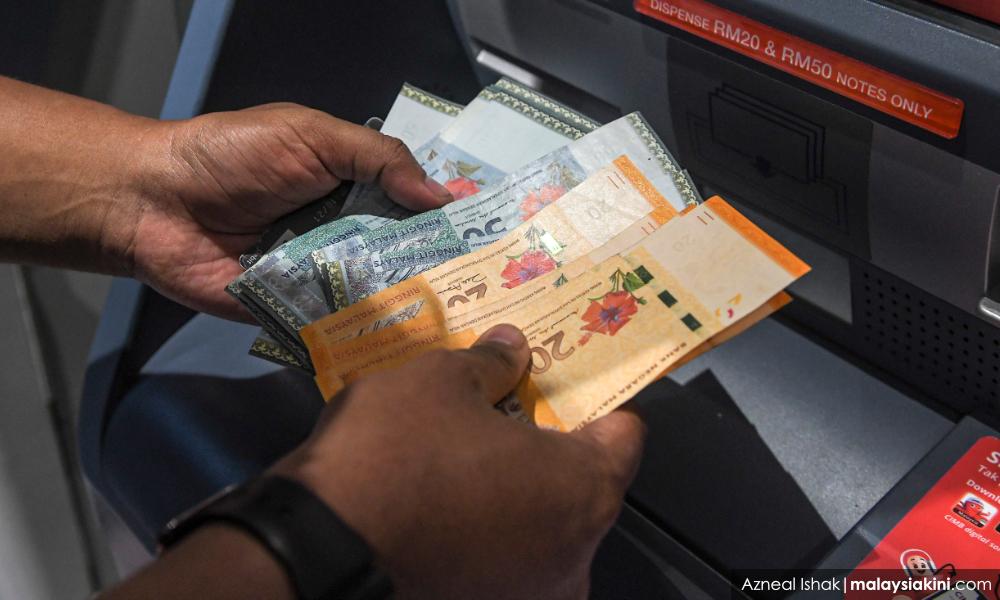
A total of RM2.19 million in bonuses was paid to several directors and selected officers of TH Properties Sdn Bhd, a subsidiary, without complying with the prescribed legal procedures.
According to the 252-page report released last night, bonus payments made by TH Properties in 2017 and 2018 breached provisions under the Companies Act 2016 because the required shareholder approval and resolutions were not obtained.
The RCI also found that unjustified and excessively high bonuses were paid from 2014 to 2017.
In addition, evidence from the Finance Ministry showed that the excessive bonus payments during this period required the finance minister’s approval, who at the time was then prime minister Najib Abdul Razak.
According to the report, Tabung Haji paid RM367.7 million in bonuses between 2010 and 2017, which the commission described as “extremely high”.
However, it said the RM220.7 million in bonuses paid between 2014 and 2017 were not only extremely high but also lacked justification.
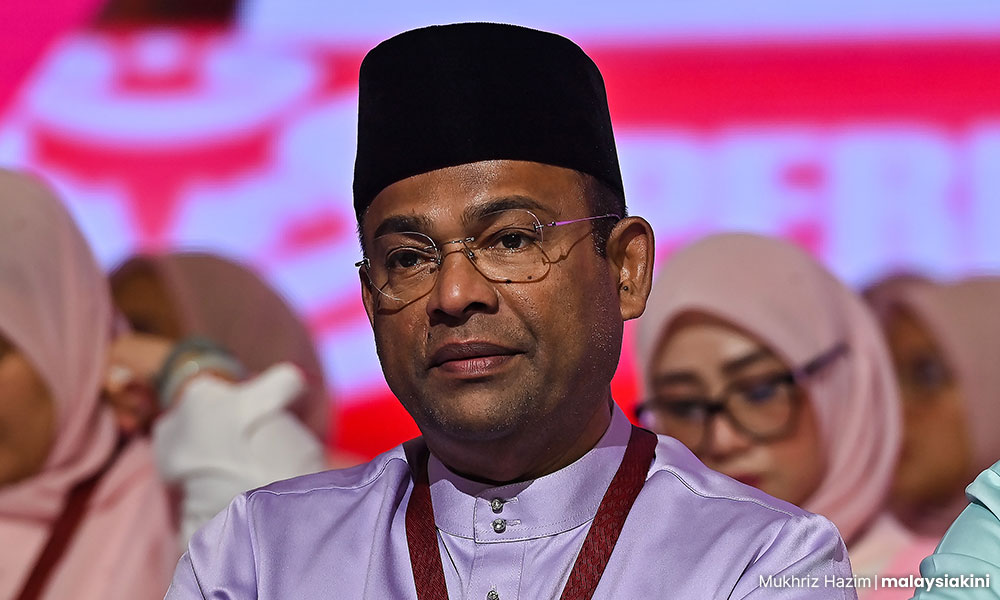
The bonuses were paid to executive and non-executive employees. However, the RCI did not provide a breakdown of the bonuses received by executives, including Umno leader and then Baling MP Abdul Azeez Abdul Rahim, who served as Tabung Haji chairperson from 2013 to 2018.
(2) Political interference, Umno leaders on the board
The broad provisions allowed for the appointment of a Tabung Haji chairperson and several board members from among politicians between 2014 and 2018.
Politicians’ involvement in Tabung Haji’s management caused public unease due to political conflict. This allowed certain parties to use Tabung Haji’s decisions as material for criticism, damaging the institution’s credibility.
Several Tabung Haji decisions, including profit distribution payments (hibah), the setting of pilgrimage fees, and the Hajj Financial Assistance scheme (Hafis), were influenced by political considerations.
In addition, the Tabung Haji Act gives the religious affairs minister the power to terminate the appointment of any board member at any time without providing a reason.
The minister exercised this power to terminate Nik Hasyudeen Yusoff’s service as chief executive officer on May 5, 2021, before his term ended on Aug 31, 2021.
The same power was used to terminate Nor Yusof’s service as board chairperson on Oct 15, 2021, before his contract expired on July 20, 2022.
The provision allowing the immediate termination of any board member without reason is no longer appropriate under present circumstances, the RCI report said.
The RCI also found that during the period under investigation, several board members were politicians. They included Azeez, who was at the time a member of the Umno supreme council.
He was appointed to the board of directors in 2011 and subsequently served as chairperson from 2013 to 2018.
Badruddin Amiruldin, who was also the Jerai MP and permanent chairperson of the Umno general assembly, served on the board of directors from 2005 to 2018.
Another individual, Rosni Sohar, who was the Hulu Bernam assemblyperson, an Umno supreme council member, and Umno women’s wing secretary, served on the board from 2014 to 2018.
The commission therefore found that the involvement of politicians in Tabung Haji’s management had created various public perceptions.
(3) Act no longer suitable
On June 1, 1995, the Pilgrims Management and Fund Board was abolished and replaced by Tabung Haji under the Tabung Haji Act.
The Act comprehensively provides for Tabung Haji’s functions, regulation, management, and operations.
However, several provisions in the Tabung Haji Act are no longer suited to current circumstances because they grant the minister extensive powers. These powers cover pilgrimage operations, funds, and investments.
The minister responsible is the minister in the Prime Minister’s Department in charge of religious affairs. The commission found that the expertise of the three ministers who oversaw Tabung Haji during the period under investigation was limited to religious affairs.
This limitation meant the ministers depended entirely on proposals submitted by TH’s management and board to carry out their responsibilities for fund management and investments.
As a result, the ministers did not receive any additional input before making decisions on fund management and investments.
The situation might have been different if responsibility for Tabung Haji’s fund management and investments had been placed under the finance minister.
The commission therefore believed that ministerial powers to regulate Tabung Haji should be shared between two ministers - the religious affairs minister and the finance minister.
The Tabung Haji Act also gives the minister the power to appoint the chairperson and board members. Section 6(2) of the Act only stipulates that the chairperson or board member must be a Muslim and a Malaysian citizen.
The commission found that there was no explanation of the specific criteria an individual must meet before being appointed as chairperson or a board member.
(4) Critical financial crisis
The findings of the RCI report also revealed that the Islamic financial institution faced a critical financial crisis in 2017, with a deficit gap between its assets and liabilities dating back to 2014.
Had the Malaysian Financial Reporting Standards been fully applied for the 2017 financial year, Tabung Haji should have recorded a net loss of RM1.4 billion.
Instead, it reported a profit of RM3.4 billion in its 2017 financial statements.
This showed that Tabung Haji’s financial position was critical during the 2017 financial year.
The financial crisis became more apparent when the auditor-general reprimanded Tabung Haji over several inconsistent changes to its financial asset impairment policies in the 2017 financial year, during which the impairment policy was changed twice.
The auditor-general’s “emphasis of matter”, dated July 16, 2018, stated:
“Tabung Haji’s method of determining its financial asset impairment policy was inconsistent. The impairment policy was updated annually, particularly during the financial year ending Dec 31, 2017, when it was updated twice.
“For the financial year ending Dec 31, 2017, Tabung Haji did not record impairments totalling RM227.81 million on investments in three subsidiaries and three associate companies. This included an investment of RM164.58 million in TH Heavy Engineering Berhad.”
Following the auditor-general’s reprimand, Tabung Haji’s management appointed PwC to conduct a financial review of its financial position from 2014 to 2017.
PwC’s review found that there had been a deficit gap between assets and liabilities since 2014. Its findings included:
Tabung Haji did not recognise impairments on investments in associate companies.
It did not recognise impairments on investments in and financing provided to subsidiaries.
The fund did not recognise impairments on fixed-income instruments.
It did not comply with FRS 140 standards relating to declines in fair value or fair-value losses on property investments.
For the 2017 financial year, Tabung Haji distributed hibah without taking into account the impact of impairments and declines in the fair value of investments.
The fund recorded dividend income from subsidiaries even though the dividends were not paid to the fund.
The commission found that the factors contributing to the financial crisis included high hibah payments from 2014 to 2017 that exceeded Tabung Haji’s financial capacity, “creative” accounting, the auditor-general’s lack of firmness, the fund’s vision of serving as a pillar of the Muslim economy, and its Hafis obligations.
(5) Repeated warnings from Bank Negara
Bank Negara issued several warnings to Tabung Haji through letters addressed to Azeez dated Aug 21, 2014, Dec 19, 2014, and Dec 23, 2015.
Bank Negara subsequently wrote to the minister on Dec 23, 2015, raising issues concerning deposit-taking and liquidity management, large depositors, and Tabung Haji’s reserves.
The central bank’s warnings showed that concerns had already been raised with Tabung Haji’s administrators and management.
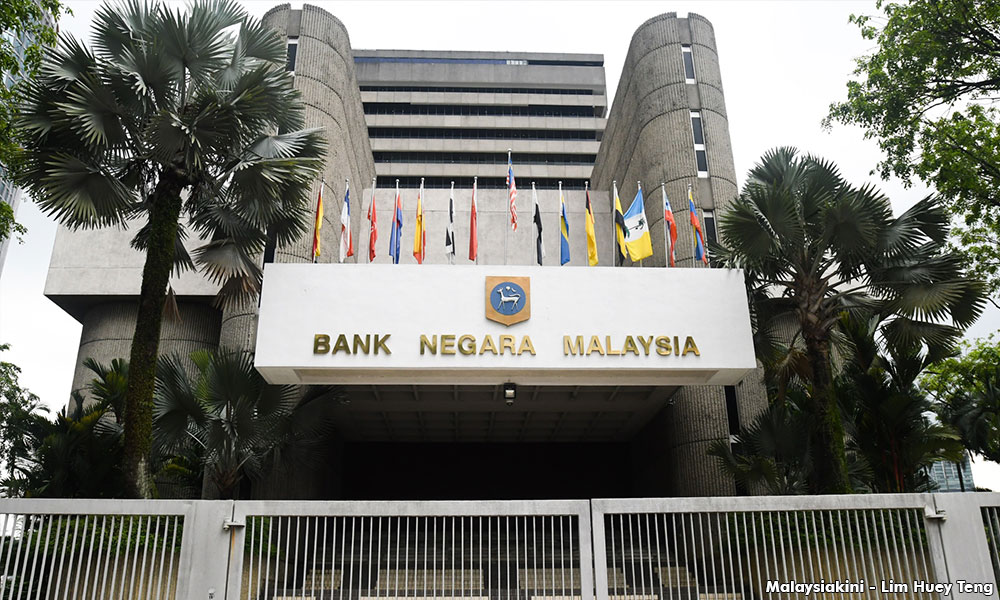
However, the RCI report did not provide details of the responses or follow-up action taken after the warnings.
However, Bank Negara started monitoring Tabung Haji following the warnings, even though it was not directly under its regulatory control, due to its high level of interconnectedness with the national financial system. - Mkini
No comments:
Post a Comment
Note: Only a member of this blog may post a comment.