
In conjunction with the DAP conference and PKR congress, I have written to both Penang Chief Minister Chow Kon Yeow and Selangor Menteri Besar Amirudin Shari, calling them to introduce “democratically appointed non-constituency seats” (Dancs) as an institutional remedy to Malay anxieties.
Dancs is similar to the closed-list proportional representation (CLPR) seats, and adding Dancs to the existing first-past-the-post (FPTP) seats creates a mixed-member majoritarian (MMM) system as in Thailand, Japan, Taiwan and Nepal.
Voters in these countries are given two ballots, allowing them to vote for different parties under the FPTP and CLPR systems.
In the proposed Dancs, voters can only vote for FPTP, but their votes would then be aggregated to allocate Dancs, limiting their options.
This is because Article 117 of the Federal Constitution stipulates that every constituency can only elect one assemblyperson and hence prohibits CLPR/Dancs which requires multiple seats in one constituency.
The whole idea of Dancs is exactly for Malaysians to see and experience how CLPR works and would in the future, demand the amendment to Article 117 to usher in the two-ballot MMM system.
This has triggered some discussion on electoral system change. Some mistake Dancs for Singapore’s group representation constituency (GRC), while others think that Malaysia should instead emulate Singapore for GRC or Australia for preferential voting.
I welcome the growing interest in the electoral system and the opportunity to demonstrate why we should emulate Thailand instead of Singapore or Australia.
Singapore’s GRC
Singapore’s voters live in 15 single member constituencies (SMCs) and 18 GRCs to elect 97 MPs.
SMCs are just like our FPTP constituencies, electing one MP each, while GRCs are simply created by merging SMCs, having four to five MPs each, hence a fortified variant of FPTP.

1. How it works: GRC voters have one ballot to choose between parties, each party will nominate four or five candidates, and the winning party will take all seats while the losers get nothing.
Created with the stated intention to guarantee minority representation, each GRC is designated for either Malays or Indians and Others, and parties’ candidates must include one from the designated minority category.
As all candidates would be elected or defeated together, there is no ranking between them. However, in practice, the ruling People's Action Party (PAP) GRC candidates would be headed by a cabinet minister who helps secure government funds and projects, making it costly for voters to reject the PAP team for fear of losing a cabinet minister.
Hence, the opposition won the first GRC as late as 2011, in the sixth election after the system’s creation.
Junior MPs in GRCs and SMCs are tasked with running town councils that manage municipal services and run the Housing Development Board (HDB) flats. This effectively makes Singapore’s general election a fusion of national-municipal contest.
2. Why it won’t resolve Malay anxieties: Electorally, Malay anxieties are caused by the fear that multiethnic parties will win power in winner-takes-all elections and introduce sweeping changes against Malays’ communal interests when Malay-Muslim nationalist parties are split.
GRCs are basically FPTP on steroids, hence, the Malay anxieties would only grow worse. And the built-in minority representation in GRCs is no obstacle to Malay-Muslim nationalist parties winning power, as there is no shortage of minority candidates for these parties.
3. What’s the takeaway: We should retain the idea of ethnic quota and apply it across all constituencies but must throw out the winner-takes-all formula.
The seats in GRCs should be divided across parties. This simply creates CLPR seats with ethnic quota, which are fundamentally different from GRCs despite both having several MPs in one constituency.
Australia’s preferential voting
1. How it works: Australians elect only one MP from each constituency, as in FPTP elections in Malaysia, but they are allowed to rank all their candidates.
The system is designed to make sure the winners will always have majority support. It is an alternative to the two-round system used in presidential elections from France to Indonesia, where the top two candidates enter a run-off if no one wins a majority vote in the first round.
Also called “instant run-off”, preferential voting works by first counting the “first preference votes”.
If there is a majority winner, then it stops there, looking just like FPTP.
If there is no majority winner, then the weakest candidate would be removed, and votes cast for the candidate as the first preference would be transferred to other candidates based on their second preference. This process will continue until a majority winner emerges.
With some operational differences, preferential voting is called alternative vote (AV) in Australia and ranked choice voting (RCV) in the United States, which is the system in the Democratic Party’s New York mayoral primary, which Zohran Mamdani won last year.

RCV is the most popular substitute for FPTP in the US, which has produced many extreme winners in multi-cornered fights.
RCV works in America because centrist candidates are more likely to appear as the second or third preference alternative to other centrists. In other words, centrist candidates can pool their votes together to deny victory to the extremists.
2. Why it can resolve Malay anxieties but destroy Malaysia’s multiculturalism: Preferential voting would be a godsend to Malay-Muslim nationalists, who can easily run a “vote Muslims only” campaign.
It can turn most constituencies into an intra-Malay contest and immediately end Malay anxieties. It would produce the opposite outcome of GRC, a Parliament that looks more like our monoethnic bureaucracy, and destroy Malaysia’s multicultural social fabric.
3. What’s the takeaway: Nothing from preferential voting but everything from this reminder: “The road to hell is paved with good intentions.”
Thailand’s MMM
1. How it works: Thailand’s House of Representatives has 500 members, 400 of which are elected through FPTP and the remaining 100 are elected in a single national CLPR constituency.
Voters are given two ballots, one to choose their local FPTP parliamentarian and the other to choose a party for national CLPR lawmakers.
Every party can nominate 100 CLPR candidates, and the 100 CLPR seats would be divided between parties based on their vote share.
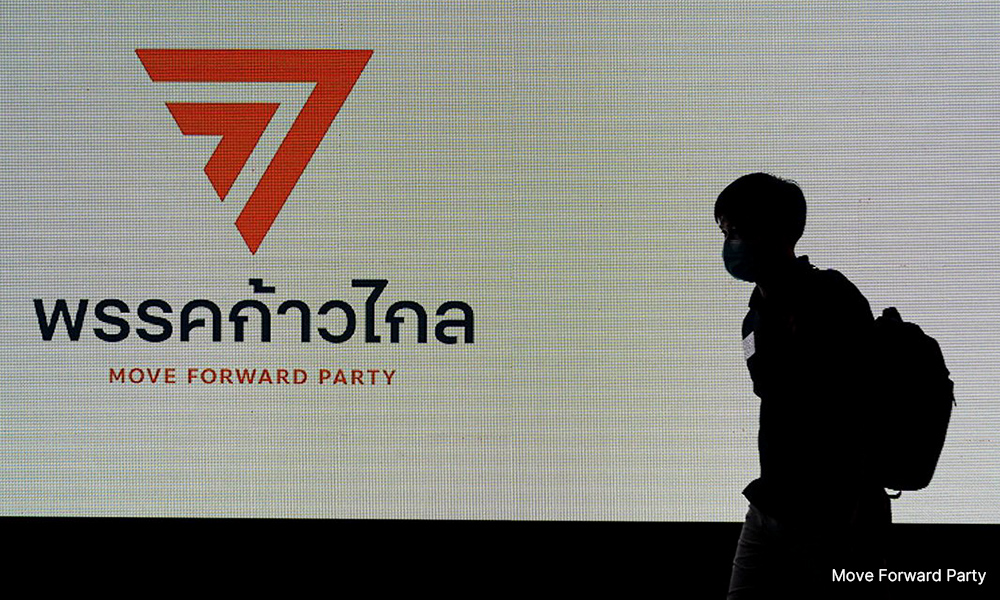
In 2023, the 100 CLPR seats were allocated proportionally to the parties, 39 for the young Move Forward Party (MFP) on 38 percent votes, 29 for Thaksin Shinawatra’s Pheu Thai Party (PTP) on 29 percent votes, and, 13 and three respectively, for the pro-military United Thai Nation Party (13 percent votes) and Bhumjatthai Party (three percent votes).
Combined with the FPTP outcomes, which favoured local notables with patronage machines, MFP overtook PTP as the largest party with 30.2 percent of total seats, without majority.
In February this year, Bhumjatthai overtook People’s Party (MFP’s successor) and PTP to become the largest party, but it also commands no majority, with 173 FPTP seats and 19 CLPR seats.
2. Why it can resolve Malay anxieties: With an MMM like Thailand’s, all Malay nationalist parties can compete safely against each other in the CLPR contests, without worrying about the dominance of Pakatan Harapan because the liberal-minority voters are more united than the Malay nationalists.
So, this dissolves the Malay anxiety 2.0 - Malays can have real choices, vote out those who steal their haj savings and Felda wealth, without worrying about a loss of power.
It would also benefit the liberal-minority voters who can choose between Harapan, Bersama, Muda, PSM and Warisan.
3. What’s the takeaway: We should adopt MMM, while questions like what percentage of CLPR seats and what vote share threshold for parties to qualify for CLPR seats can be debated later.
Ensuring that Malay nationalists can get representation through CLPR seats even if they contest against each other is important.
Are we condemned to communalism?
Singapore’s first prime minister Lee Kuan Yew’s pessimistic prediction that Malaysia can never overcome communal politics went viral soon after the Negeri Sembilan state election. This is a very essentialist view that we are just products of our history and political culture.
It is time that we ask: what are the institutional enablers of communalism in Malaysia? And what are the institutional remedies?
My calls to the Penang chief minister and Selangor menteri besar to introduce Dancs, as a proxy of CLPR, may fall on deaf ears.
However, Malaysians who refuse to be condemned to communalism must continue to debate and demand solutions, not just blame the problems. - Mkini
WONG CHIN HUAT is a political scientist at Sunway University and a member of Project Stability and Accountability for Malaysia (Projek Sama).
The views expressed here are those of the author/contributor and do not necessarily represent the views of MMKtT.
No comments:
Post a Comment
Note: Only a member of this blog may post a comment.