
The parliamentary special select committee must respond urgently to the Centre for Law and Democracy (CLD)’s global ratings and assessment regarding Malaysia’s Freedom of Information (FOI) Bill 2026.
Considering that the CLD’s review found the bill extremely weak and ranked it among the worst in the world, we call on the PSSC to take urgent action to bring it in line with international human rights law and standards.
The CLD assessment and rating, published on Aug 12, scored Malaysia’s FOI bill a dismal 47 out of 150 points (29 percent), based on the CLD’s Right to Information (RTI) rating indicators. This score places Malaysia 137th out of 142 countries worldwide that have RTI or FOI laws.
This finding reinforces the serious concerns our organisations raised, and it is evident that the FOI bill, tabled for its first reading in Parliament on July 13, fundamentally fails to meet international human rights law and standards.
The CLD analysis is scathing, stating that the bill “represents an extremely weak legislative effort” and, as the CLD observes, “This draft law earns Malaysia a tie for weakest performance among Southeast Asian countries, alongside the Philippines, but the latter is currently substantially upgrading its own legislation in this area.”
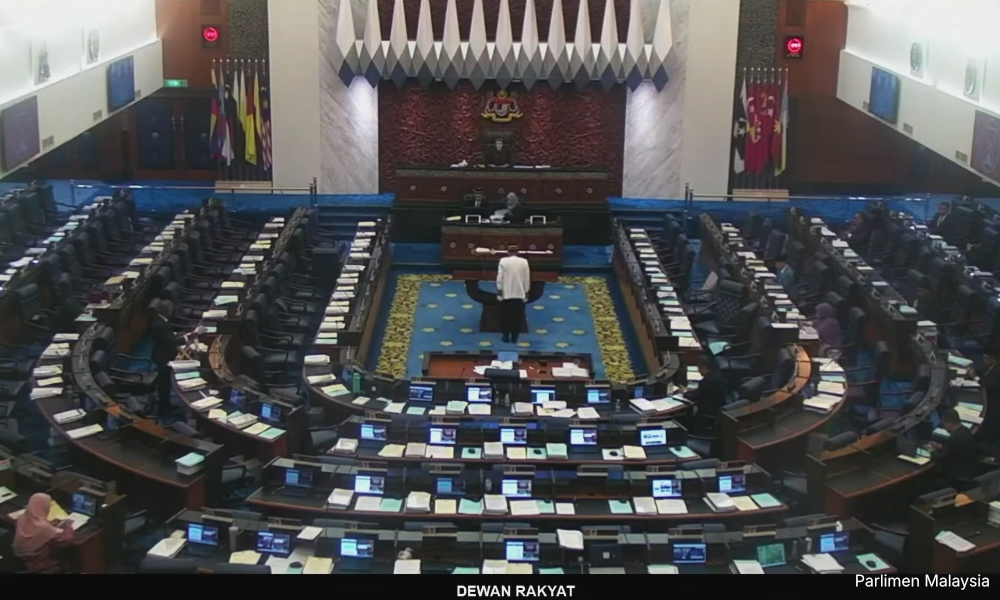
The CLD’s RTI rating system has been used to assess various RTI and FOI laws worldwide. The assessment sets out seven categories to encapsulate the fundamental requirements of an effective law. The scores for Malaysia’s FOI bill are as follows:
● Right of access - 17 percent
● Scope - 40 percent
● Requesting procedures - 13 percent
● Exceptions and refusals - 17 percent
● Appeals - 61 percent
● Sanctions and protections - 50 percent
● Promotional measures - 19 percent
Consider and rectify concerns
As the PSSC is performing their mandate, we see fit to reiterate our demands to ensure that all relevant concerns are adequately considered and rectified, and this is critical in light of the CLD’s objective external review echoing our criticisms:
1. Instead of establishing a right for members of the public to access information held by the government and introducing a culture of openness by default, the FOI bill preserves the supremacy of secrecy laws such as the Official Secrets Act (OSA) 1972.
With approximately 165 federal laws (approximately 25 percent of substantive federal laws currently in force) containing secrecy provisions, this risks leaving a vast body of government information beyond meaningful FOI access and scrutiny.
CLD analysis: Recognising this flaw, the CLD recommends that the bill should “set overriding standards...for all secrecy provisions such that provisions in other laws which do not conform to it are void, to the extent of that inconsistency”.
2. The list of exempted categories of information is excessively broad and unimpeded by essential safeguards, including a comprehensive harm test, a public-interest override, and meaningful severance or redaction provisions.
This creates a real risk that information concerning corruption, abuse of power, environmental harm or human rights violations could remain hidden even where disclosure is clearly in the public interest.
CLD analysis: CLD notes, “The FOI bill contains numerous exceptions which do not conform to international standards in the sense that they protect interests or provide for secrecy on grounds which are not recognised internationally”.
3. The FOI bill introduces unnecessary restrictions on the right to request information.
By restricting access to citizens aged 18 and above, supported by the use of national ID cards, imposing prescribed purposes and potentially criminalising the subsequent use of lawfully obtained information, the bill places unnecessary barriers between the public and information held by the government.

These restrictions, specifically the inclusion of criminal liability, will have a chilling effect and ultimately deter members of the public from seeking information in the first place.
CLD analysis: CLD describes these purpose restrictions as a “truly massive limitation” that is unknown in other RTI laws.
CLD notes that “the radically low score of just four points in the category of Requesting Procedures, normally an easy area to do well, is particularly disappointing. Only one other country does this poorly, namely tiny Palau.”
4. The FOI bill seeks to limit judicial interpretation of constitutional provisions by declaring that “nothing in this Act shall be construed as fundamental liberties under Part II of the Federal Constitution”.
A provision of this nature is deeply alarming and practically unheard of under Malaysian law.
Rather than expanding the legal understanding of the right to information under the constitutional guarantee of freedom of speech and expression and other fundamental liberties, the bill shockingly seeks to deny the existence of such a right, contradicting a long history of domestic jurisprudence and fundamental principles of international human rights law.
This clause also raises concerns about judicial independence and the separation of powers by seeking to deny the court’s role in interpreting constitutional provisions.
CLD analysis: The law should recognise the right to access information held by public authorities as a fundamental right, with clauses 6(2) and 22 being removed.
5. The FOI bill does not provide for any effective oversight or administration by an independent authority. Under the bill, the ombudsman established under the Ombudsman Act will conduct external review.
However, the ombudsman does not exist, and there is no clarity on when or how the position will be established. This effectively means the FOI framework will have no external oversight.

CLD analysis: CLD explains, “access to information is a highly specialised area, which requires the attention of a dedicated body” and that “extensive experience from countries around the world demonstrates that having a dedicated body focusing on information appeals, such as an information commission... is a much more powerful way of securing the right to information than allocating information oversight to a body which has a far more general mandate”.
Therefore, the FOI bill should establish a specialised Information Commission to oversee the implementation of the FOI framework effectively – “indeed, many much smaller and poorer countries have also done this”.
Comprehensive review
We emphasise that the FOI Bill 2026, in its current form, is widely denounced nationally and globally as deficient and will do little to remedy the entrenched culture of secrecy in Malaysia.
The government has repeatedly reiterated its commitment to combating corruption and improving governance, yet this bill does not reflect those stated ambitions.
It is not too late to re-draft this bill to ensure it aligns with international law and standards.
Malaysia deserves a genuine right-to-information law, not legislation that creates the illusion of openness or reform while preserving a culture of secrecy.
We therefore urge the PSSC to conduct a comprehensive review of the bill, with due consideration of the criticisms and recommendations received from all relevant stakeholders.
Issued by:
1) Prishanth Linggaraj (C4 Center)
2) Wathshlah Naidu (Centre for Independent Journalism)
3) Nalini Elumalai (Article)
Endorsed by (Organisations):
1) Agora Society Malaysia
2) Aliran
3) Alliance of River Three
4) Consumers’ Association of Penang
5) Freedom Film Network
6) Gabungan Darurat Iklim Malaysia Berhad
7) Gabungan Pilihan Raya Bersih & Adil
8) Gerakan Media Merdeka
9) Greenpeace Malaysia
10) Himpunan Advokasi Rakyat Malaysia
11) Ikatan Anak Muda Tawau
12) Jaringan Rawang Tolak Insinerator
13) Justice for Sisters
14) KLSCAH Civil Rights Committee
15) Kuala Lumpur Residents Action for Sustainable Development Association
16) Lawyer Kamek (Sarawak)
17) Liga Rakyat Demokratik
18) Mandiri
19) North South Initiative
20) Nusantara Bergerak
21) Ohmsi Sdn Bhd
22) Our Journey
23) Pergerakan Tenaga Akademik Malaysia
24) Persatuan Aktivis Sahabat Alam
25) Persatuan Martabat Untuk Semua Petaling Jaya
26) Persatuan Pemangkin Daya Masyarakat
27) Persatuan Perlindungan Alam Sekitar Malaysia
28) Persatuan Sahabat Wanita Selangor
29) Project Stability and Accountability for Malaysia
30) Rasuah Busters
31) Sahabat Alam Malaysia
32) Sinar Project
33) SIS Forum (Malaysia)
34) Siuman Collective
35) Suara Rakyat Malaysia
36) Sustainable Development Network Malaysia
37) TawauKini
38) The OKU Rights Matter Project
Endorsed by (individuals):
1) Andrew Khoo
2) Brendon Gan
3) Dania Amani
4) Abdul Halim Yusof
5) Chamil Wariya
6) Hussamuddin Yaacub
7) Zakaria A Wahab
8) Donovan Louis
9) Lim Chee Han
10) Ngo Sheau Shi
11) Sonia Randhawa
12) Hasbeemasputra Abu Bakar
13) Kennedy Michael
14) Lee Jing
15) Ariff Nizam
16) Sha’ani Abdullah
17) Ng Tien Eng
18) Ngeow Chow Ying
19) Wong Chin Huat
20) Zaharom Nain
21) Shah Hakim Zain
22) Shakila Zen
23) Sudhagaran Stanley
24) Wan Noor Khuzairey
25) Yuenmei Wong
- FMT
The views expressed here are those of the author/contributor and do not necessarily represent the views of MMKtT.
No comments:
Post a Comment
Note: Only a member of this blog may post a comment.