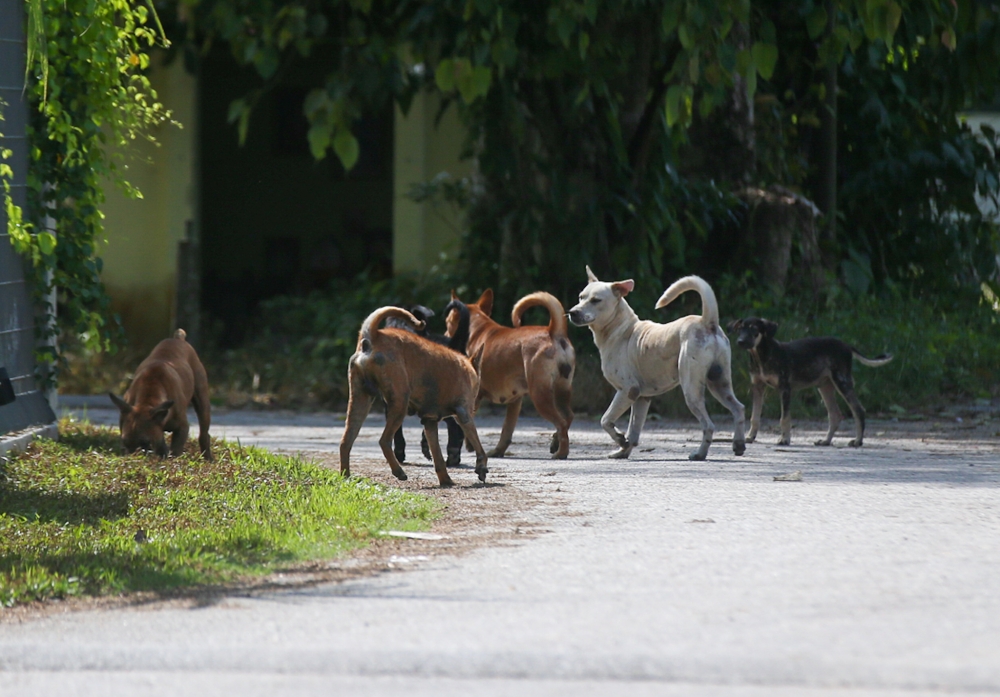
THE death of Rocky in Port Klang has reignited debate over Malaysia’s treatment of stray animals. But beyond the outrage lies a broader policy question: why does Malaysia continue to rely so heavily on reactive enforcement instead of investing more systematically in prevention?
Local authorities commonly respond to complaints involving stray dogs and cats through capture, impoundment and other enforcement measures.
Such operations may address immediate public-safety concerns, but they do little to tackle one of the main drivers of stray populations: uncontrolled reproduction.
Prevention can be more cost-effective.
A peer-reviewed study of the animal welfare organisation Help in Suffering’s sterilisation and vaccination programme in Jaipur, India, found that the programme cost about US$10.78 per dog sterilised and vaccinated.
Researchers calculated that every US$1 spent generated about US$8.50 in savings from avoided dog-bite treatment, rising to US$58.40 when wider societal costs were included.
The Jaipur programme also contributed to a substantial reduction in rabies and dog-bite risks over its decades of operation. The findings illustrate the potential economic value of sustained sterilisation and vaccination, rather than relying primarily on repeated removal.
Bhutan offers another example. In 2023, the country reported achieving sterilisation and vaccination of virtually its entire free-roaming dog population through a nationwide programme. More than 153,000 dogs had been vaccinated and sterilised over the 14-year initiative.
Malaysia has begun investing in similar preventive measures, but funding remains fragmented. The Housing and Local Government Ministry allocated RM1.21 mil to local authorities in 2024 for seven environmental campaigns, one of which covered stray-animal management.
At state level, there are encouraging examples. Perak doubled funding for its Pawsitive Initiative from RM150,000 to RM300,000 for 2026, with the programme supporting subsidised neutering and other measures. An additional RM100,000 was allocated for animal pounds and shelters.
But such programmes remain dependent on individual budgets and political priorities.

Turkey provides a cautionary example of what can happen when legislation and implementation diverge. Its previous framework required municipalities to sterilise and vaccinate street dogs before returning them to where they were found.
In 2024, Turkey adopted a new law requiring municipalities to remove stray dogs from the streets and place them in shelters, with euthanasia permitted in specified circumstances.
At the time, the country had an estimated four million street dogs but only 322 shelters with capacity for about 105,000 animals.
The lesson for Malaysia is not simply that one model is humane and another is not. It is that policy without sufficient resources and infrastructure is unlikely to solve the underlying problem.
Malaysia’s decentralised system makes consistent funding particularly important. Local authorities operate under state oversight, resulting in different approaches and resources from one council to another.
Some councils have already introduced incentives for responsible ownership. Majlis Daerah Yong Peng, for example, charges RM25 a year to license a sterilised female dog, compared with RM50 for an unsterilised female.
Such measures could be expanded. Reduced licensing fees for sterilised animals, subsidies for neutering and vaccination, and stronger support for trap-neuter-return programmes could make prevention more attractive to both councils and pet owners.
Tax incentives could also help expand private and NGO funding. The federal government was reported in July to be considering a special fund and tax incentives for stray-animal welfare, suggesting there is already policy interest in moving beyond enforcement alone.
The policy conversation should therefore move beyond whether individual enforcement operations are conducted humanely.
The more fundamental question is why Malaysia continues to spend so much effort responding to stray populations after they have grown, rather than reducing the rate at which those populations are replenished.
As the Malay proverb goes, mencegah lebih baik daripada merawat. Prevention is better than cure.
In this case, prevention means making sterilisation, vaccination, responsible ownership and adoption easier and more financially viable.
PBTs do not simply need better ways to catch stray animals. They need the resources and incentives to make fewer animals need catching in the first place.
The author, Dr Mohd Zaidi Md Zabri is a Research Fellow at the Centre for Islamic Economics, Kulliyyah of Economics and Management Sciences, International Islamic University Malaysia.
The views expressed are solely of the author and do not necessarily reflect those of MMKtT.
- Focus Malaysia.
No comments:
Post a Comment
Note: Only a member of this blog may post a comment.