In today’s increasingly volatile world, political independence alone is no longer enough, with economic resilience also essential.
From Mehdi Soltanzadeh
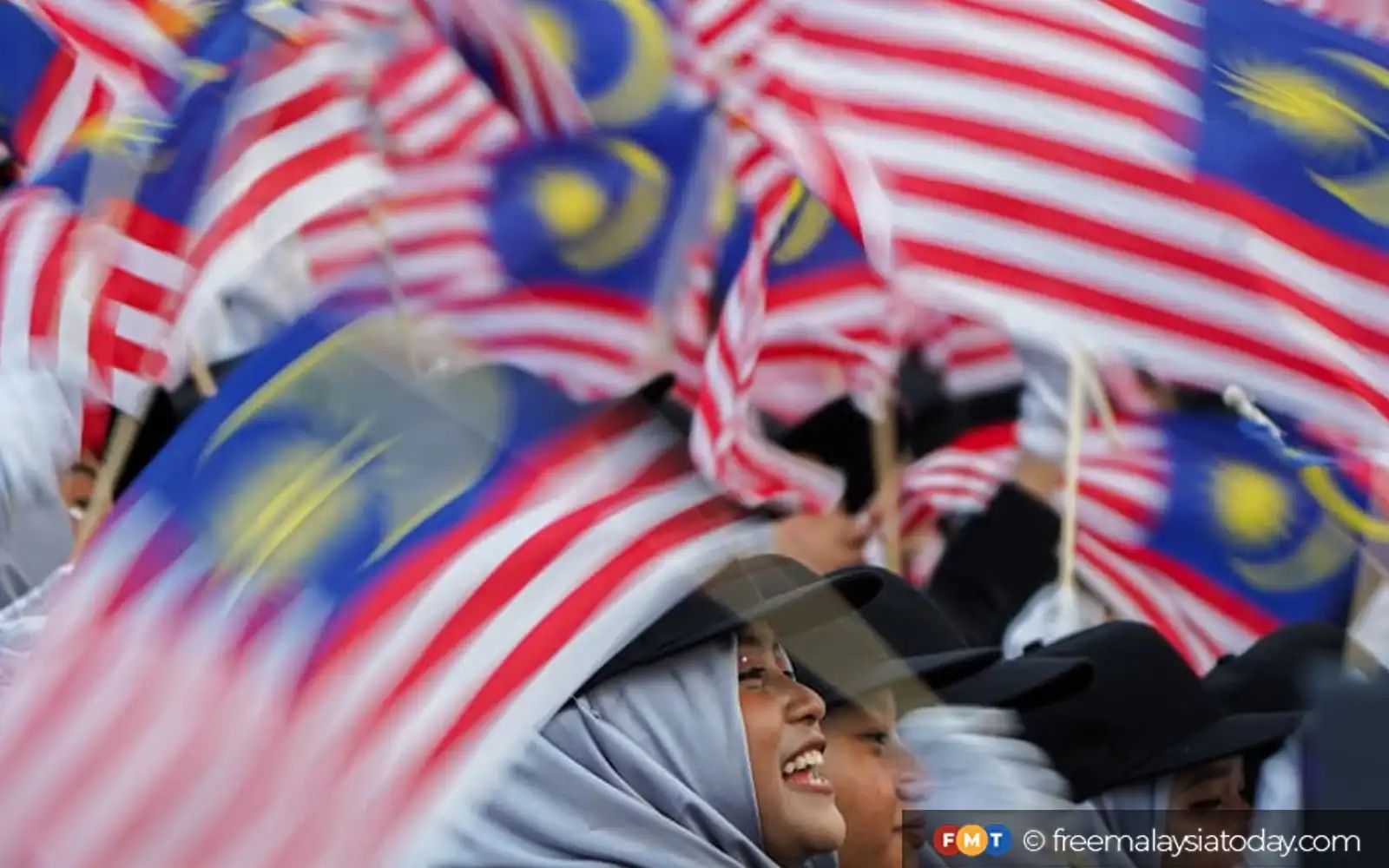
As Malaysians raise the Jalur Gemilang and celebrate Merdeka, let us remember this day not merely as a historical commemoration, but as a call to reinvigorate the meaning of genuine independence.
Malaysia has achieved remarkable development and regional influence over the past six decades, but recent geopolitical turbulence in West Asia has highlighted some vulnerabilities in the country’s social and economic structure.
As Malaysians celebrate Merdeka, perhaps it is time to ask a deeper question: what does Merdeka mean in today’s increasingly volatile world?
For the generation that fought for independence, Merdeka meant freedom from colonial domination. Today, however, threats to national independence do not always come in the form of foreign armies or colonial powers. They can come through economic dependency, energy insecurity, disrupted supply chains, technological dependence and geopolitical conflicts taking place thousands of miles away.
The recent conflict in West Asia offers an important lesson. A conflict in one part of the world can rapidly affect countries far beyond the battlefield.
Oil prices can rise overnight. Shipping routes can become insecure. Air travel can be disrupted. Tourism can decline. Global markets can become volatile. Industries dependent on petroleum and petrochemicals can face rising costs.
Malaysia may be geographically far from West Asia, but in an interconnected world, distance no longer guarantees protection from geopolitical consequences.
This is perhaps one of the most important lessons Malaysia should reflect upon during Hari Merdeka: political independence alone is no longer enough. A nation must also possess economic resilience and strategic independence across every aspect of governance.
Malaysia is fortunate to have energy resources and a strong petroleum and gas industry. Yet the conflict in West Asia reminds us that energy security cannot be taken for granted.
Malaysia has vast areas of land and sea under its jurisdiction, and perhaps now is the time to explore the potential for further oil and gas exploration while also developing the country as an energy hub. Based on recent research on the energy sector, the world is expected to remain heavily dependent on oil and gas at least until 2050.
Another concern is the potential increase in food prices caused by disruptions to fertiliser imports from the Middle East, as well as rising fuel prices. Every day, Malaysia faces a growing food waste challenge.
The country is estimated to generate 17,000 tonnes of food waste daily, with Kuala Lumpur, the nation’s largest urban and commercial centre, contributing a significant share through households, restaurants, hotels, markets and shopping centres.
Yet what is commonly regarded as rubbish may actually be one of Malaysia’s most overlooked resources.
The question is simple: what if Kuala Lumpur’s food waste could be transformed into valuable organic fertiliser by learning from the experiences of countries such as South Korea, Germany and France?
Estimates suggest that if all food waste generated in Kuala Lumpur were systematically collected and converted into high-quality organic compost, it could potentially support the nutrient and soil-structural needs of 80,100ha of agricultural land every year. This represents a remarkable opportunity to connect Malaysia’s urban waste problem with its agricultural needs.
Several countries have already demonstrated that food waste can become a valuable resource. South Korea and Germany have integrated organic waste management into their wider environmental strategies. Food and organic waste are collected separately and processed through composting and anaerobic digestion, producing organic fertiliser and renewable energy.
The West Asian conflict also provides an important warning for Malaysia’s tourism industry. Tourism is often considered a peaceful sector, far removed from international politics. Yet wars and geopolitical crises can immediately affect tourism through rising airfares, airspace closures, travel warnings and declining international confidence.
Malaysia’s tourism strategy must therefore become more resilient. The country should diversify its tourism markets and avoid excessive dependence on a limited number of countries. Asean, East Asia, South Asia, Central Asia, West Asia and Europe should all remain important components of Malaysia’s tourism strategy.
The government’s recent policy allowing visa-free entry for tourists from China and India was a positive move, and it would be beneficial to extend the policy beyond 2026. China and India have played important roles in the history of trade in the Malay world and have contributed to the multicultural identity of the region.
Let us remember that a nation’s history is never far removed from its geographical location. The peaceful coexistence of different ethnicities, religions and cultures gives Malaysia a unique identity that should be promoted internationally.
Perhaps the most important lesson from the conflicts of our time, however, concerns foreign policy.
In an increasingly divided world, countries are often pressured to choose sides. Great-power competition, regional rivalries and ideological conflicts can place small and medium-sized countries in difficult positions. Malaysia must therefore continue to pursue a balanced and principled foreign policy.
This does not mean remaining silent in the face of injustice. Malaysia should continue to support peace, international law, humanitarian principles and dialogue. But Malaysia should also avoid becoming unnecessarily involved in conflicts that do not serve its national interests.
Such a balanced foreign policy will benefit Malaysians at home while protecting the unity and harmony of Malaysian society.
As Luqman al-Hakim, or Luqman the Wise, famously said, a thousand friends are too few, and one enemy is too many. - FMT
Mehdi Soltanzadeh is a senior lecturer at Universiti Malaya’s Academy of Malay Studies.
The views expressed are those of the writer and do not necessarily reflect those of MMKtT.
No comments:
Post a Comment
Note: Only a member of this blog may post a comment.