
Although BN and Perikatan Nasional joined forces to consolidate the Malay vote in the Negeri Sembilan election, an analysis of polling district results and Chennah’s demographics suggests DAP secretary-general Anthony Loke still made modest gains among Malay voters.
His support among Chinese voters, meanwhile, appears to have remained stable at around 80 percent, although MCA may have made marginal gains among the community.
Overall, Pakatan Harapan’s vote share in Chennah rose by nearly three percentage points from the 2022 general election. But with BN absorbing most of PN’s support base, it still secured more than half the vote, allowing MCA candidate John Siow to defeat Loke.
In the November 2022 general election, Harapan secured about 44 percent of the vote in Chennah, while BN and PN polled about 41 percent and 15 percent respectively.
Combined, BN and PN would have accounted for about 56 percent of the vote.
This time, BN won 5,726 votes, or 53.2 percent, while Harapan secured 5,038 votes, or 46.8 percent.

Loke makes gains among Malay voters
Merdeka Center senior researcher Ted Lee told Malaysiakini that the 2022 polling district results showed Harapan started from a disadvantaged position.
“When the final results came in, DAP won about 47 percent of the vote in Chennah, meaning its support actually increased by around three percentage points. My observation is that this increase mainly came from Malay and Orang Asli voters.
“Loke and Harapan’s support among Malay voters increased, from roughly 13 or 14 percent in 2022 to around 20 percent this time,” he said.
Lee attributed the estimated six-percentage-point increase in Malay support partly to Loke’s incumbency advantage and strong personal standing in the constituency.
He also estimated that Loke’s support among Orang Asli voters rose to about 30 percent.
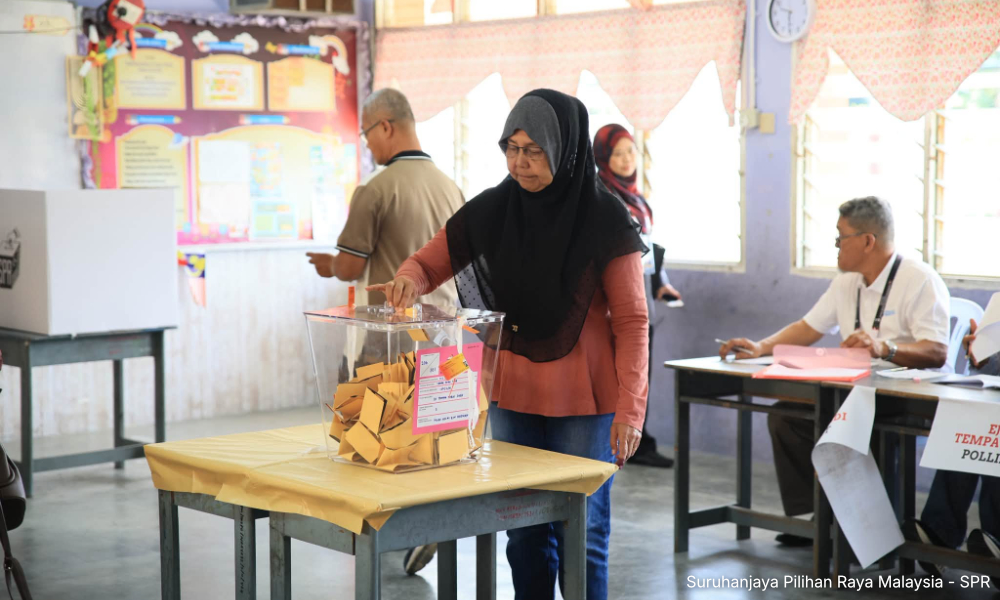
“Our impression is that, in the past, when Orang Asli ballot boxes were opened, BN could typically secure more than 90 out of every 100 votes. This time, however, it appears Harapan obtained around 30 percent of the Orang Asli vote.”
Lee estimated that Loke retained roughly 80 percent support among Chinese voters, although MCA may have registered a slight increase.
Chennah, in the northern part of Jelebu district, is a rural constituency with 14,422 voters. Malays account for 47.8 percent of the electorate, while Orang Asli make up 6.3 percent.
East Malaysian bumiputera account for another 1.3 percent, putting the combined bumiputera share at 55.4 percent.
Chinese voters make up 42.6 percent of the electorate, while Indians account for just two percent.
Before polling day, Malaysiakini estimated that if BN and Harapan retained their respective core Malay and Chinese support bases, Chennah’s roughly 900 Orang Asli voters could become kingmakers, with the result potentially decided by only a few hundred votes.
In the end, Loke lost by 688 votes.
Malay support varies across districts
Data independently obtained by Malaysiakini show significant differences in Harapan’s performance across Malay-majority polling districts.
In Kampung Sungai Buloh, where more than 99 percent of voters are Malays, Loke won 38.35 percent of the vote, compared with BN’s 61.64 percent.
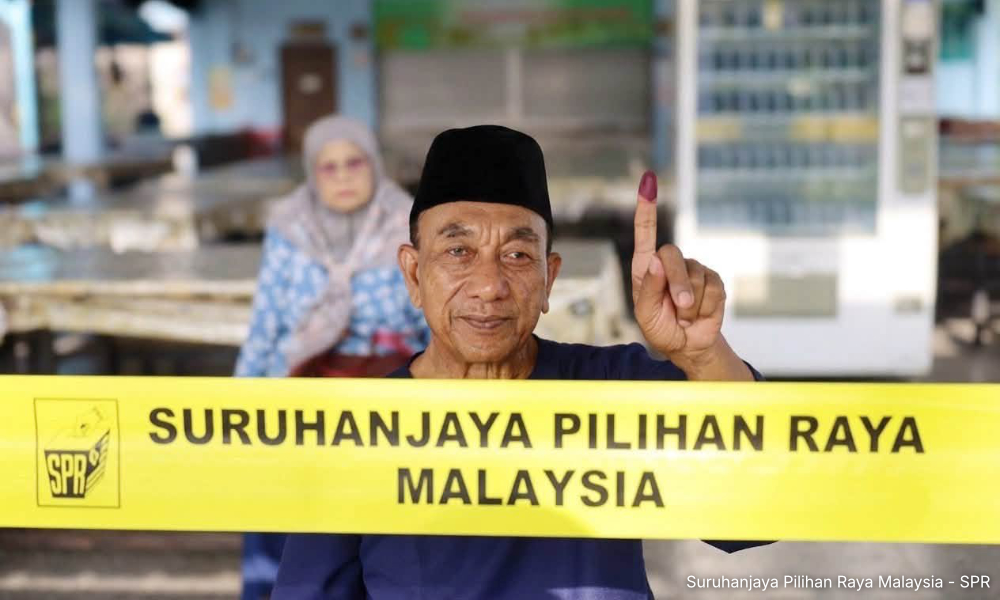
But in Kampung Seperi and Kampung Gagu, where Malays make up about 97 percent and 91 percent of voters respectively, Harapan secured only 11.78 percent and 19.85 percent.
The three polling districts have 1,010, 387, and 525 registered voters respectively.
Kampung Sungai Buloh, a “Kampung Angkat Madani”, was Harapan’s strongest Malay-majority polling district in Chennah. During the campaign, Malaysiakini visited the village and interviewed two Malay voters who expressed support for Loke.
In the ethnically mixed Simpang Durian polling district, BN won more than 61 percent of the vote, while Harapan secured nearly 39 percent.
Simpang Durian has 2,147 registered voters, comprising about 65 percent Malays, 26 percent Chinese, six percent Indians, less than one percent Orang Asli, and around three percent from other ethnic groups.
According to a social media post by DAP vice-chairperson Syahredzan Johan on July 31, the eve of polling day, a DAP campaign team had been stationed in Simpang Durian throughout the two-week campaign to canvass support for Loke.
Meanwhile, Pekan Titi, Chennah’s largest polling district, has 3,981 registered voters, of whom 81 percent are Chinese, 16 percent Malays, and about 1.6 percent Indians.
Loke won nearly 74 percent of the vote there, while Siow secured about 26 percent, broadly in line with Harapan’s previous performance in the area.
Harapan’s Malay support challenge
Statewide, Lee preliminarily estimated that Harapan’s support among Malay voters in Negeri Sembilan stood at 22 to 24 percent, slightly higher than in the 2022 general election.
However, he said this remained insufficient for Harapan to win a simple majority.
“My calculation is that if Harapan wants to win 19 state seats and form the state government with a simple majority, its support among Malay voters would need to exceed 36 to 38 percent,” he said.
Lee also estimated that Harapan lost a sizeable portion of its Indian support, contributing to losses such as Repah.
In the Negeri Sembilan state election last week, BN won 18 seats and PN seven, giving the two coalitions a combined 25 seats and a two-thirds majority in the state assembly.
Harapan won only 11 seats, losing control of the state government. - Mkini
No comments:
Post a Comment
Note: Only a member of this blog may post a comment.