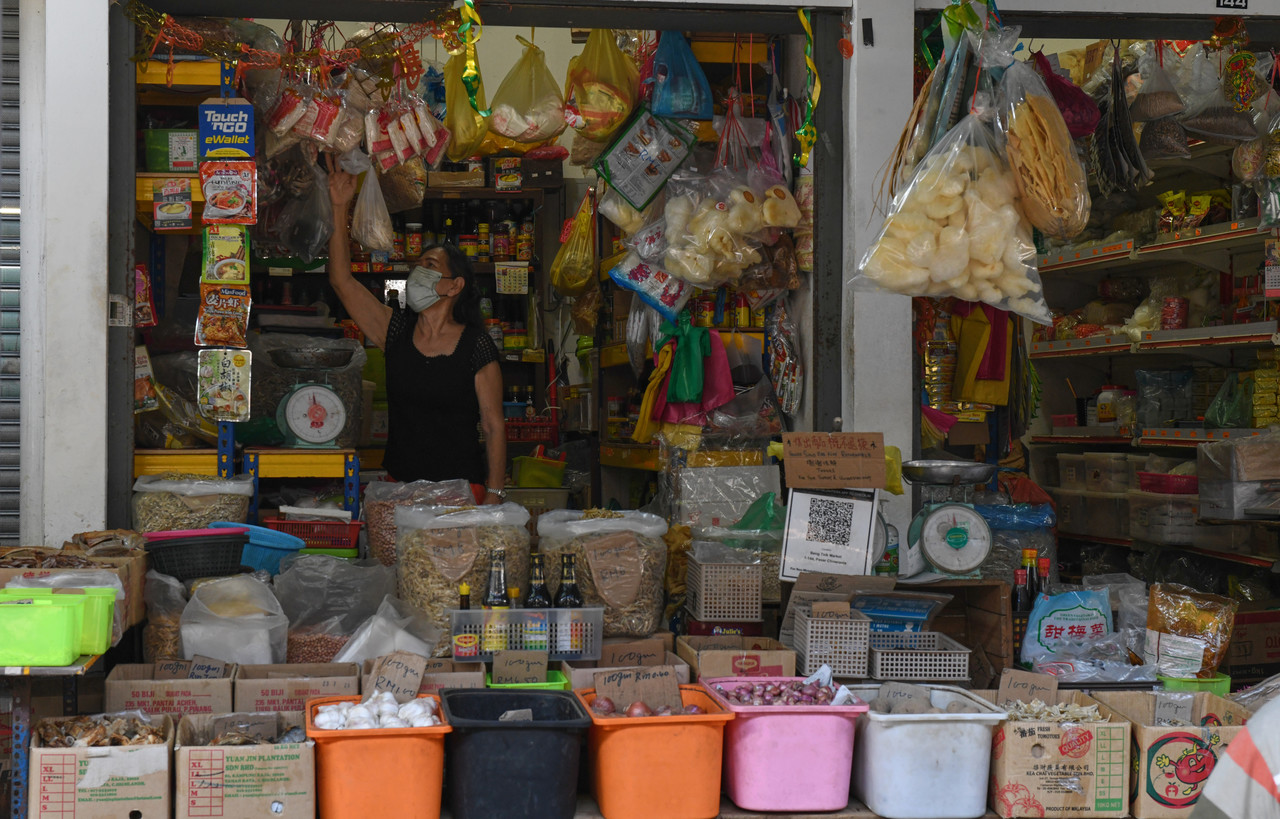
EVERY small business begins with hope. For some, it offers the chance to earn a better income. For others, it is a way to support a family, escape unemployment or build a future beyond salaried work.
Yet starting a business and sustaining one are two very different achievements.
Across Malaysia, entrepreneurs work long hours, promote their products online, respond to customers late into the night and stretch limited resources. Despite these efforts, some businesses continue to grow while others gradually disappear.
If entrepreneurs are working equally hard, why do their outcomes differ so greatly?
The easy answer is that struggling entrepreneurs lack discipline, financial knowledge or determination. But that explanation is incomplete.
Hard work matters, yet it cannot shield a business from rising costs, unpredictable demand, digital disruption, supply chain challenges or sudden household emergencies.
In today’s uncertain economy, effort alone is rarely enough.
Starting is easier than surviving

Entrepreneurship is often promoted as a pathway out of poverty and economic vulnerability.
Training programmes teach participants how to develop products, build brands, set prices and market through social media. Some also provide equipment, start-up capital or short-term mentoring.
These initiatives are valuable, but success is too often measured by how many businesses are launched rather than how many remain sustainable.
A business may generate sales from the outset, but sales do not necessarily mean financial stability. Many entrepreneurs do not separate business and household finances.
Prices may cover raw materials while overlooking transportation, electricity, packaging and the owner’s labour. Revenue is frequently diverted to urgent household expenses, leaving too little capital to replenish stock.
The business is operating, but it is not yet resilient.
This challenge is especially acute for low-income and informal entrepreneurs, whose businesses are closely tied to household survival. A sick child, a broken vehicle or rising living costs can quickly turn business capital into emergency household spending.
Unlike larger companies, microenterprises have few financial buffers. Even a relatively small setback can threaten both the business and the family that depends on it.
Survival requires more than financial literacy
Financial literacy remains an essential entrepreneurial skill. Business owners must understand cash flow, pricing, costs, savings and responsible borrowing.
Bank Negara Malaysia’s financial literacy initiatives rightly recognise financial capability as a foundation of resilience.
However, financial knowledge alone cannot guarantee survival.
An entrepreneur may keep excellent records yet lose customers as consumer preferences change. Another may produce an excellent product but struggle to reach larger markets.
A rural entrepreneur may understand digital marketing but face unreliable logistics or poor internet connectivity. Entrepreneurial survival therefore depends on a broader set of capabilities.
Business owners must be able to adapt to changing markets, use digital platforms effectively, build relationships with customers and suppliers, access reliable information and make difficult decisions when resources are limited. Above all, they must be able to recover from setbacks.
Building the capability to survive

Success is often measured by profits and expansion, but less attention is given to the capabilities that allow entrepreneurs to endure difficult periods.
This is what I describe as Entrepreneurial Survival Capability: the ability to anticipate challenges, adapt to changing conditions, mobilise available resources and sustain a business through uncertainty.
It is built on several interconnected strengths.
Financial capability enables entrepreneurs to manage limited resources. Adaptive capability helps them adjust products, prices and business models. Digital capability allows them to compete in an increasingly technology-driven marketplace.
Social capability is equally important. Entrepreneurs rarely succeed alone. Family members, customers, suppliers, mentors, community organisations and fellow entrepreneurs provide information, encouragement, referrals and practical support.
This explains why two equally hardworking entrepreneurs selling similar products may experience very different outcomes. One may benefit from mentoring, affordable financing and strong business networks, while the other faces every challenge alone.
The difference is not necessarily effort. It is capability and support.
Building an ecosystem for success
If entrepreneurship is to reduce poverty and create economic opportunity, support cannot end once a business is launched.
Short-term training helps entrepreneurs get started, but sustained success requires ongoing access to mentoring, digital support, market opportunities, financing and advanced skills as businesses evolve.
Programmes should therefore measure more than registrations and participation. They should assess whether businesses remain active, generate stable income, retain customers and become more resilient over time.
At the same time, policymakers must recognise that entrepreneurs operate within a wider economic environment. Infrastructure, financing, childcare, transportation, digital connectivity and social protection all influence whether a business survives.
Small business owners deserve recognition for their resilience, but resilience should not mean struggling without adequate support.
Ultimately, entrepreneurship succeeds when effort is matched by a strong ecosystem that connects people with markets, knowledge, technology and networks.
Malaysians have never lacked initiative or determination. The real question is whether our entrepreneurship ecosystem enables that hard work to become sustainable.
Because when a business closes, it does not always mean its owner failed to work hard enough. Sometimes, it means the capabilities, resources and support needed to survive simply were not there.
The author, Dr Nik Zirwatul Fatihah is a Research Fellow Post Doctorate at the Ungku Aziz Centre for Development Studies (UAC), Universiti Malaya.
The views expressed are solely of the author and do not necessarily reflect those of MMKtT.
- Focus Malaysia
No comments:
Post a Comment
Note: Only a member of this blog may post a comment.