Letter to Editor
MANY leaders in the political realm today speak about having principles, but many have never understood what constitutes principles.
One could speak about principles but the question is does one really understand what principles are.
In essence social principles are transformational and unitive and it does not operate on the basis of categorisation, sectarianism , and polarisation.
Social principles, when built on moral foundations, contribute to the common good.
It is puzzling that lately an UMNO youth leader was speaking about principles while violating its essence.
According to press reports, UMNO Youth chief Datuk Dr Muhamad Akmal Saleh stated in September 2026 that PH forced his party to choose between power and principles, defending UMNO’s pivot toward cooperating with PAS.
The UMNO youth national leader is indicating the importance of the principle of unity from a sectarian perspective with co-religionist PAS, and the need to choose ethno-religious unity over power that is offered by the current unity government.
The question is how could sectarian unity be regarded as principled when Malaysia consists of multi-ethnic and religious communities?
Does the principle that all people belong to one human family and are called to promote peace and justice across racial, national, and economic differences can be reconciled with ethno-religious politics that tends to see the other from lessen human dimension or merely to be tolerated or accepted for mere political arrangements or goals?
The most important principles that politicians in a multi-ethnic and religious society should hold on to are the right to life, equality and the common good.
This principle has broader ramifications in the realm of social justice, that is built to promote peace and harmony in the country over a long run than ethno-religious sectarian unity and politics that scatters seeds of divisiveness in society, and in the process creating distrust among the young and the future generation.
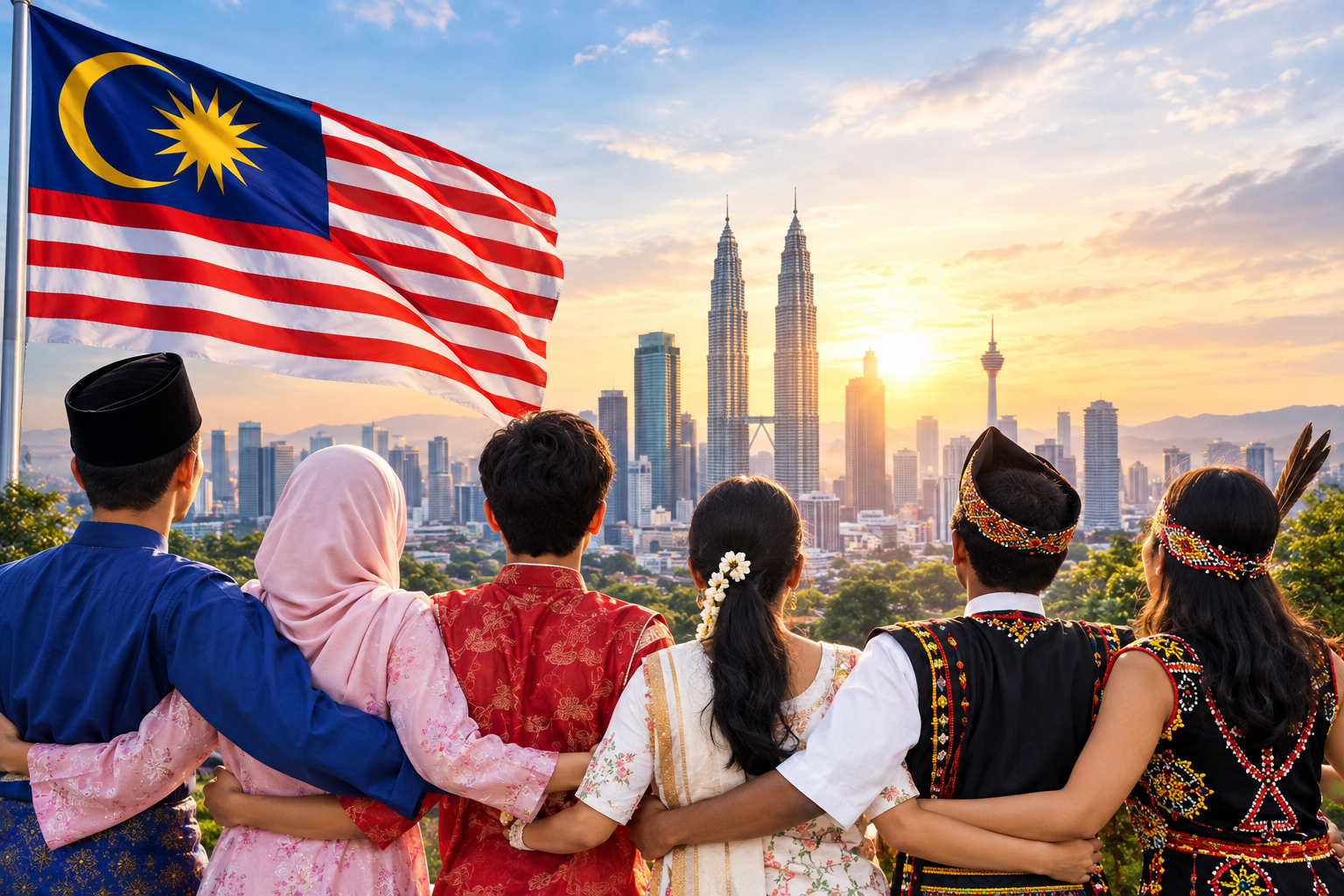
We will be celebrating Malaysia day on Sept 16 which honors the birth of a wider federation which includes Sabah and Sarawak which are made up of large non muslim population, while politicians in the Peninsular are contradicting it with ethno-religious sectarian politics.
Therefore it is vital to understand what principles mean instead of narrowing it down to ethno-religious consciousness. Principles cannot contradict itself.
Principles are a fundamental truth, law, guideline, or moral belief and cannot be reduced to ethno-religious supremacy.
Ronald Benjamin is the Secretary of the Association for Welfare, Community and Dialogue
The views expressed are solely of the author and do not necessarily reflect those of MMKtT.
- Focus Malaysia.
No comments:
Post a Comment
Note: Only a member of this blog may post a comment.