
PARLIAMENT | The Dewan Rakyat has passed amendments to the Sports Development Act 1997, giving the sports minister broader enforcement powers against sports bodies.
The voice vote passage today came despite concerns over potential power misuse linked to the vague language of the Sports Development (Amendment) Bill 2026, with multiple lawmakers referencing the citizenship scandal plaguing the Football Association of Malaysia (FAM).
Several MPs also took issue with the bill’s proposal that the minister may, after consulting the sports commissioner, declare unlawful any sports body believed to be used for “purposes prejudicial to or incompatible with” national security, public order, or morality.
The proposal was detailed in Clause 13, which sought to introduce a new Section 41A.
In his debate, Suhaimi Nasir (BN-Libaran) (below) questioned why a decision that could have major effects on sports bodies is placed “so close to political power”, saying the minister’s role is to determine policies instead of execute legislation.
/file/publisher-c1a3f893382d2b2f8a9aa22a654d9c97/2025/08/e3608152ea3a49d37b53681b3655edd2.jpg)
Ahmad Fadhli Shaari (PN-Pasir Mas) similarly questioned why the term “morality” was not defined in the bill, while Ismail Abd Muttalib (BN-Maran) requested an explanation on what “level” has to be reached before a sports body is deemed detrimental to public order.
“I am not saying that today’s minister will abuse power - that is not the issue. Parliament drafts laws not for one minister. We draft laws for anyone who will hold that power in the future,” Ismail said.
'Minister has no absolute power'
In his winding-up speech, Youth and Sports Minister Taufiq Johari said Section 41A will align with the Societies Act 1966 and other relevant legislation to prevent “absolute power granted solely to the minister”.
“(Any deregistration orders) must go through a lengthy process (involving) receiving views and advice from the sports commissioner. The minister cannot simply issue an order to deregister a sports body merely because the minister disagrees or holds a different opinion from that association.
“Determining the three aspects - (infringements on) national security, public order, and morality - is not the sole right of the minister. It must be based on the law and established under existing legal offences in Malaysia itself,” he added.
/file/attachments/orphans/5756765_634061.png)
He noted that there are also other “clear guidelines” to ensure the minister does not use the powers arbitrarily for political or personal purposes, or due to mutual disagreements with sports associations.
Responding to lawmakers’ debates on the minister’s authority to form laws on safe sport, as stipulated under Clause 11 of the bill, Taufiq (above) said the amendment is a continuation of the Safe Sports Code, which aims to safeguard the rights and welfare of the country’s athletes and sports community.
Another proposed rule, Section 25B, establishes procedures that should be undertaken by a deregistered sports body, including vesting its assets, debts, and liabilities, before it can set up a new sports body as a replacement.
Taufiq said that the assets and properties of sports bodies whose registration is revoked will be frozen, with existing mechanisms requiring such bodies to disclose all movable and immovable assets in their financial reporting.
He said this practice will continue alongside the ongoing development of a new Sports Body and Sports Event Management System.
On the proposed new Section 25A, which details the consequences of a sports body’s deregistration by the sports commissioner or the minister, Taufiq said that the sports commissioner regulates sports bodies from the aspect of constitutional compliance.
/file/publisher-c1a3f893382d2b2f8a9aa22a654d9c97/2019/01/759a1a5dfd328c649ba539161da6bbf1.jpg)
“A sports body is revoked not because it is inactive in conducting sports activities, but because it fails to comply with its constitution when it does not practice good governance, besides failing to conduct annual general meetings or committee meetings and the like.
“If any issue, arrears, or governance problem arises involving sports bodies or financial matters that affect compliance with the Act, the sports commissioner will issue an official written notice containing instructions for resolution or a show-cause notice,” he added.
The affected sports body, he said, will be given a reasonable period of around 30 days so its committee can submit feedback, explanations, or a resolution action plan before any follow-up action is taken.
Power abuse risks
Meanwhile, Jeffrey Kitingan (GRS-Keningau) earlier asked if the bill will include measures to curb potential abuse of power, particularly in the minister’s ability to appoint any public officer as enforcement personnel.
In his debate, the Parti Solidariti Tanah Airku (Star) president claimed that the scandal involving seven foreign players whose naturalisations were disputed by the International Federation of Association Football (Fifa) remains “unresolved and has not been fully investigated”.
/file/publisher-c1a3f893382d2b2f8a9aa22a654d9c97/2024/12/138cb2548dbf4c746915627361b9e0bd.jpg)
“There is only evasion… how could this happen when indigenous people in Sabah and Sarawak have to wait for a response for years after applying (for citizenship)?” Kitingan (above) pressed.
Taking issue with the “absolute power” wielded by the sports commissioner, who will have the authority to require sports bodies to amend their constitutions, Tan Hong Pin (Harapan-Bakri) warned that a lack of clear implementation mechanisms could cause issues.
Pointing to findings of a recent Asian Football Confederation (AFC) audit into FAM, the DAP MP said questions have been raised about monitoring efforts and the implementation of procedures that should be the “bedrock” of an association’s management.
“The new Section 19B enables the commissioner to direct that amendments be made (to sports bodies’ constitutions). This power is useful when a constitution does not comply with the law or contains ambiguities.
“However, if the issue is that procedures are not being executed, then amending documents will not solve this problem,” he said.
V Sivakumar (Harapan-Batu Gajah) also said the AFC audit’s findings should serve as “important lessons” on how strong institutions should not rely on office bearers.
The former human resources minister defended the bill as an opportunity to move from “personality-driven governance” to a more institutionalised system, but his fellow DAP party member, RSN Rayer (Harapan-Jelutong), issued a stern “reprimand” to the government over the scandal.
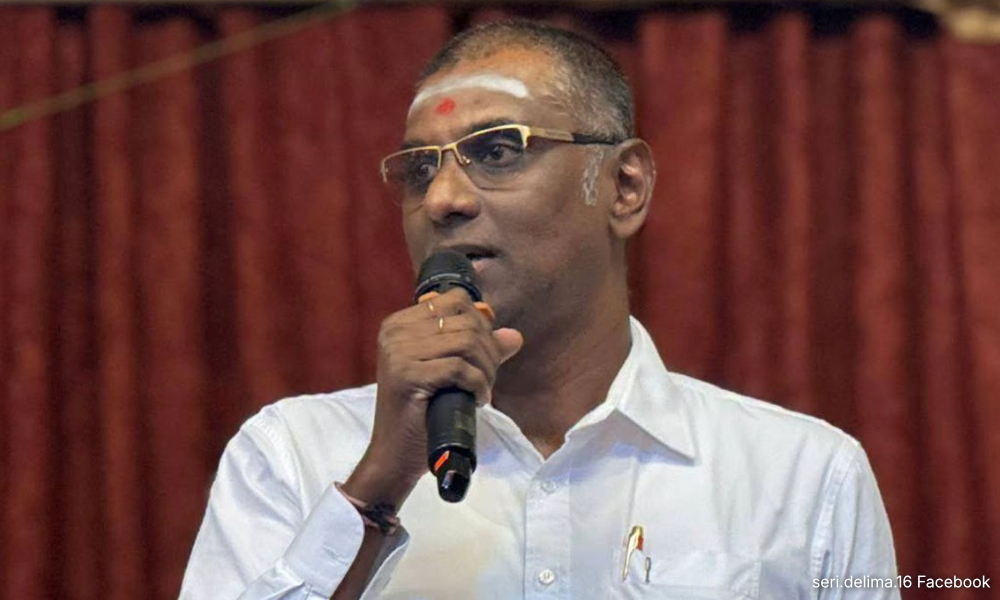
The backbencher also requested that the sports commissioner “be given the power to ensure there is no more document forgery”, referring to Fifa’s findings that falsification and forgery of documents were involved in the citizenship granted to seven Harimau Malaya players.
In response to debates concerning FAM, Taufiq said that while the ministry has no right to interfere in the affairs of sports bodies, it will “ensure transparency” for matters within its boundaries and jurisdiction.
“By utilising this bill, we will continue to empower sports associations - not just FAM, but all sports associations in the country,” he said in his winding-up speech.
He also listed the National Football Development Programme and the Mokhtar Dahari Academy as among Youth and Sports Ministry initiatives to build grassroots talent so that young footballers may one day represent the nation on the world stage. - Mkini
No comments:
Post a Comment
Note: Only a member of this blog may post a comment.