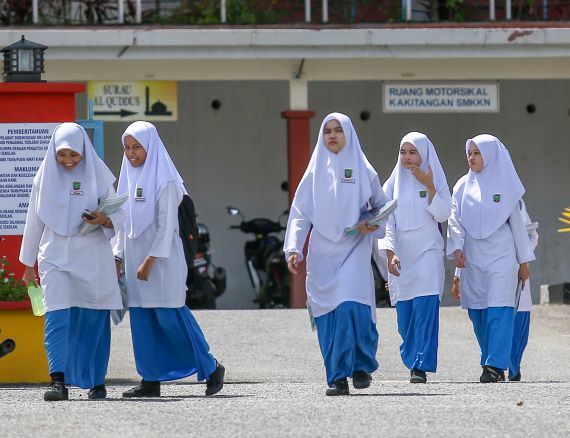
ZULFARHAN Osman Zulkarnain. T. Nhaveen. Zara Qairina Mahathir. Yap Shing Xuen. Muhammad Idlan Fareeq Shahril. Irene Sofiya Mohd Khairool Faisal.
Different names. Different years. Different circumstances. Yet each represents a young life lost, a grieving family and a future cut short.
As an educator and a mother, I find myself asking an increasingly disturbing question: in our relentless pursuit of academic excellence, have we overlooked the very humanity we are supposed to nurture in our children?
The tragedies involving Zulfarhan and Nhaveen in 2017 should have prompted serious reflection. Nearly a decade later, we are still confronting deaths and disturbing incidents of violence involving students.
Although the circumstances differ and investigations or legal proceedings remain ongoing in some cases, these tragedies demand more than temporary public outrage. They require us to examine what has gone wrong in our society.
Malaysia has repeatedly reformed its education system. We have revised curricula, changed examination formats, introduced new assessments and reconsidered when children should begin formal schooling.
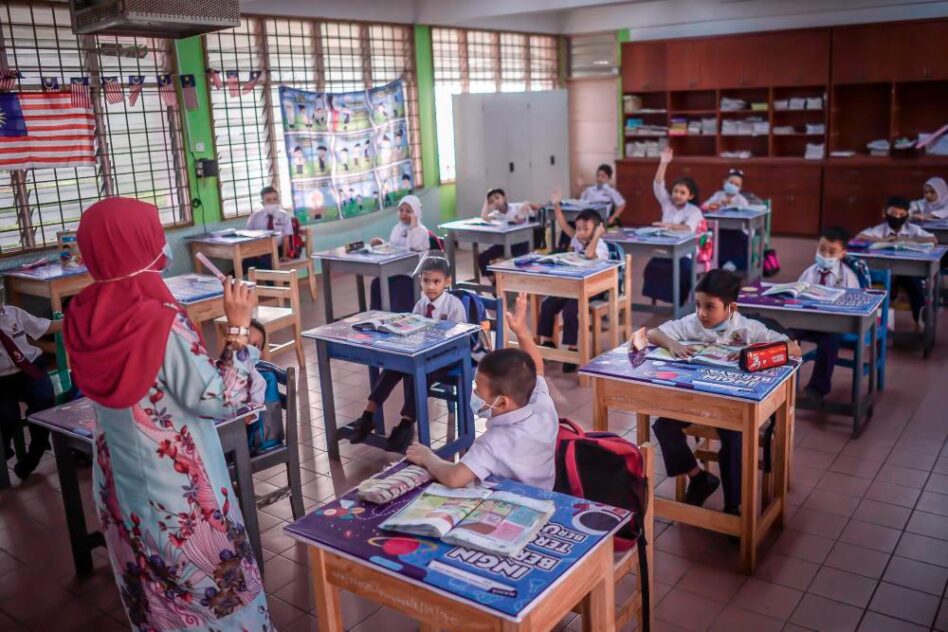
But amid these reforms, have we given equal attention to whether their emotional maturity, empathy and moral development are keeping pace with their intellectual abilities?
I remember looking through my nephew’s Year Six textbook and discovering material I had studied in Form Three back in 2002. It struck me how much more our children are expected to learn, and how early.
Teachers are overwhelmed, while parents struggle to keep their children academically competitive. Yet amid the pressure to produce high achievers, are we overlooking something far more fundamental?
Are we paying enough attention to how children learn to manage anger, respond to rejection, resolve conflict and treat others with compassion?
The young people whose lives have been lost had futures beyond their academic results. They had aspirations, relationships, talents and dreams.
Their worth was never defined by their achievements, nor should their deaths be reduced to the loss of future doctors, scientists, educators or leaders. They were human beings whose lives mattered in their own right.
But whom should we blame?
It would be convenient to hold schools and teachers solely responsible. I believe the problem runs much deeper. Education begins at home. Children need more than academic guidance, tuition classes and material comfort.
They need affection, attention, boundaries and meaningful conversations. They need adults who model compassion, respect and emotional regulation.
Yet how many parents genuinely have sufficient time and energy for their children?
Long working hours, demanding careers and exhausting commutes have become normalised. We celebrate productivity and professional achievement while family time quietly becomes whatever remains.
We constantly preach work-life balance, but have we created a society that allows families to practise it?
This is not about blaming working parents. It is about questioning a system that demands so much from adults while expecting them to raise emotionally secure, resilient and compassionate children.
At the same time, social media and digital content increasingly shape how young people perceive violence, relationships, rejection and conflict.
Access to technology must therefore be accompanied by digital literacy, parental guidance and age-appropriate boundaries. Children need help understanding what they encounter online, not merely restrictions imposed after something goes wrong.
Schools, too, must do more than deliver academic outcomes. Emotional education, conflict resolution, empathy and respect should be integral to learning, reinforced through everyday behaviour rather than confined to textbooks or occasional awareness campaigns.

Students also need accessible counselling, trusted reporting channels, early intervention and meaningful institutional accountability.
Warning signs of aggression, bullying or psychological distress must not be dismissed as ordinary childhood behaviour. Nor should every difficulty automatically be treated as a disciplinary problem when a child may also need psychological support.
Making schools safer, however, is only part of the solution. We must reconsider the wider environment in which children grow up: our homes, workplaces, education policies, digital spaces and lifestyles.
Perhaps it is time to look beyond another curriculum revision or assessment reform and ask whether our expectations are developmentally and emotionally sustainable.
Employers must recognise that family well-being matters. Policymakers must consider children’s emotional development alongside academic performance. Parents must prioritise presence over perfection.
Communities must rediscover their collective responsibility to protect and guide the young.
After all, raising a child takes a village. In our current circumstances, the entire country needs to examine its role in raising the next generation.
We cannot continue measuring national progress solely through examination results, university rankings and economic productivity while overlooking the humanity of the children we are raising.
What kind of leaders do we want for Malaysia? Highly intellectual individuals who excel academically but lack empathy? Or capable, compassionate human beings who understand the value of another person’s life?
These qualities should never be mutually exclusive.
Zulfarhan Osman Zulkarnain. T. Nhaveen. Zara Qairina Mahathir. Yap Shing Xuen. Muhammad Idlan Fareeq Shahril. Irene Sofiya Mohd Khairool Faisal.
Remember their names. Remember not merely how they died, but the lives they should have been allowed to live.
We cannot bring them back. But we owe them, their families and every child growing up in Malaysia more than condolences and promises of another review. We owe them meaningful change.
Their futures were taken far too early. The futures of millions of other children are still in our hands. Let us build a society that is not merely more educated, productive or competitive, but fundamentally more humane.
Because the greatest failure of an education system is not producing students who cannot pass an examination. It is failing to nurture human beings who understand the value of another human life.
The author, Dr Rabi’ah Al-Adawiyah Rahmat is a Forensic Odontologist Specialist and Senior Lecturer at the Faculty of Dentistry, Universiti Malaya.
The views expressed are solely of the author and do not necessarily reflect those of MMKtT
- Focus Malaysia.
No comments:
Post a Comment
Note: Only a member of this blog may post a comment.