
“Is it true that racial discrimination is enshrined in the Malaysian Constitution?”
That was one of the uncomfortable questions posed by a visiting Thai journalist during a meeting. He and his Cambodian counterpart were exploring how Malaysiakini could help ease tensions between their two countries over their long-running border dispute.
Both expressed concern over rising xenophobia in their respective countries and how certain politicians were exploiting ultranationalist sentiments for mileage, with damaging consequences.
Predictably, both journalists have since found themselves at the receiving end of online vilification back home, denounced as traitors for daring to build bridges while others seem hell-bent on torching them.
While Cambodian resentment is largely directed at the Thais, the latter, as the Thai journalist put it, have a veritable “buffet” of targets to choose from.
Apart from Cambodians, who have risen to the top of the list following the recent armed conflict, these include Chinese investors, Israelis, and Thai Malay Muslims in the country’s restive southern provinces.
Malaysian hot potato
Inevitably, the discussion turned to race relations and the proverbial burning of bridges in Malaysia, bringing with it questions about the constitution and the country’s future.

Call it political correctness, or perhaps concerns that the Special Branch could have planted listening devices in the Malaysiakini office, I thought it prudent to pass the hot potato to a Malay colleague.
My learned colleague launched into a lengthy explanation, touching on how race and religion had been weaponised for political expediency, the New Economic Policy, and how grouping the poorer Orang Asli as well as the people of Sabah and Sarawak into the same category did not accurately reflect the economic position of Malays in Peninsular Malaysia.
The more seasoned Thai journalist appeared to have a firmer grasp of the Malaysian situation. He was also a former colleague of Malaysiakini co-founder Steven Gan.
I have little doubt that their time together would have afforded him considerable insight into Malaysia’s complex racial dynamics.
His much younger Cambodian counterpart, however, wore an expression suggesting he was struggling to reconcile this Malaysia with the one he had encountered in tourism brochures.
An iron-willed firebrand
I, on the other hand, found myself recalling the many exchanges I had with the late trade unionist, activist, and editor GV (Jiwi) Kathiah.
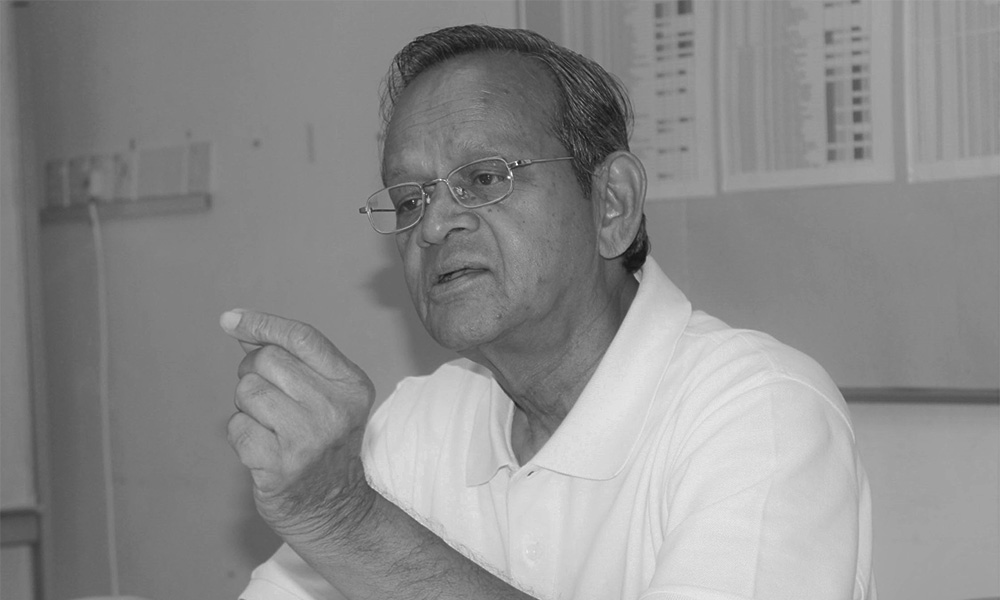
But how does one even begin to describe Jiwi?
Do I start with his declaration that Krishna and Jesus were communists? Or the countless history lessons and colourful anecdotes, ranging from organising demonstrations to matters of the heart involving women during his student days in the United Kingdom?
Or his decision to remain a bachelor after witnessing a fellow trade unionist break down in tears in a police lock-up when his wife turned up, believing that marriage would distract him from the cause?
Perhaps his sartorial stubbornness deserves a mention as well. He wore a yellow T-shirt every day in solidarity with Bersih’s electoral reform demands, long after even Bersih’s own leaders had traded theirs for other colours.
Or should I go further back, to his childhood, when he would place flowers before a photograph of Subhash Chandra Bose, the Indian anti-colonial nationalist?
That early admiration helped shape his conviction that when the force of logic fails to bring about change, the logic of force becomes a necessary alternative - a worldview that stood in stark contrast to Mahatma Gandhi’s philosophy of non-violent resistance.
His “bullet is stronger than the ballot” sentiment had me constantly looking over my shoulder whenever Jiwi aired it in public. After all, he was never one to mince his words, regardless of who was around him or whom he was addressing.

Then there were his numerous run-ins with politicians from both sides of the divide, including the late MIC president S Samy Vellu, who was two years his senior and hailed from the same neighbourhood of Batu Arang, Selangor.
In short, Jiwi’s convictions were not seasonal, and his principles were not negotiable. There were no pragmatic concessions because he did not seek titles, positions, or wealth.
Living and dying as equals
Returning to the Thai journalist’s questions, I was reminded of a particular discussion with Jiwi about the underrepresentation of non-Malays in the police and armed forces.
Picking his brain on the subject, I asked whether he would consider writing an article to encourage greater participation by the Malaysian Indian community in the security services.
True to form, Jiwi’s response was as pointed as it was impossible to forget. “If we cannot live as equals, why should we be expected to die as equals?”
He then delivered the punchline, saying he would only consider writing such an article if there were a constitutional guarantee that bullets fired in the direction of the Malaysian security forces would be divided according to a 75-25 racial quota.
The haves and have-nots
For Jiwi, the struggle was perhaps less about race than class. A lifelong battle to bridge the chasm between the haves and have-nots.
We spoke at length about how Malay politicians exploited their own community by wielding race and religion as potent tools.
By cultivating a siege mentality, they created a preoccupation with perceived threats to their racial and religious identity, while diverting attention from the corruption and abuse of power that had kept the poor Malays in the economic doldrums.
The cruel irony, as we often observed, was that the people supposedly being protected were frequently the ones paying the price. Meanwhile, those who profited most from this politics of fear were the political elites, their families, and cronies.

Malaysiakini co-founder Premesh Chandran could not have put it better when he recalled Jiwi as someone who simply could not stomach injustice.
“He would rave against the oppression of workers by companies and against the people by the government. His heart was always with the downtrodden and he felt their pain in his bones.
“He spoke about the day that the poor would overcome their chains and finally get their justice and fair share of the world's wealth,” Premesh said in an article written following Jiwi’s death in 2020.
Even PSM deputy chairperson S Arutchelvan, who is no stranger to confrontations and police arrests, conceded in his tribute that Jiwi often rattled him with his unvarnished words.
He recalled how Jiwi had even challenged the exiled Communist Party of Malaya (CPM) leader Chin Peng during a meeting, urging him to return home and face whatever consequences awaited him, like a warrior.
Equality should not cause discomfort
Meanwhile, the Thai journalist also asked whether we could ever envisage a Malaysia without racial quotas.
The question drew an exchange of glances among the three Malaysiakini representatives in the room - a Malay, an Indian, and a Chinese - as though he had suggested something so far removed from our reality that none of us had even contemplated it.

But of course, we have, just that we never felt that it would happen in our lifetime.
Despite these “privileges” being, in many ways, self-defeating, perpetuating the notion that an entire community cannot survive on an even playing field, politicians are unlikely to relinquish such a valuable political currency.
As mentioned before, few things are more politically useful than perpetuating the fear that equality must come at someone else’s expense, while those on the other side remain steadfast in their conviction that there is little to be gained, and perhaps much to be lost, by rocking the boat.
As I reflect on the Thai journalist’s questions, I find myself wishing Jiwi had been in that room. Any Special Branch listening devices would have blown a fuse by the time he was done.
But more importantly, he would have reminded us that equality should never be an uncomfortable question.
Thank you, Jiwi, for the memories, stories, lessons, laughter and, above all, the courage to remain true to your convictions. You may be gone, but the conversations continue. - Mkini
RK ANAND is a member of the Malaysiakini team.
No comments:
Post a Comment
Note: Only a member of this blog may post a comment.