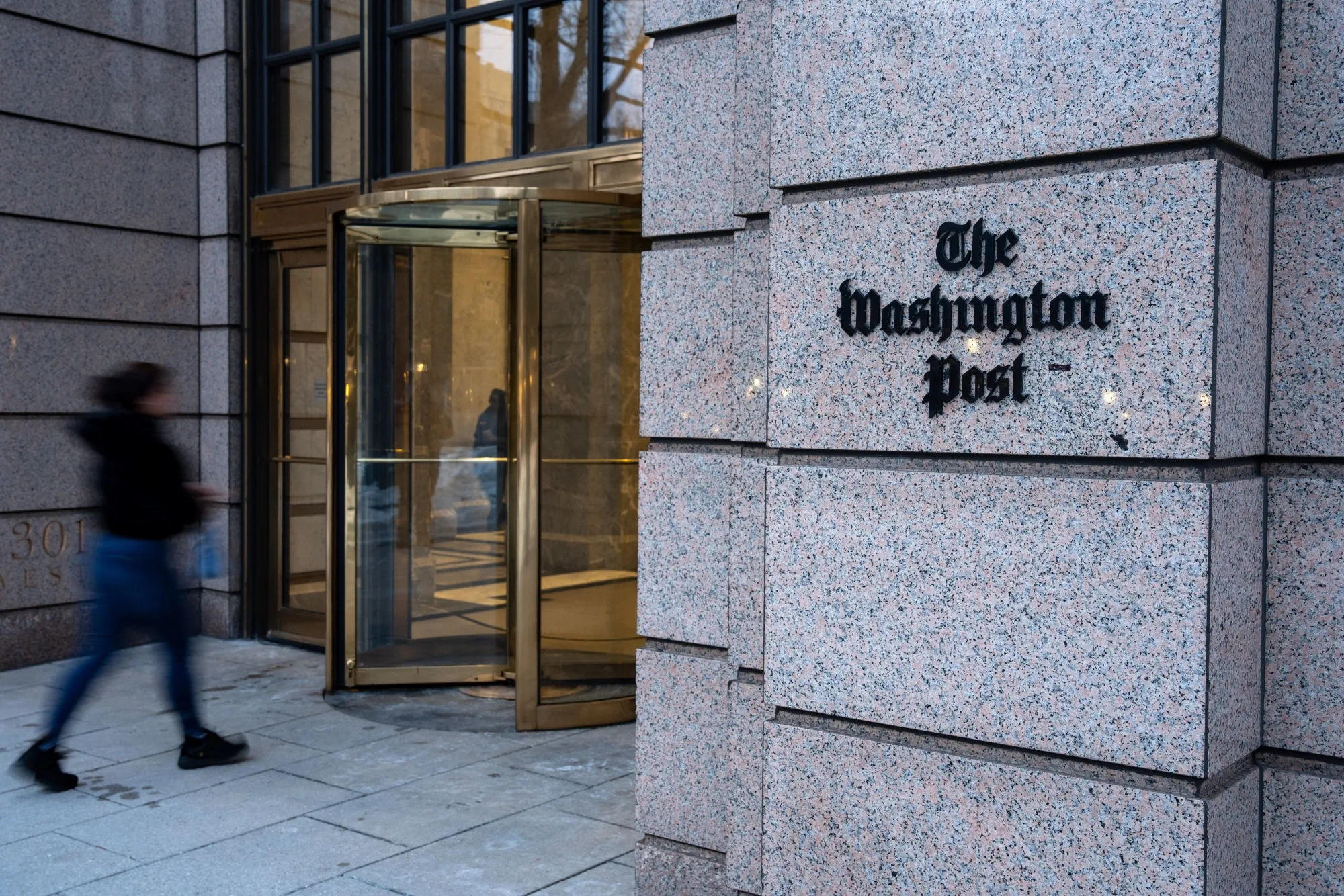
THE mass layoffs at The Washington Post in early 2026 are often framed as a uniquely American media story: a collision of declining digital revenue, changing audience habits, and costly legacy structures. For Malaysian news outlets, that framing is dangerously comforting.
The real lesson of The Washington Post episode is not about scale or geography; it is about structural vulnerability, strategic complacency, and the consequences of failing to adapt editorial purpose and business models fast enough in a hostile information economy.
What happened in Washington is a preview of pressures that Malaysian media already face, only with fewer buffers and less margin for error.
At its core, The Washington Post crisis shows that prestige does not equal immunity. The Post is one of the world’s most recognisable newspapers, with global reach, elite readership, and deep historical credibility.
Yet none of that prevented the collapse of revenue expectations once audience growth stalled and digital subscriptions plateaued. Malaysian news organisations; many of which still rely heavily on advertising, sponsorships, or political patronage should take note.
If a globally dominant brand can lose financial footing this quickly, smaller outlets operating in a tighter market are even more exposed.

One immediate lesson is the danger of over-reliance on a single revenue narrative. The Post bet heavily on rapid digital subscription growth after 2016, building its newsroom and costs around optimistic assumptions that did not hold. When growth slowed, layoffs followed abruptly and brutally.
Malaysian outlets often repeat a similar mistake by assuming advertising will “recover”, government-linked advertising will remain stable, or social media platforms will continue delivering traffic. These assumptions delay hard decisions about diversification.
Sustainable media now requires multiple revenue streams, i.e. subscriptions, memberships, events, licensing, philanthropy, and targeted services not because they are fashionable, but because volatility is structural, not cyclical.
A second, more uncomfortable lesson concerns newsroom scale and strategic focus. The Washington Post expanded aggressively, building large teams across beats, verticals, and global coverage. When revenue fell, cuts were indiscriminate, wiping out entire desks and institutional memory.
Malaysian newsrooms, many already lean, cannot afford expansion without clear purpose. Growth must be tied to audience value and mission clarity, not prestige or imitation of foreign models. Bigger is not safer. In fact, overextension can make collapse faster and more damaging.
Equally important is the lesson about editorial relevance in a fragmented audience environment. The Post produced high-quality journalism but struggled to convert that quality into sustained audience loyalty outside political crisis cycles.
Malaysian media face a similar challenge: serious reporting competes with influencers, TikTok explainers, partisan portals, and AI-generated content that is faster, cheaper, and often more emotionally engaging.
The lesson is not to abandon serious journalism, but to rethink how it is packaged, distributed, and explained. Depth without accessibility is no longer enough. If journalism does not meet audiences where they are linguistically, culturally, and digitally: it risks becoming invisible regardless of its quality.
The layoffs also highlight a governance lesson Malaysian outlets should study closely: leadership insulation from newsroom reality is dangerous. Reports from inside the Post describe a widening gap between management strategy and editorial morale, with staff learning the scale of layoffs only when the axe fell.
This erosion of trust magnified the damage. In Malaysia, where newsroom cultures are often hierarchical and decision-making opaque, similar dynamics can be fatal.
Media organisations that do not cultivate internal transparency, shared strategic understanding, and staff buy-in will struggle to survive crisis moments. Trust inside the newsroom is as critical as trust with audiences.
Another sobering takeaway lies in the vulnerability of investigative and public-interest journalism. At the Post, layoffs disproportionately weakened long-term reporting capacity: foreign desks, investigative teams, and specialist beats that require time and resources.
Malaysian outlets already operate investigative journalism on thin margins, often dependent on a handful of reporters.
The lesson here is strategic, not sentimental: if public-interest reporting is core to an outlet’s identity, it must be structurally protected through dedicated funding models, partnerships, or nonprofit arms. Otherwise, it will always be the first casualty when finances tighten.
There is also a cautionary lesson about platform dependence. Like many global outlets, The Washington Post relied heavily on search engines and social platforms to distribute content and attract subscribers. Algorithm changes and audience fatigue reduced returns overnight.
Malaysian media, many of which are even more dependent on Facebook, Google, and messaging apps, face an amplified version of this risk.

Platform dependency is not neutral; it is a structural vulnerability. Building direct relationships with audiences through newsletters, messaging communities, apps, and memberships is no longer optional.
The Post’s experience shows how quickly external platform dynamics can destabilise internal operations.
Finally, The Washington Post episode underscores the psychological cost of crisis-driven downsizing. Sudden mass layoffs damage not only output, but institutional confidence. Survivors work under fear, innovation stalls, and long-term planning becomes impossible.
Malaysian outlets, operating in politically and economically sensitive environments, must recognise that resilience is as much cultural as financial. Gradual adaptation, honest communication, and early restructuring are less destructive than dramatic, last-minute cuts.
The collapse of newsroom capacity at one of the world’s most influential newspapers should not be viewed from Malaysia with detached curiosity. It is a warning shot.
The media business model that sustained journalism for decades is not merely weakening; it is transforming under pressure from technology, attention economics, and trust erosion.
Malaysian news outlets have the advantage of seeing this unfold elsewhere. The disadvantage is that they have less room to fail.
The lesson is clear: prestige will not save you; scale will not save you, and waiting will not save you.
Only strategic clarity, diversified revenue, audience trust, and disciplined adaptation will. The Washington Post learned that lesson painfully. Malaysian media still have time to learn it deliberately.
R Paneir Selvam is Principal Consultant at Arunachala Research & Consultancy Sdn Bhd (ARRESCON), a think tank specialising in strategic and geopolitical analysis.
The views expressed are solely of the author and do not necessarily reflect those of MMKtT.
- Focus Malaysia.
No comments:
Post a Comment
Note: Only a member of this blog may post a comment.