
The Investment, Trade, and Industry Ministry has issued a clarification following a report that Chinese electric vehicle (EV) maker BYD is supposedly reconsidering its plans to set up a local assembly plant in Tanjung Malim, Perak.
In a statement today, minister Johari Abdul Ghani responded to “claims and confusion” circulating on social media regarding the ministry’s conditions for BYD’s manufacturing licence and related automotive policies.
Recently, The Edge quoted Johari (above) as saying that BYD was unable to agree with the terms set by his ministry, including that it exports at least 80 percent of the cars produced in Tanjung Malim, and prices the remaining 20 percent above RM200,000 a unit.
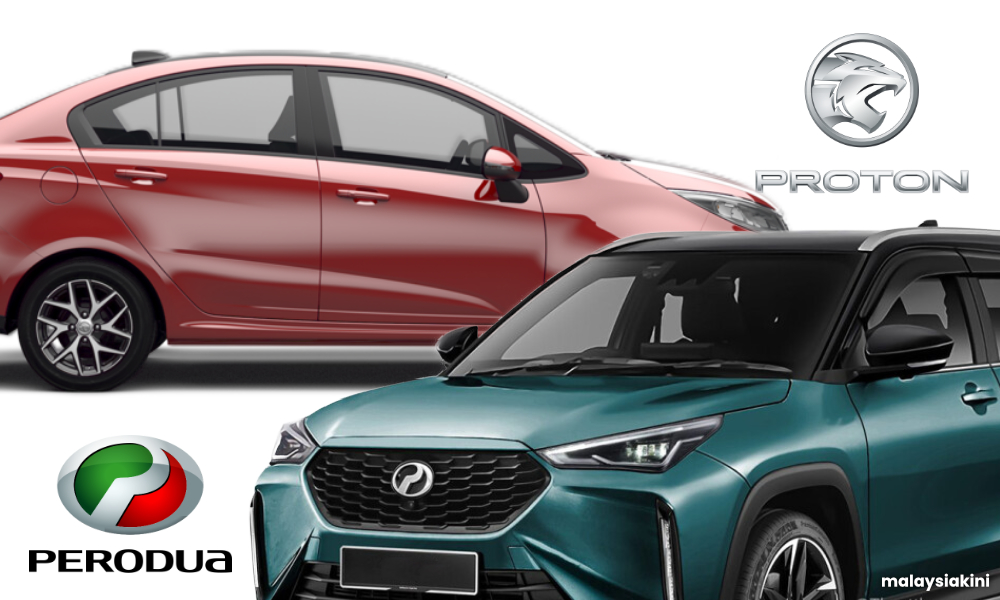
Johari reportedly asserted that there is a need to “protect” national carmakers Proton and Perodua, which he said annually sell about 150,000 and 350,000 cars, respectively.
Elaborating, Johari said BYD Automotive Malaysia Sdn Bhd was approved an interim manufacturing licence on Sept 29, 2025, based on an export-oriented production profile with the majority of output designed for international markets.
The licence, he added, was issued with specific conditions aligned with the National Automotive Policy and the New Industrial Master Plan 2030, to promote high-value activities while preventing market distortion and ensuring sustainable industry development.
“These conditions are not unique to BYD, but reflect a consistent approach applied to all new automotive investments in Malaysia beginning September 2025, except those using existing local assembly facilities,” the minister said.
Additional conditions
Johari also confirmed that Putrajaya mandated additional conditions on the manufacturing licence, including setting the approved sales volume at 10,000 units, or 20 percent of BYD’s total production capacity for the domestic market, while prioritising export integration.
The limit on domestic sales, Johari said, is a “pro-export condition” aimed at ensuring investment contributes to Malaysia’s trade balance and global supply chain integration.
Stressing that the additional condition is not a restriction but a “mutually agreed production framework” deemed as a “strategic measure to encourage export orientation”, Johari said the ministry also set the minimum on-road price at RM100,000 - contrary to the RM200,000 figure reported by The Edge.
“The attached conditions are non-discriminatory and are applicable equally to all high-volume automotive assembly projects regardless of brands and countries of origin… BYD is not singled out; the same condition applies to any new CKD (completely-knocked down) entrant,” he added.
Johari’s statement, however, did not address how the locally-assembled Wuling Bingo EV is being sold in Malaysia for as low as RM67,800, a price significantly below the RM100,000 floor price he cited for CKD vehicles.
For context, CKD refers to a product, typically automobiles or machinery, delivered in individual parts to a destination, where they are assembled locally.
Approved permit policy
Johari further explained that under the Franchise Approved Permit (AP) policy, the standard minimum on-road price for all passenger vehicles imported into the country, completely-built-up (CBU), is RM250,000.
He said that to encourage early-stage EV adoption, the government had introduced a temporary relaxation from 2022 until Dec 31, 2025, reducing the minimum on-road price specifically for EV CBU vehicles to RM100,000 as a “deliberate, time-limited measure”.
The measure, the minister said, was designed to stimulate consumer demand and build EV familiarity in the market, while providing Proton, Perodua, and the broader national automotive ecosystem the time and space needed to develop their EV capabilities and supply chains.
“Nevertheless, the ministry is reviewing the ‘floor price’ policy to further strengthen local assembly activities while ensuring that CBU vehicles’ pricing is driven by market forces,” he added.
Addressing claims that the ministry is “pawning the future” of the industry to benefit a few established local players rather than promoting a healthy ecosystem, Johari stressed that the ministry’s approach is “not protectionist, but developmental.”
“Investments without clear export commitments or localisation plans offer limited benefit to Malaysia’s automotive ecosystem and would constrain manufacturers from achieving the economies of scale necessary for deep and sustainable localisation.
“Our framework is designed to encourage exactly the kind of long-term, high-value commitment that benefits both investors and Malaysia,” he added.
He also reaffirmed that Malaysia remains “genuinely open” to Chinese automotive investment, highlighting that as of December 2025, 14 out of 34 foreign automotive brands in the market are from China - including BYD, Chery, Jaecoo, Jetour, Haval, Wey, MG, and Volvo.
“Malaysia stands ready to partner with manufacturers who come here not only to serve our domestic market, but to build for the world, and our policy framework is designed precisely to enable and accelerate that ambition,” Johari emphasised. - Mkini
No comments:
Post a Comment
Note: Only a member of this blog may post a comment.