


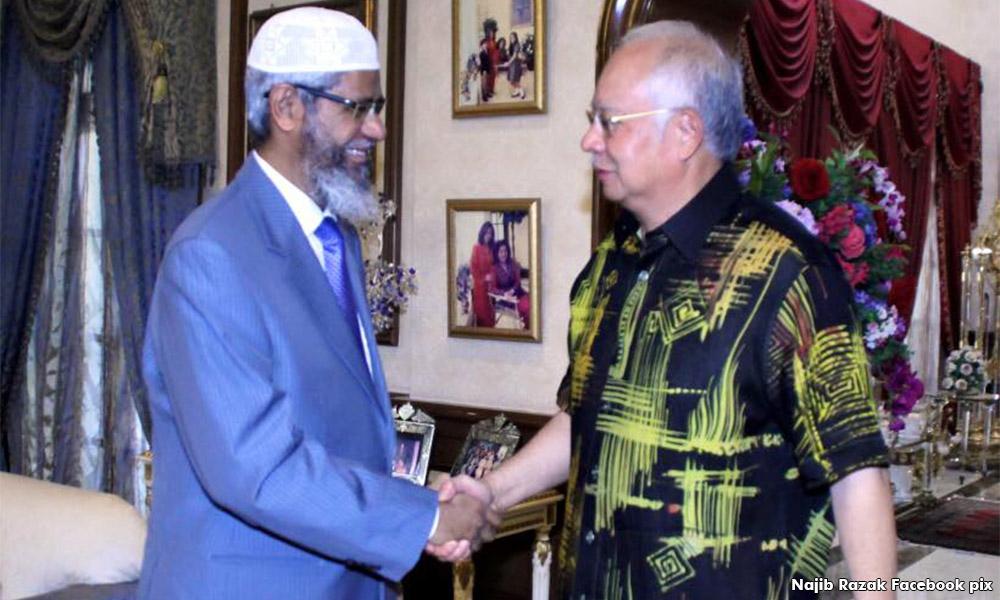
In July of 2018, I wrote two articles about Islamic preacher Zakir Naik - taking a closer look at his actual teachings, and discussing some of the polemics surrounding him.
Today, Zakir is back in the news, as he has apparently been what we could term "soft banned" from speaking in Penang.
As coincidence would have it, we also recently saw that an event at which former prime minister Najib Abdul Razak was scheduled to speak at UKM was "postponed".
These incidents provide something of a litmus test for the new Pakatan Harapan government. It is easy to talk about freedom of speech, but it is considerably harder to walk the talk.
Most reasonable people will agree that freedom of speech should come with a measure of responsibility and that we can conceive of cases wherein some restrictions should be placed on public speech. One clear example would be cases where a speaker is planning to incite violence.
Unless there is clear proof of such intent however, a vibrant democracy should place very few restrictions on free speech - indeed, perhaps none at all.
Let us see whether the cases of Zakir and Najib warrant such restrictions.
A closer look at Zakir
The debate surrounding Zakir and his place in Malaysia is not a new one. I remember vividly that the first article I wrote about Zakir was not the same article I thought I would write when I began my first draft.
Prior to writing the article, I had an impression of Zakir that was probably similar to many people of my background - that he was a bigot with tendencies towards incitement.
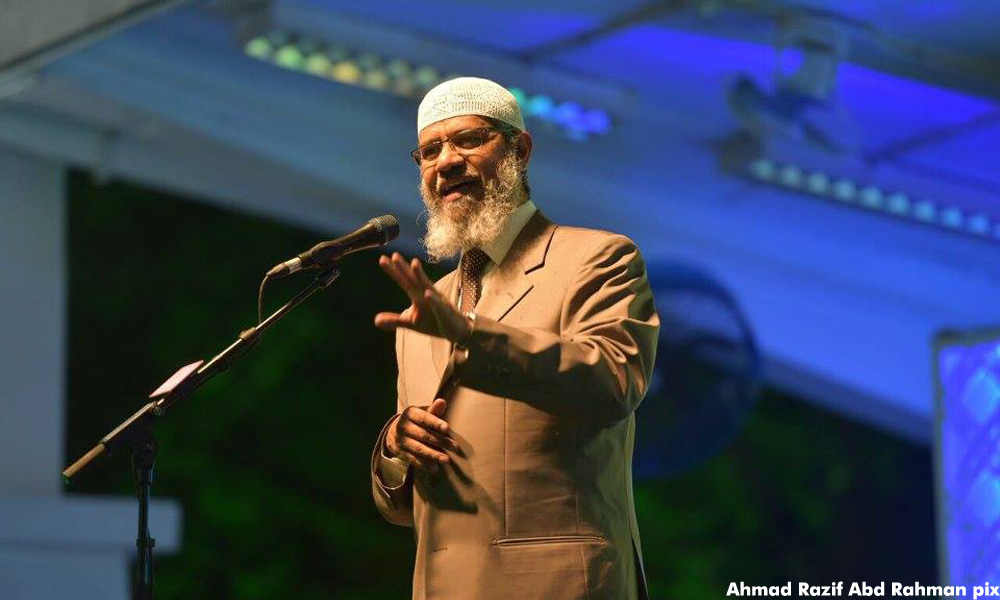
However, I believed that since every individual should be given a fair evaluation based objectively on facts, I felt obligated to do a little bit of assessment based on investigating primary sources.
By the time I had gone through a few of Zakir’s videos, my opinion had changed. The man is no saint and I certainly do not agree with many of his conclusions.
It became clear to me, however, that many of those who hated Zakir hated some sort of idea of him - one propagated by many people with rather anti-Muslim tendencies - rather than the man himself and his actual words.
Then we come to the case of Najib. So many of us spent years and years writing about his many sins and I don’t think many of us have changed our minds about the kind of person we believe him to be.
As to his crimes, it is incumbent on us to follow due process and hope that a transparent judiciary will bring to light everything he has and hasn’t done.
With regard to his current political activism and views however, there seems to be very little justification to restrict him in in any way. As we are all coming to learn, Najib is becoming very, very adept at annoying those in power.
This surely has something to do with the fact that being on the receiving end for so long surely teaches one a thing or two about how to hit the government and hit hard.
A lot of the time, however, the things that Najib brings up speak directly to the question of good governance and sound government policy. I’m not saying he’s right in his criticisms - not by a long shot. I am saying, however, that a lot of what he talks about should be considered fair game.
Roundabout censorship?
Next, we should examine exactly how the authorities are responding to individuals like Zakir and Najib.
The Penang authorities are remaining tight-lipped about the reasons why Zakir was not allowed to speak on the island recently with one anonymous source making vague and vaguely incredulous suggestions that it had to do with timing and availability.
UKM, meanwhile, made another vaguely incredulous suggestion that Najib’s event was "postponed" because the university was not able to provide sufficient security.
If security personnel are the issue, what difference could a postponement possibly make? Is UKM planning to hire more security guards in the next few weeks specifically for Najib?
I suppose a case can arguably be made that roundabout censorship is mildly better than direct censorship. That said, I don’t think the difference is either significant or substantial.
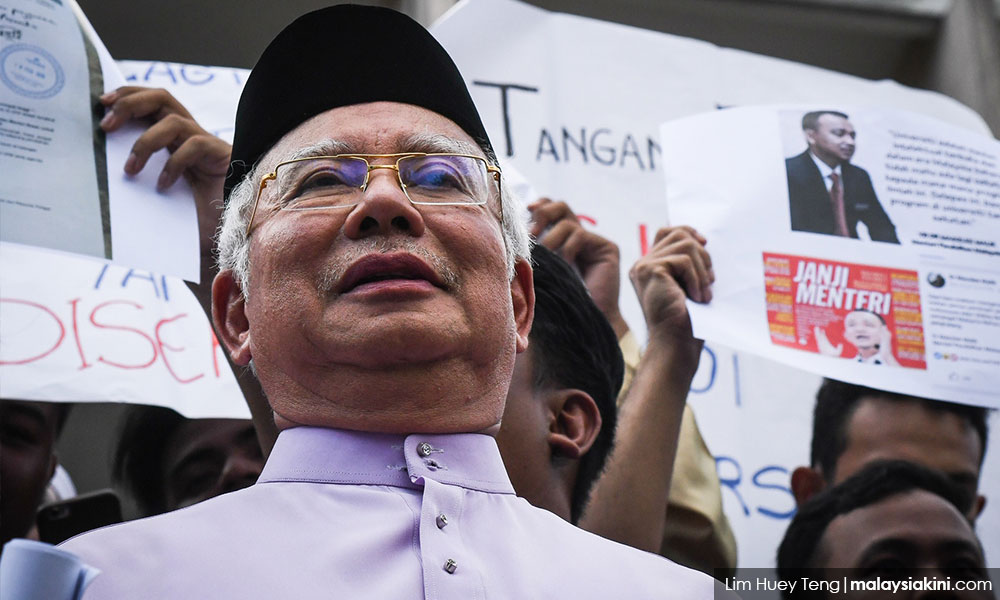
Censorship, ultimately, is still censorship. A soft ban is still a ban. Indeed, some would say that roundabout censorship is worse than direct censorship because the latter is at least honest.
Free market of ideas
One of the most pertinent political questions of the day is this, "Is Harapan just BN 2.0?"
It is through issues like these that we find the answer to this question.
Censorship, misleading answers and so on, these were the hallmarks of BN’s government and no one wants to return to those days.
Harapan, like any wise and responsive government, should never fear ideas. The more you try to repress ideas, the more they spread. Again, we speak from experience.
A diversity of views should always be welcome, and institutions like Harapan should always be willing to sell their own ideas in a free marketplace and in competition with all others.
This incentivises the government to produce ideas that are actually good and which are able to win hearts and minds based on their own merit - not based on artificial market manipulation, the likes of which Malaysia has had quite enough.
NATHANIEL TAN is director of media and communications at Emir Research, a think-tank focused on data-driven policy research, centred around principles of engagement, moderation, innovation and rigour. - Mkini

No comments:
Post a Comment
Note: Only a member of this blog may post a comment.