



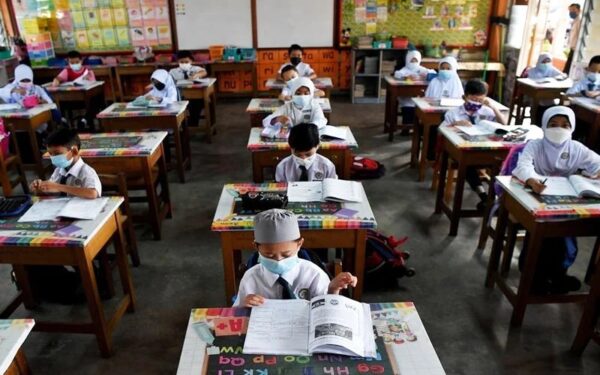
MALAYSIA’S recent Malaysian Education Blueprint (Rancangan Pendidikan Malaysia 2026–2035) proposed allowing children as young as six to enter Standard One from 2027, on a voluntary basis.
This means parents can choose to enrol a child at 6 instead of seven (7) if the child is ready. The change is not mandatory; it is meant to give families and schools flexibility.
Prime Minister Datuk Seri Anwar Ibrahim noted that while the initial policy included a readiness or diagnostic test, it was later scrapped to avoid disadvantaging children who are early but might fail a formal exam.
The headline initiative is that younger enrolment is allowed (not forced), recognising diverse development speeds.
I have lived this policy change in my own life. I entered Standard One when I was just five years old and advanced to Standard Six by age 10. At first it felt thrilling to learn with older peers, but my progress was halted when the school administration stopped my acceleration.
Back then, they claimed there was “no rule” allowing a ten-year-old in Standard Six; indeed, at the time our education law had no clear provision for skipping grades. This roadblock was disheartening.

Fortunately, I was later selected for the PERMATA Insan programme, a national gifted-education initiative. PERMATA Insan, based at Universiti Sains Islam Malaysia (USIM), identifies and nurtures gifted and talented Muslim students as early as eight years old.
Under PERMATA, children around age 8‒12 (and in some cases younger “highly able” kids) receive enriched schooling that blends advanced academics with Qur’anic and Islamic studies.
Entry requires high scores on standardised intelligence tests (the UKM1 and UKM2 exams) and a special assessment, so only truly exceptional children are admitted. In other words, PERMATA is exactly the type of programme to support “gifted and talented” learners, ones who are far ahead of the usual curriculum.
Malaysia’s PERMATA programmes have a track record of accelerating bright youngsters. For instance, one alum is Izz Imil “Iz” Shahrom, who at age 12 enrolled in a Bachelor of Science in Mathematics at the Universiti Malaya, making him the youngest UM undergraduate in history. His success was publicly celebrated as proof of the impact of PERMATA@Pintar Negara Programme.
Back in time, another Malaysian prodigy, Adi Putra Abdul Ghani, astonished educators by inventing 235 new mathematical formulas and publishing 12 of them in a book titled Seni Matematik Islam.
Adi was so advanced that he was invited to give lectures in Malaysian universities by age ten. These examples show that some children master complex material far earlier than typical.
Our education system has supported this kind of acceleration before. In the past, top-performing third-graders in national schools were given an exam (the Penilaian Tengah Sekolah) that, until 2000, allowed them to skip Standard 4 and move straight to Standard 5.
Similarly, at the university level, Malaysian universities routinely offer “direct admission” (fast-track) PhD spots to outstanding Bachelor’s degree holders with very high CGPAs (e.g. ≥3.70).
In other words, the principle has been there: if a child or student clearly exceeds current grade-level learning, the system can permit them to leap ahead.
The key is having fair criteria (like test scores and readiness assessments) to ensure such skips truly benefit the student and not the school’s shortcuts.
In conclusion, the initiative to allow six-year-olds into Standard One is just one step in the right direction. This policy, like compressed and accelerated policies elsewhere, is inclusive of those ready to learn beyond their years, without forcing it on those who are not.
We must remember that gifted and talented children (including high achievers) are a special but real part of our student population.
The old one-size-fits-all model can leave such talents bored or frustrated. With proper safeguards, we should not let bureaucracy hold back a young mind eager to leap ahead.
As I experienced, being held back by “no rule” was a wasted opportunity. It’s time our education system be more flexible and open: providing enrichment and acceleration when needed, so each child can thrive at their own pace.
This is not a blanket policy but an adaptive one. One that ensures every capable student can reach their potential. After all, preparing the nation’s future means nurturing every kind of talent, not ignoring it.
Ahmad Faiz Yazid is a PERMATA Insan alum who holds a Bachelor of Economics with Honours (Distinction) from Universiti Malaya (UM) and was the recipient of the Anugerah Pelajaran DiRaja (Pingat Jaya Cemerlang) at UM’s 65th Convocation Ceremony in 2025.
The views expressed are solely of the author and do not necessarily reflect those of MMKtT.
- Focus Malaysia

No comments:
Post a Comment
Note: Only a member of this blog may post a comment.