


The return of several former leaders to PKR should not be viewed simply through the old argument over who left, who stayed, and who has now returned.
The more important question is whether their experience, political networks, and grassroots influence can strengthen a party that now carries far greater responsibilities than when many of them first left.
Edmund Santhara Kumar, Kamarudin Jaffar, Tian Chua, Xavier Jayakumar, and Steven Choong Shiau Yoon are familiar names in Malaysian politics. Between them, they bring years of experience in Parliament, government, elections, and constituency work. Their political histories differ, and some parts remain uncomfortable for many PKR members. That should not be ignored.
But neither should their experience be dismissed simply because political relationships broke down during one of the most turbulent periods in the party’s history.
I say this as someone relatively new to PKR who previously came from a different political background, including Bersatu. I did not experience every internal battle within PKR, nor do I share the same emotional history as members who stayed through those difficult years.
But perhaps that distance also makes one thing easier to see: political journeys are rarely straight, and parties that want to grow must eventually decide whether past differences will permanently define their future.

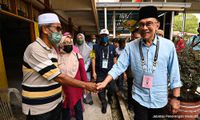
Party president Anwar Ibrahim’s willingness to welcome former leaders and activists back reflects an understanding that PKR now needs consolidation. At the party congress, he openly called on former leaders to return and apologised to those who may have felt marginalised in the past.
After decades of navigating alliances, internal divisions, and political realignments, Anwar is sending a clear message: PKR must decide whether to remain trapped by old disagreements or draw on its collective strengths to prepare for the challenges ahead.
Rebuilding without forgetting the past
That does not mean history should be forgotten. Members who stayed with PKR during its difficult years deserve particular respect. Some continued running branches, organising activities, and defending the party after more prominent personalities had left. They carried responsibilities that newcomers like myself did not have to bear at the time. Their loyalty should not count for less simply because former leaders are now returning.
The value of returning figures lies largely in their experience and the relationships they retain. Political organisation takes years to build. Former MPs and senior party leaders may still have links with community leaders, local associations, businesses, and voters in areas where PKR’s presence has weakened. They also understand constituency management and election organisation in ways that cannot be developed overnight.
The political ruptures after 2020 cost PKR more than a few recognisable names. When leaders leave, local networks can weaken, branches lose momentum, and voters who once had direct ties to the party can become disconnected. Restoring some of those links could prove useful as PKR prepares for increasingly difficult electoral contests.
But the party should remain realistic. A leader’s return does not mean their former supporters will automatically follow. Voters today are more independent, and political loyalties are less predictable. Those returning must demonstrate that they still have something useful to contribute. Their relevance should be measured by their work and ability to rebuild confidence, not simply by the positions they once held.

The same principle should apply when seats and party positions are discussed. Returning leaders should not automatically take precedence over those who spent years building the party in their absence. Their experience should instead be put to use strengthening branches, improving election preparation, reconnecting with the rakyat, and developing younger leaders.
If the process becomes another contest over positions and influence, PKR will only recreate the internal problems it is trying to overcome.
The timing of this consolidation is important because Anwar is no longer leading an opposition party whose main task is to criticise the government. He is leading the government itself, and Budget 2027 illustrates the scale of that responsibility.
From party consolidation to governing
Presented under the theme “Reaching for the Skies, While Anchored on Our Values”, Budget 2027 was framed by Anwar as more than an annual accounting exercise. He described the national budget as a moral commitment by the government to the people.
Whether or not one agrees with every measure, the budget seeks to reach a broad cross-section of Malaysian society, from lower-income households and workers to students, civil servants, pensioners, farmers, fisherfolk, gig workers, homebuyers, and young Malaysians entering an economy increasingly shaped by artificial intelligence.
The expansion of the Rahmah Cash Contribution (STR) and Rahmah Basic Contribution (Sara) is among the most direct measures. The government has allocated RM16 billion for both programmes in 2027, with RM150 a month for STR recipients and additional Sara payments for Malaysians aged 18 and above who are not covered by STR. For families struggling with daily living costs, such measures are likely to matter more immediately than discussions about macroeconomic projections.
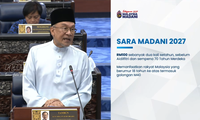
Budget 2027 also takes further steps on wages. The minimum wage is scheduled to rise from RM1,700 to RM2,000 in June 2027 for workers covered by the new rate, while the government is introducing a new wage framework setting RM2,500 as the starting rate for semi-skilled occupations and graduates. GLICs and GLCs are also raising their living-wage benchmark to RM3,400.
These measures matter because the cost-of-living problem cannot be addressed indefinitely through subsidies and cash assistance alone. Wages must eventually catch up.
The budget also covers taxation, education, welfare, transport, housing, and employment protection. Individual tax relief is being increased from RM9,000 to RM12,000, tax rates for certain middle-income bands are being reduced, and relief is being widened to cover areas ranging from family care to AI subscriptions. Other measures target PTPTN borrowers, public transport users, farmers, fishermen, persons with disabilities, healthcare workers, small traders, first-time homebuyers, and gig workers.
There is also an effort to prepare younger Malaysians for technological change. Another 100,000 free AI subscriptions will be provided, alongside digital courses and greater investment in AI, research, automation, and professional training. Helping people manage current pressures is necessary, but preparing them for the economy ahead is equally important.
Turning policies into public confidence
Policies may be formulated in Putrajaya, but political confidence is built much closer to the ground. Local leaders and branches need to understand what the government is introducing, who qualifies, how people can benefit, and where implementation is falling short. If assistance is available but eligible recipients do not know how to obtain it, a governing party cannot simply expect the policy to speak for itself.

This is where experienced leaders returning to PKR could prove useful. They understand constituencies, know local political structures, and, in some cases, retain relationships that could help reconnect the party with communities. Their experience can complement a younger generation of leaders who understand new voters, digital communication, and a political landscape very different from the one PKR faced two decades ago.
PKR needs both.
The party must also think beyond Anwar. His position as prime minister, party president, and central figure in PKR’s history gives the party considerable political weight. But no serious organisation should build its future on the assumption that one leader will always be there to carry it.
Government performance and party strength are not the same thing. A government can introduce useful policies while its grassroots machinery weakens. Economic indicators can improve while voters remain dissatisfied with their personal circumstances. Ministers can perform well while branches become disconnected from the communities they are meant to represent.
The return of experienced former leaders should not be seen simply as the party looking backwards. If managed properly, it can form part of a broader effort to recover lost networks, consolidate different groups, and build an organisation capable of supporting the government while preparing for future elections.
As a relatively new PKR member, I believe Anwar was right to open that door. I also understand why members who stayed through the difficult years may approach the process more cautiously. Both perspectives deserve respect.
The decision’s value will ultimately be measured by what happens next. Are branches becoming stronger? Is election machinery better organised? Are younger leaders still being developed? Are those returning willing to contribute before seeking positions? Are voters who drifted away beginning to listen again?
And if PKR can combine that organisational rebuilding with a government agenda that genuinely improves wages, eases household pressures, and prepares Malaysians for the future, the party will have something far more valuable than temporary political momentum.
It will have a stronger reason for people to believe in it again. - Mkini
MAHATHIR MOHD RAIS is a former Federal Territories Bersatu and Perikatan Nasional secretary. He is now a PKR member.
The views expressed here are those of the author/contributor and do not necessarily represent the views of MMKtT

No comments:
Post a Comment
Note: Only a member of this blog may post a comment.