


Few politicians in Malaysia today are quite like Tiong King Sing.
Some of his conservative critics in Peninsular Malaysia mistakenly label him a “Chinese minister from DAP”, not knowing he actually leads an indigenous-majority Sarawak party.
Yet, he enjoys considerable popularity and visibility within the Chinese Malaysian community.
And while he champions unity within Gabungan Parti Sarawak (GPS), he has steadily expanded his own political footprint and that of the Progressive Democratic Party (PDP) - at times even putting pressure on his coalition allies.
For more than three years, the tourism, arts and culture minister has frequently dominated national headlines since taking office in December 2022.
From personally rushing to the airport to “rescue” a Chinese tourist to the uproar over listing bak kut teh as a national heritage dish, and most recently, the controversy surrounding the Rain Rave Water Music Festival, Tiong consistently tackles issues with a hands-on, front-line approach.

While some admire him for his hands-on brand of politics, he is also known for being frank and candid, especially on issues concerning non-Muslims, which led to others accusing him of stirring the hornet’s nest.
Regardless of whether he is admired or resented, Tiong has undeniably become one of the most recognisable ministers in the Madani government.
Beyond the national spotlight, he is driving a far more significant political expansion within his home state of Sarawak.
Shift in traditional power structures
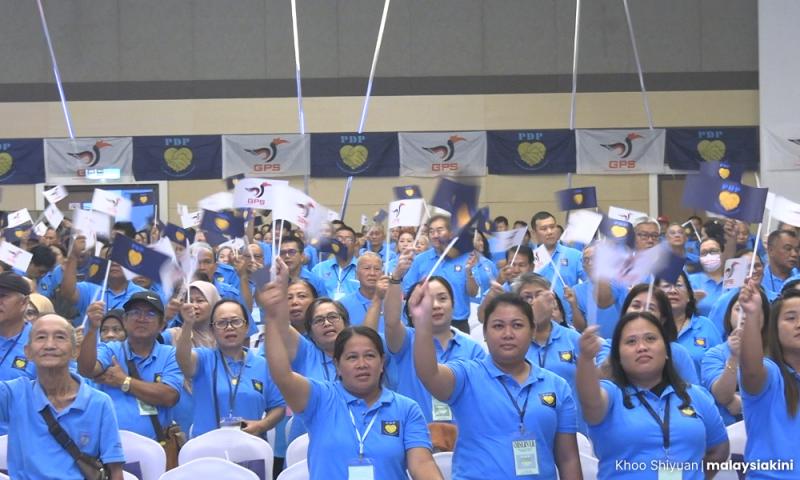
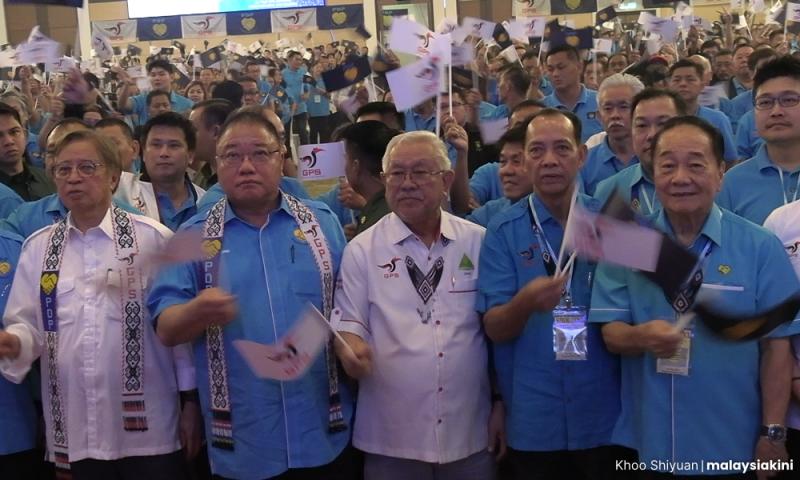
The PDP’s triennial general assembly in Sibu on May 16 served in many ways as a massive show of strength.
The venue was packed to the rafters with delegates and party members from across Sarawak. As GPS and PDP flags waved continuously and the party anthem played on loop, Tiong took the stage to a roaring standing ovation that lasted nearly a minute.
In most political parties, such a scene would be highly unusual. More than half of the crowd were indigenous Sarawakians, yet the leader standing at the centre of the stage, receiving the loudest adulation, was an ethnic Chinese.
For a long time, Malaysian politics adhered to a rigid, well-defined power structure: ethnic-majority parties managed their own communities, with Chinese-based parties focusing on urban areas and indigenous ones mobilising the rural grassroots.
Even within a unified coalition like GPS, component parties maintained a tacit understanding to respect these clear-cut boundaries.
Tiong, however, has gradually dismantled these lines.
Part of the reason he has been able to build support among indigenous Sarawakians lies in the unique nature of Sarawak politics itself.
Compared to Peninsular Malaysia, the state’s political culture has historically been less ideologically rigid and less sharply polarised along ethnic lines, instead placing a stronger emphasis on localism.
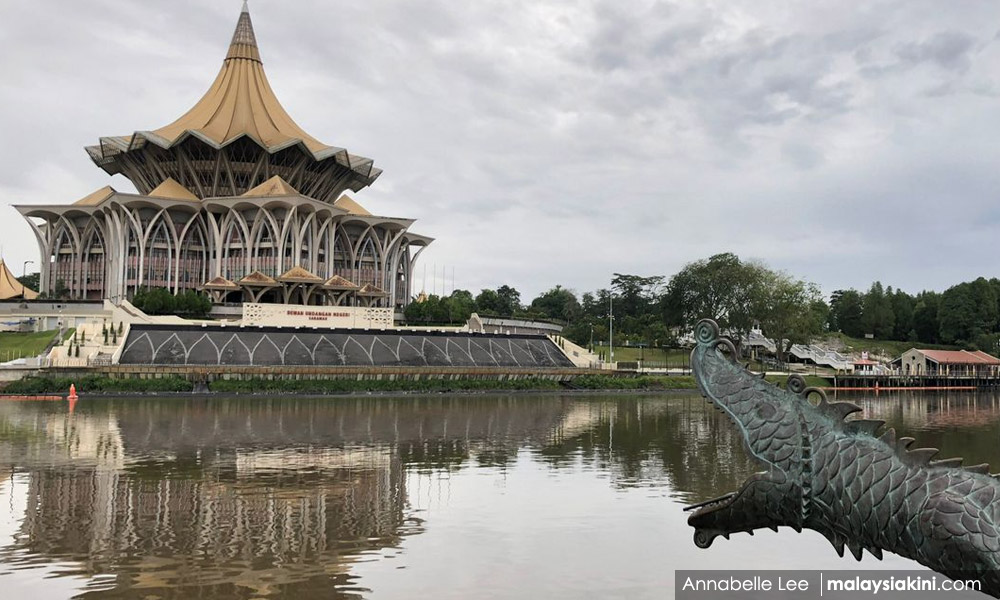
Personality, local influence, access to state resources, and the ability to deliver development often matter more than ideological positioning.
Like many dominant political systems, Sarawak politics also operates heavily through patronage networks and local power brokers.
In such an environment, a leader seen as effective, resourceful, and capable of bringing projects or federal access back to the ground can often transcend ethnic boundaries more easily than in the peninsula.
Tiong’s political style - highly visible, direct and centred on delivering tangible results and resources - fits naturally within that political ecosystem.
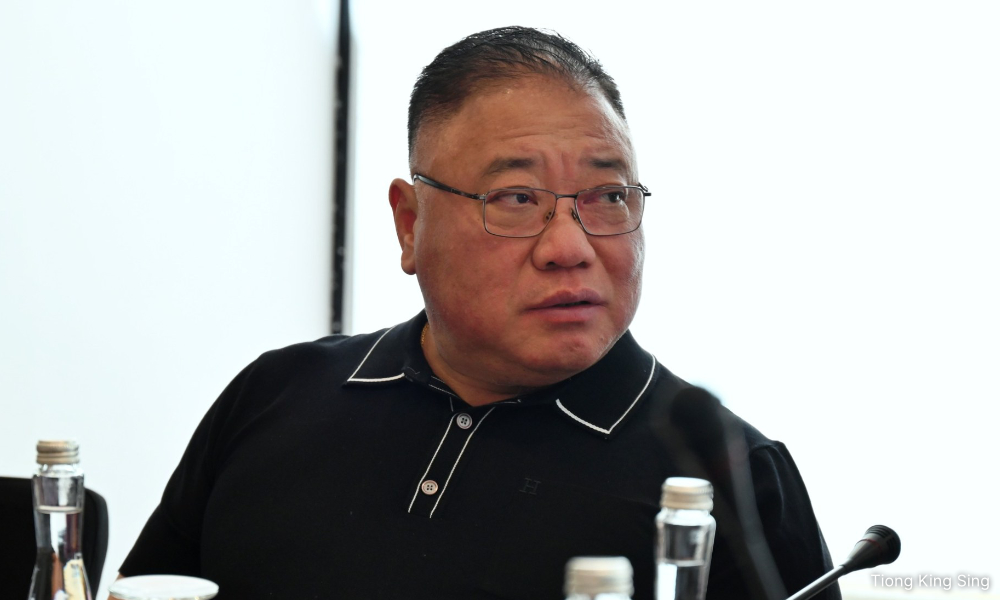
He is neither a conventional Chinese Malaysian political leader, nor does he indulge in the heavy ideological rhetoric favoured by Peninsular Malaysian politicians.
Instead, he operates as an “action-oriented politician” - expressive, quick to react, and carrying a distinctively blunt, street-smart swagger.
While this maverick style frequently ruffles feathers within the traditional bureaucracy, it gives him an incredibly sharp public profile.
Especially in the current political climate - following multiple shifts in federal power where the public has grown weary of bureaucratic lip service - a minister willing to rush to the scene, handle problems personally, and go toe-to-toe with civil servants easily wins grassroots favour.
And Tiong has successfully converted this personal brand into formidable political capital.
Tiong’s expansion plans
In truth, the real story is not Tiong’s visibility in the federal cabinet, but how he is fundamentally reshaping PDP.
Founded in 2002 as the Sarawak Progressive Democratic Party (SPDP) in the wake of the deregistration of the Sarawak National Party, it was long considered the smallest component party within what would become GPS.
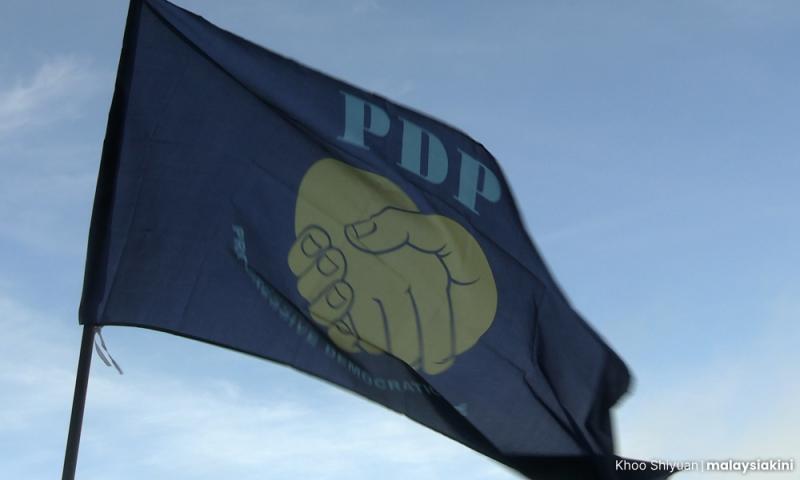
That changed in 2014 when a leadership crisis erupted. After a faction led by William Mawan Ikom quit, Tiong assumed total control of the party.
Upon taking the helm, his primary objective was not mere survival but aggressive expansion.
In 2017, he spearheaded a rebranding exercise, shortening the party’s name to PDP.
On the surface, it was a simple name change, but it was a calculated move to shed its localised image.
While SPDP carried regional connotations, PDP signalled the party’s aim of expanding its traditional reach.
Concurrently, Tiong began extending the party’s organisational tentacles into the peninsula.
PDP progressively established two pro-tem divisions in Selangor and six in Johor. Tiong justified the move as a welfare initiative to assist Sarawakians working in the peninsula.

However, Sarawak political insiders viewed it as a highly symbolic declaration: a regional party born out of the Sarawak hinterlands was now attempting to project cross-regional influence.
The true leap of PDP’s strength, however, came in 2024 when it absorbed Parti Sarawak Bersatu (PSB).
With this move, PDP did not just recruit a few politicians but the entire apparatus of what was once Sarawak’s largest opposition party.
PSB was originally born from a splinter faction of the Sarawak United Peoples’ Party (SUPP), and its core leader, Wong Soon Koh, was regarded as one of SUPP’s influential heavyweights.
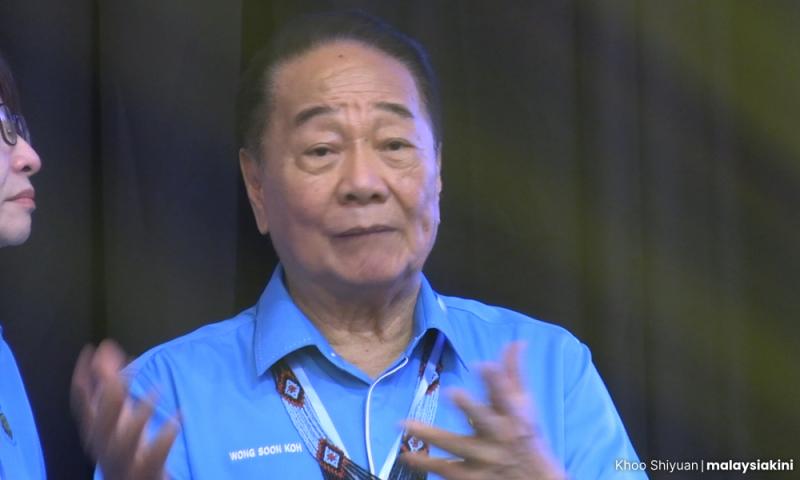
During the 2021 Sarawak state election, PSB won four seats: Bawang Assan, Engkilili, Ba’Kelalan, and Batu Lintang. Aside from See Chee How (Batu Lintang), who later resigned from the party, the remaining state assemblypersons eventually joined PDP after the merger.
With a single stroke, PDP grew from a minor party with just five seats in Sarawak’s rural heartland into a serious contender. Its eight seats empowered it with more leverage to negotiate with its allies.
Encroaching on allies’ turf
This rapid expansion has touched the most sensitive nerve within the GPS coalition: seat allocations and spheres of influence.
The Bawang Assan and Engkilili seats, held by Wong and Johnical Rayong Ngipa, respectively, have long been traditionally contested by SUPP. Consequently, PDP’s expansion has come at the direct expense of its coalition ally.
Friction between the two parties traces back to the 2021 state election, when GPS fielded Tiong in Dudong - a state constituency SUPP had held for decades.
While the two parties stopped short of an open declaration of war after that election, the fracture never truly healed.
With the Sarawak state assembly mandated to dissolve by February next year at the latest, a new state election is looming, and these underlying tensions are boiling over.
Since the start of this year, Tiong and SUPP president Dr Sim Kui Hian have repeatedly traded barbs in public over seat allocations and the appointment of community leaders.
Though both remain under the GPS umbrella, their mutual hostility is an open secret.
The PDP congress on May 16 was, therefore, less of a routine delegates’ meeting and more of an open arena for power projection and political posturing.
Taking a hardline stance during his speech, Tiong said that PDP must defend all eight of its state seats in the upcoming election.

Without explicitly naming SUPP, he criticised a fellow coalition partner for “belittling, looking down on, and bullying” PDP.
Speaking directly in front of GPS chief Abang Johari Openg, Tiong drew a line in the sand, insisting that PDP would make no concessions on matters involving the party’s dignity and seat interests.
“Unity is our strength, but unity must come with justice,” Tiong declared.
“We do not want to be mere bystanders in this coalition. We want to be the decision-makers.”
While these remarks were an explicit challenge to his allies, Tiong punctuated them with a strategic pivot: “PDP continues to commit to GPS.”
Unity and the kingmaker
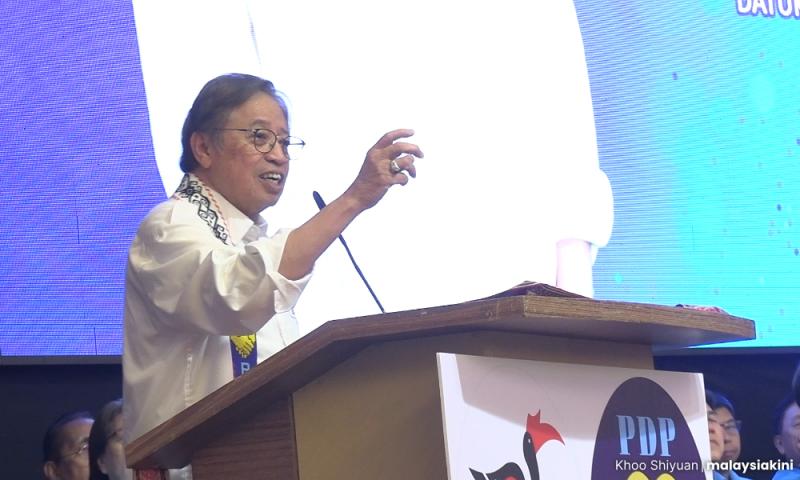
When Abang Johari took the stage immediately afterwards, he visibly attempted to lower the temperature in the room.
Without naming anyone, the Sarawak premier adopted a paternalistic tone, reminding PDP that Sarawak’s voice remains loud enough to act as a federal kingmaker only if it preserves its unity.
He recalled the aftermath of the 2020 “Sheraton Move” political crisis, sharing that Bersatu president Muhyiddin Yassin had called him at 2pm.
Once GPS pledged its backing, Muhyiddin was sworn in as prime minister by 5pm the same day.
“It was Sarawak that decided,” Abang Johari said.
He added a poignant, double-edged warning: “As long as we are united, we will decide the future of Malaysia. In other words, they don’t listen to you if we are not united.”
Throughout his address, Abang Johari meticulously avoided naming either PDP or SUPP, nor did he explicitly guarantee whether PDP would be allowed to defend all eight of its seats.
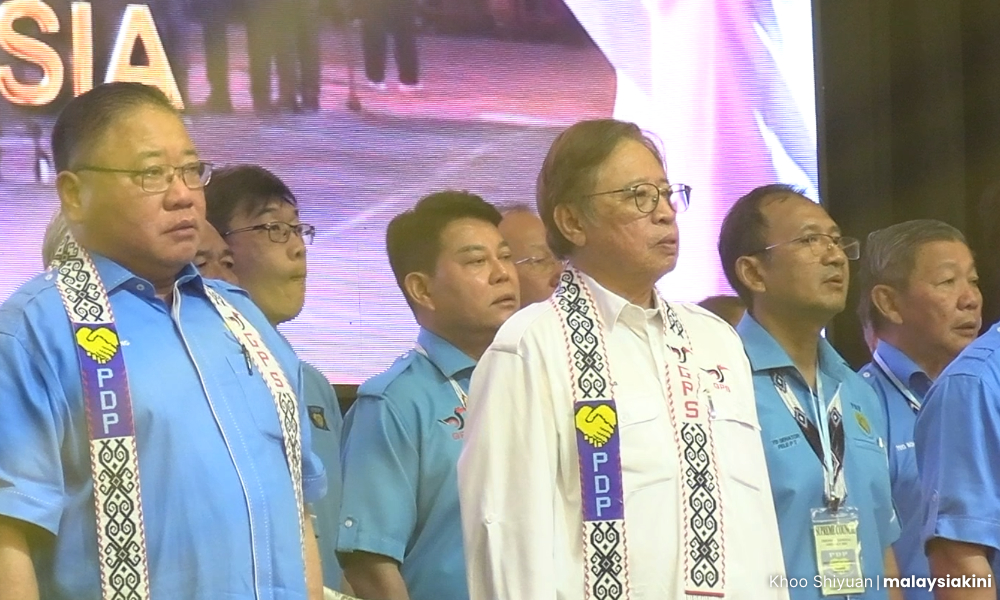
Yet, everyone in attendance understood his true objective: managing the increasingly volatile turf disputes and anxieties threatening to fracture GPS from within.
New pillar or loose cannon?
PDP can no longer be dismissed as a minor component party. During its 2017 rebranding, the party reported a membership of roughly 97,000.
According to Tiong’s announcement at the congress, that figure has now blown past 250,000.
More importantly, Tiong’s leverage extends far beyond organisational numbers.
He possesses a level of national exposure and grassroots popularity that few can match - even if it comes tethered to controversy and constant criticism.
For GPS, which has historically operated on localised dynamics, political figures capable of breaking out of Sarawak to command the national narrative are relatively rare.
This unique positioning grants Tiong a brand of political momentum seldom enjoyed by leaders of smaller GPS component parties.
Asked by Malaysiakini about the seat disputes at the sidelines of the event, Tiong dismissed talk of so-called “traditional seats”.
“In the past, our party also had seats that were taken over by other component parties in the coalition,” he argued.
As for speculation that PDP is preparing a permanent westward expansion into Peninsular Malaysia, Tiong denied any intentions of contesting there.
He also appeared entirely unfazed by those who mistakenly label him a “DAP minister”, explaining that his portfolio frequently requires close collaboration with the Transport Ministry, led by DAP secretary-general Anthony Loke, due to tourism, aviation, and flight route issues.
“None of that matters,” Tiong remarked coolly. “What matters most is contributing to the nation, the people, and the economy.”
In many ways, that statement perfectly encapsulates Tiong’s political brand.
He neither cares for ideology nor has an appetite for abstract political theories. His focus is entirely on execution, efficiency, and rapid problem-solving.

It is a style that makes him stand out vividly within a political system that deeply values order, decorum, and seniority. But by that same token, it ensures friction is never far behind.
His circle of friends is expanding, but so is his list of adversaries.
As the Sarawak state election draws near and the tug-of-war between PDP and SUPP intensifies, the answer will soon come: will Tiong emerge as one of the coalition’s new pillars of power - or become the force that unsettles its delicate internal balance? - Mkini

No comments:
Post a Comment
Note: Only a member of this blog may post a comment.