


Conducting the groundbreaking for the Madani Mosque on the site of the 110-year-old Dewi Sri Pathrakaliamman Temple along Jalan Masjid India, Kuala Lumpur, in March last year, Prime Minister Anwar Ibrahim declared “victory”.
Anwar also said victory had been achieved when a Muslim could show a good example for others.
“Showing that this is a Muslim of good character - compassionate, caring, and just; not an example of cruelty and hatred. That has never been a part of our (government’s) policy,” he added.
Fellow columnist Mariam Mokhtar noted that claiming “victory” invites the suggestion of a clash of different cultures or religions, between non-Muslims and Muslims, or in this case, between Hindus and Muslims - “them and us”.
Things have been simmering since then within the Indian-Tamil community, with murmurs of unhappiness with the Pakatan Harapan government and Anwar himself.
There were even suggestions that the community vote for the opposition in the future.
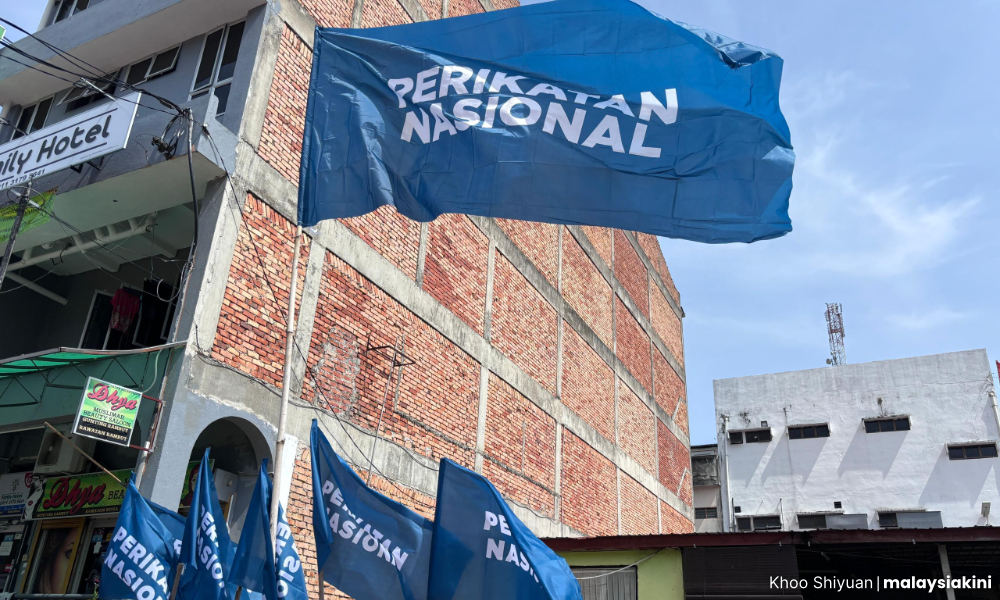
But Anwar, apparently, was not aware of or ignored such sentiments from the ground. As if in defiance and ignorance of this sector of the electorate, Anwar was at it again.
Escalation
In February, in a speech that was construed as “smacking of arrogance”, he announced that the government had barred the construction and operation of all houses of worship built without official approval.
He declared that local councils have the prerogative to remove any illegal houses of worship.
In an immediate response, the Malaysian Consultative Council of Buddhism, Christianity, Hinduism, Sikhism, and Taoism warned that the prime minister’s statement was too general and could be interpreted as applying to all places of worship indiscriminately.
The group urged the prime minister to clarify whether the directive applies to places of worship that existed before Merdeka, arguing that categorising decades-old places of worship as “illegal” under the law is arbitrary and unfair.
Lawyers Ambiga Sreenevasan and N Surendran demanded that Anwar withdraw his remarks as the directive was unprecedented and had serious consequences.
“For starters, only a court can declare with finality that a temple is occupying land illegally, and a court order is required before it can be demolished. In no circumstances can temple management be labelled trespassers, and police action taken against them,” they said.
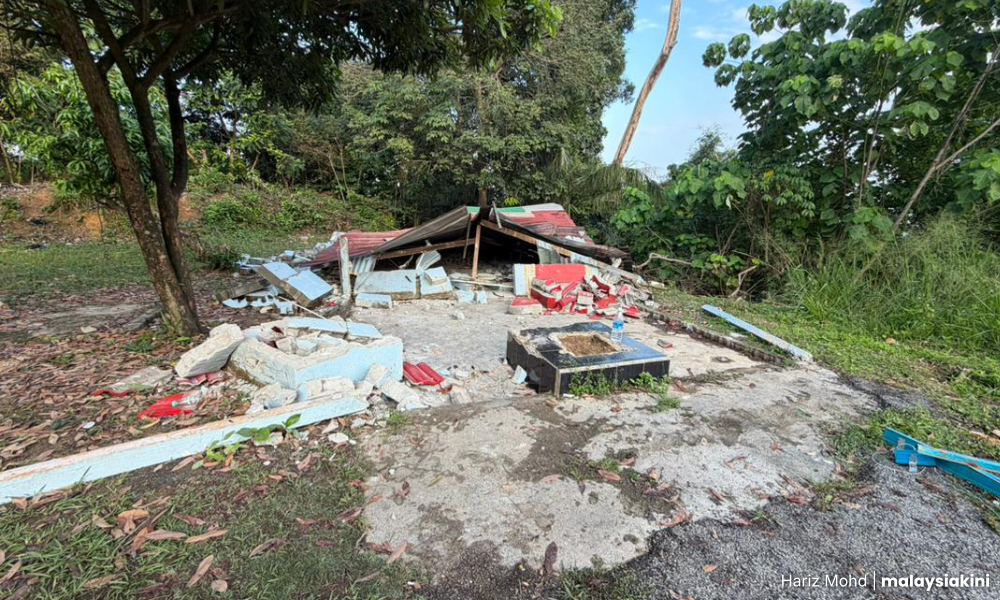
But vigilante groups were already on the prowl. A temple in Rawang was demolished, a rally was organised, and other minor incidents were reported.
‘Misconstrued’
On May 10, Anwar appeared to acknowledge that some of his remarks about Hindu temples had been perceived as tacit support for hostility directed at the Indian community.
Speaking to Indian students at Universiti Malaya, Anwar suggested that his call for stern enforcement against houses of worship built without permits may have been “misconstrued”, describing such interpretations as attempts to sow division.
Anwar had faced criticism from leaders within the Indian Malaysian community, who argued that his use of the term “kuil haram” (illegal temples) could be seen as endorsing unilateral action.
At the same event, he announced that the allocation for the Malaysian Indian Transformation Unit (Mitra) had been increased from RM100 million to RM150 million.
He was in an apologetic mood, acknowledging his imperfections while reaffirming his commitment to carrying the responsibility entrusted to him.
“I realise that no human being is perfect, and there are still shortcomings within myself that I constantly reflect upon.
“However, I continue to shoulder this responsibility with all my heart and soul, because every step taken is to ensure that the future of the nation and homeland will always be protected,” he said.
Then, on Saturday, speaking at the Madani Harmony Discourse, he called on the peace-loving majority to speak up against narratives of hatred and slander being propagated by a minority group against society in the country.
He said the situation appeared to reflect a “tyranny of the minority”, where a small group of loud, angry individuals who spread slander were attempting to impose their will on the majority of the people.
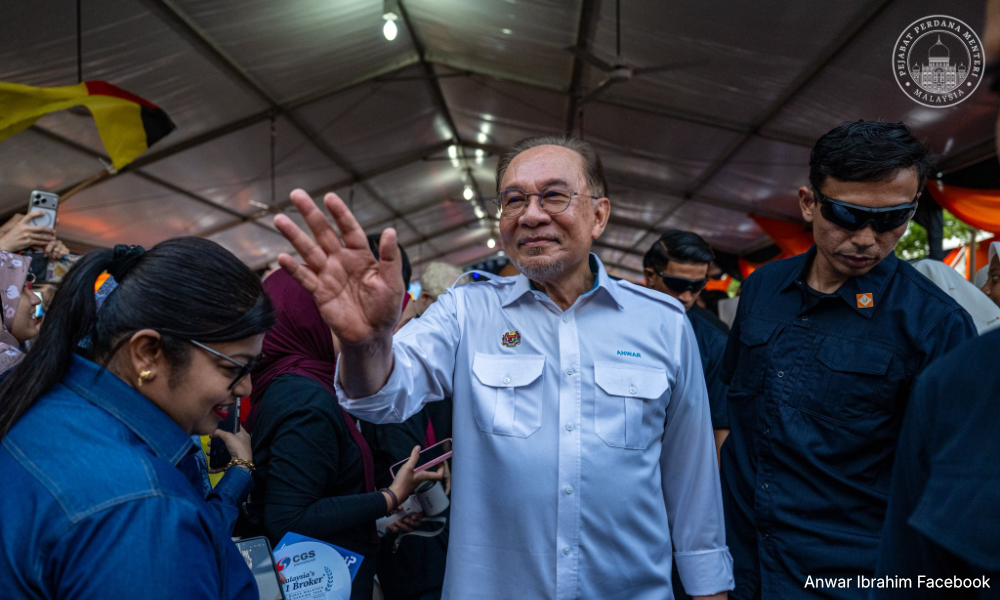
“Now, it is the noisy minority - angry, cruel, and stirring up emotions. They gather, sow hatred, spread slander, and instil fear in others. This seems like a tyranny of the minority. The oppression and cruelty of a small group forcing the larger group (majority).”
What more can people do?
But on how many occasions has he sung the same song? Countless times, he made the same threat - don’t touch on race, religion, and royalty but it has not abated.
On the contrary, the tempo has increased, especially on social media, which has become a snake pit of sorts for racist remarks.
Many, including this writer, have repeatedly spoken up against the escalation of racist remarks, and many have made police reports. What more can be done if action is not taken?
Lack of enforcement and, in some cases, selective prosecution have caused religious extremists and racists to accelerate their display of hatred.

Anwar’s shifting tone - from arrogance to apology, from “victory” to victimhood - only underscores the government’s failure to enforce some laws fairly and consistently.
When temples are singled out while other illegal structures remain untouched, when threats against minorities are tolerated, but criticism of leaders is swiftly acted upon, the message is unmistakable - selective prosecution is not a peculiarity; it is the operating principle.
Until enforcement is blind to race, religion, and political convenience, we will remain trapped in a cycle where extremists thrive, minorities feel besieged, and the prime minister will go unheard against the din of unchecked hatred.
Blinkered justice
Anwar’s rhetoric, from declaring “victory” over a century-old temple to pleading that his words were “misconstrued”, is more than a matter of tone.
It exposes a deeper malaise: a government that speaks of unity while practising division, that warns against racial and religious provocation while leaving enforcement conveniently selective.
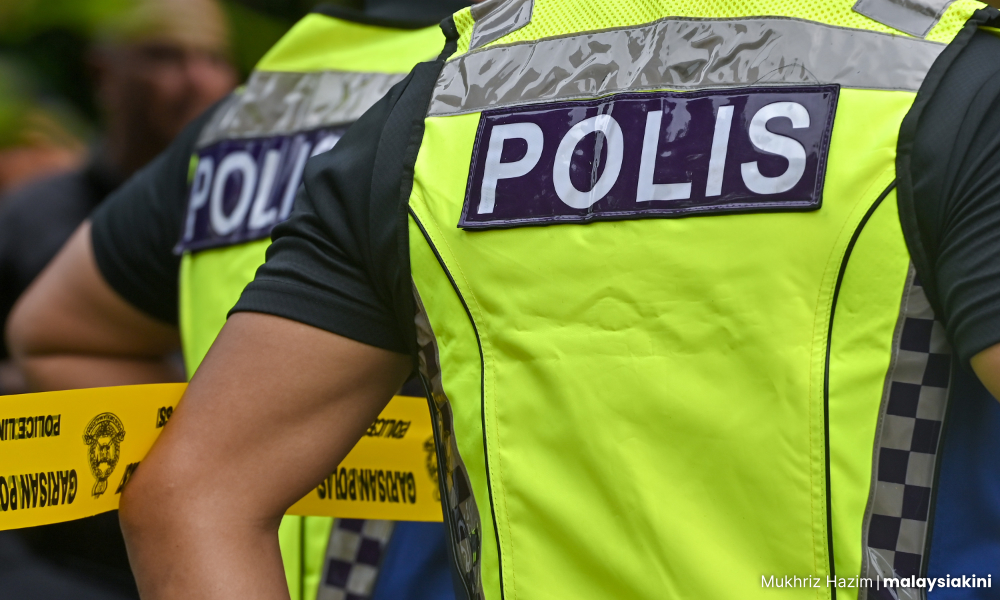
By branding temples “illegal” while thousands of unlicensed eateries and workshops escape scrutiny, the administration signals that the law is not blind but blinkered.
Each apology, each new allocation, each call for harmony rings hollow when there is unequal treatment and unchecked hostility.
The prime minister’s refrain about the “tyranny of the minority” is itself a paradox. If extremists are truly a minority, why does their venom dominate the discourse?
Because selective prosecution has emboldened them, and silence from institutions has given them space to thrive. Social media, left unpoliced, has become the echo chamber of hate, while temples become the scapegoats of enforcement.
What the nation needs is consistency: a rule of law applied without fear or favour, a government that protects all communities equally, and a prime minister whose words do not inflame divisions but extinguish them. - Mkini
R NADESWARAN is a veteran journalist who strives to uphold the ethos of civil rights leader John Lewis: “When you see something that is not right, not fair, not just, you have to speak up. You have to say something; you have to do something.” Comments: citizen.nades22@gmail.com.
The views expressed here are those of the author/contributor and do not necessarily represent the views of MMKtT.

No comments:
Post a Comment
Note: Only a member of this blog may post a comment.