


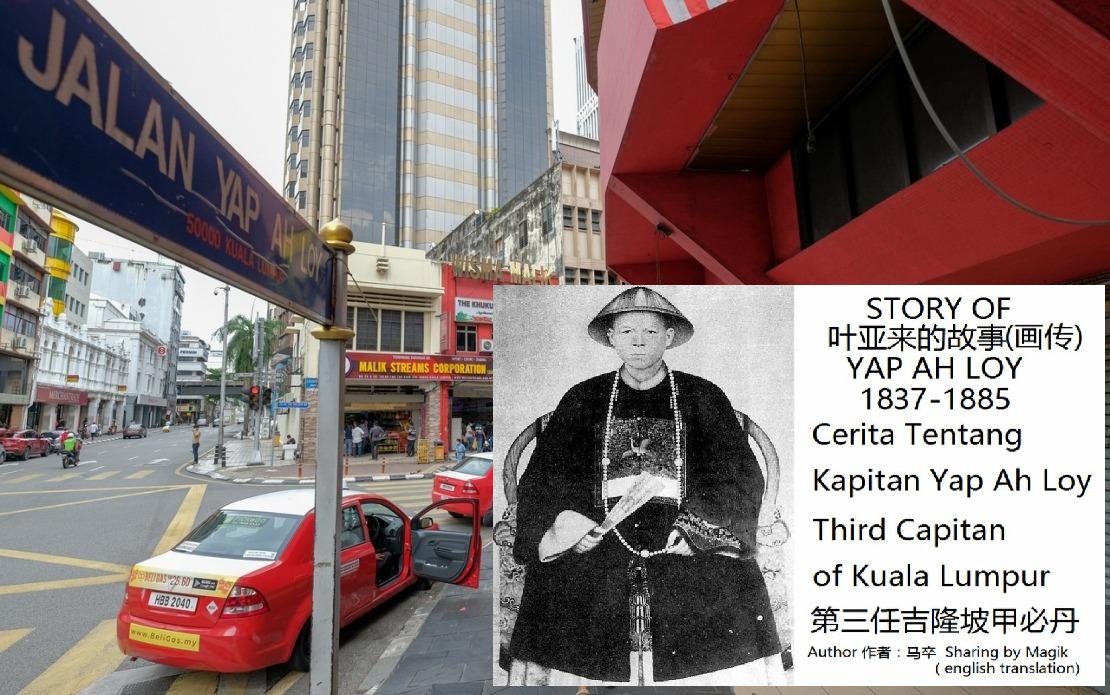
PIMP, drug lord, gambling kingpin – basically an underworld figure with some hefty leverage and authority. This is the dubious and oft-argued legacy of Kuala Lumpur’s third Kapitan Cina – Yap Ah Loy (1837-1885).
His place in local history has been a matter of fierce debate. On the one hand, there are those who credit him for developing a muddy river settlement into a thriving economic centre of commerce and trade.
On the other, there are accusations that father of Kuala Lumpur was a gangster with a shady past who used his criminal influence to rise to the rank of Kapitan Cina.
Hence there is controversy over his role in the development of KL. Should Malaysians be according such esteem to a figure who is said to have had his fingers in some less-than-savoury pies. These include alleged control over gambling dens, opium houses and brothels.
However, it has been argued that Yap’s involvement in these illicit trades was a sign of the times and must be viewed in the correct historical context.
According to history freak Azizul Farhan, Yap’s sphere of influence must be understood in the context of 19th century KL which was a lawless outpost that was attracting thousands of immigrant Chinese labourers to work in tin mines.
In a lengthy post on the Patriot Studios Facebook page, it was pointed out that many of the so-called illicit trades such as opium, prostitution and gambling were carried out with the implicit approval of the British colonial authorities who saw it as a necessary evil to contain the mass of (mostly male) labourers.
They needed entertainment, companionship and narcotics to counter the harsh realities of working in the tin mines.
‘No saint but a necessity’
According to the cultural and civilisation enthusiast, Yap who was born to poor parents in what was formerly known as the Canton province in China was the man who provided these services to maintain the peace – all the while with the tacit thumbs up from the British.
The Kapitan Cina was afforded powers akin to a “mini government administrator” who kept the peace and ensured the smooth running of the British “extractive” economic model.
It was concluded that while Yap was no saint, all colonial-era tin mining towns operated in the same manner. His actions and deeds were a necessary evil that reflected the times when these outposts were still developing and needed management of a different type.
The interesting post has generated 4.8K likes, 939 comments and 1.5K shares at the time of writing, denoting that this famed Kapitan Cina is still the subject of much debate, controversy and certainly no shortage of intrigue.
One observer contended that the British colonial powers bore the brunt of the blame for operating mining towns in such a manner.
Not only were illicit trades allowed and encouraged, the Chinese were granted land in urban areas that created an imbalance in the population make-up.
This commenter surmised that long-term problems were sure to fester wherever the British had their colonial imprint, ie in the case of Kashmir which is today a conflict point between India and Pakistan.

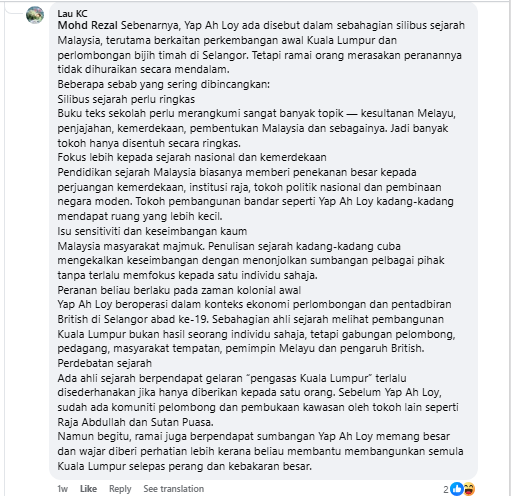
The debate over Yap’s role and whether he should be recognised as a historical figure that developed the capital city was evident in various comments.
One argued that with information freely available these days claiming that “he’s more of a pimp (than perhaps a community leader)” simply meant he was not a figure to be celebrated.

There was also a belief that the historical texts have been manipulated. Some claimed that Abdullah Hukum should be recognised as the (sole) founder of KL.
As such, they are unhappy that Yap had been accorded this status in some historical books given that he was after all a triad society leader (a prominent headman of the local Hai San secret society).

However, there were those who felt that Yap’s role in developing KL has not been given enough prominence in historical books.
It is acknowledged by this commenter that the title of “founder” cannot be afforded to any one individual given there was an acceptance that Yap had a big role to play in shaping the history of KL.
The debate may rage on. Historical veracity may be questioned and identity politics will rear its ugly head whenever the divisive figure that is Yap Ah Loy is mentioned. But there is no doubting that he had a major role to play in shaping KL – for better or worse.
- focus malaysia

No comments:
Post a Comment
Note: Only a member of this blog may post a comment.