`


THERE IS NO GOD EXCEPT ALLAH
read:
MALAYSIA Tanah Tumpah Darahku

LOVE MALAYSIA!!!


31 AUGUST 2026

Sunday, September 13, 2026

From dishwasher in Melbourne to heading the kitchen at Gilda in George Town, a Malaysian (food) love story


Gilda is both a neo bistro and a showcase of art like the stunning 'Lunar Rotis' piece by Jitish Kallat which features a series of 'rotis' used to symbolise the phases of the moon. — Pictures by Opalyn Mok

GEORGE TOWN, Sept 13 — Before he was brining chicken and making coconut milk-laced romesco at Gilda Restaurant, Ahmad Soffian Salim was washing plates in restaurants more than 14 years ago.

It was almost an accidental career change for the mechanical engineering major who had initially worked in the engineering department at Malaysia Airlines planning aircraft maintenance and servicing.

Ahmad relocated to Melbourne, Australia with his wife, Aim Aris, back in 2012 when the latter was pursuing her postgraduate studies there.

Living in an area that was far from the airport, Ahmad sought out jobs near their home and ended up as a kitchen assistant washing dishes and pots in a restaurant.
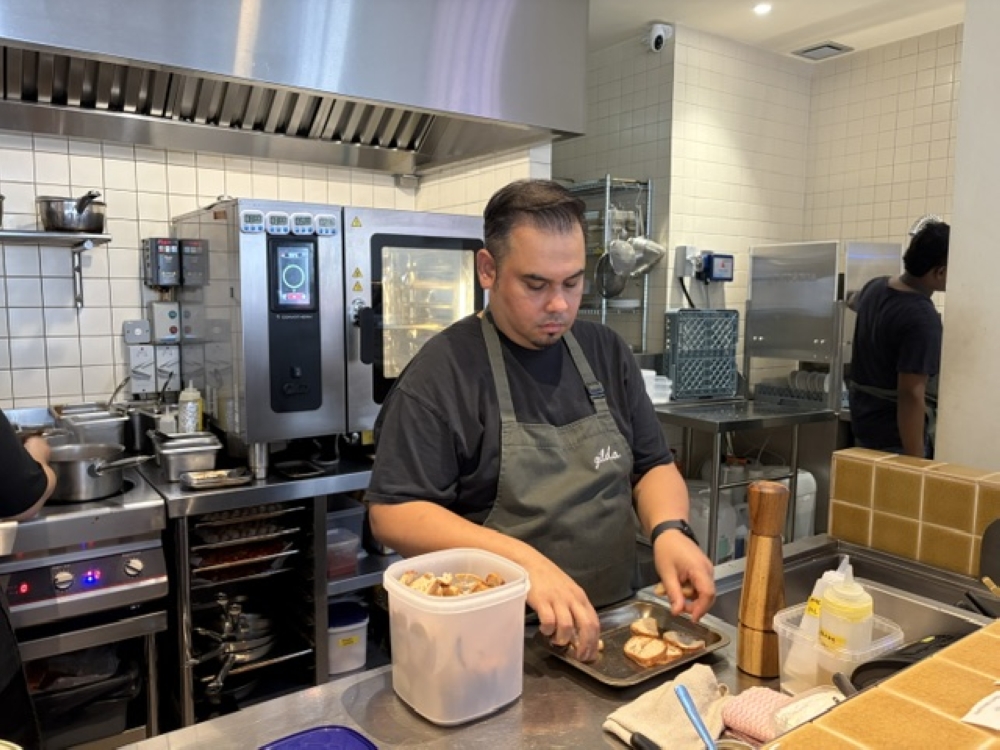
Chef Ahmad working in the open kitchen.
”We lived in an area where one of the best cafes in Melbourne was just behind our house,” Aim said.

She said 2012 was the peak of cafe culture in the area and it was their first time experiencing the Australian hospitality industry where in some cafes, the chef designs the menu to pair with coffee.

”It was really interesting and that was the first spark for Ahmad to want to try immersing himself in this industry,” she said.

One of the easiest ways to get in was to work his way up so that was how Ahmad started working as a kitchen assistant.

”I love food but what really made me want to be a chef was the high quality local produce there,” Ahmad said.
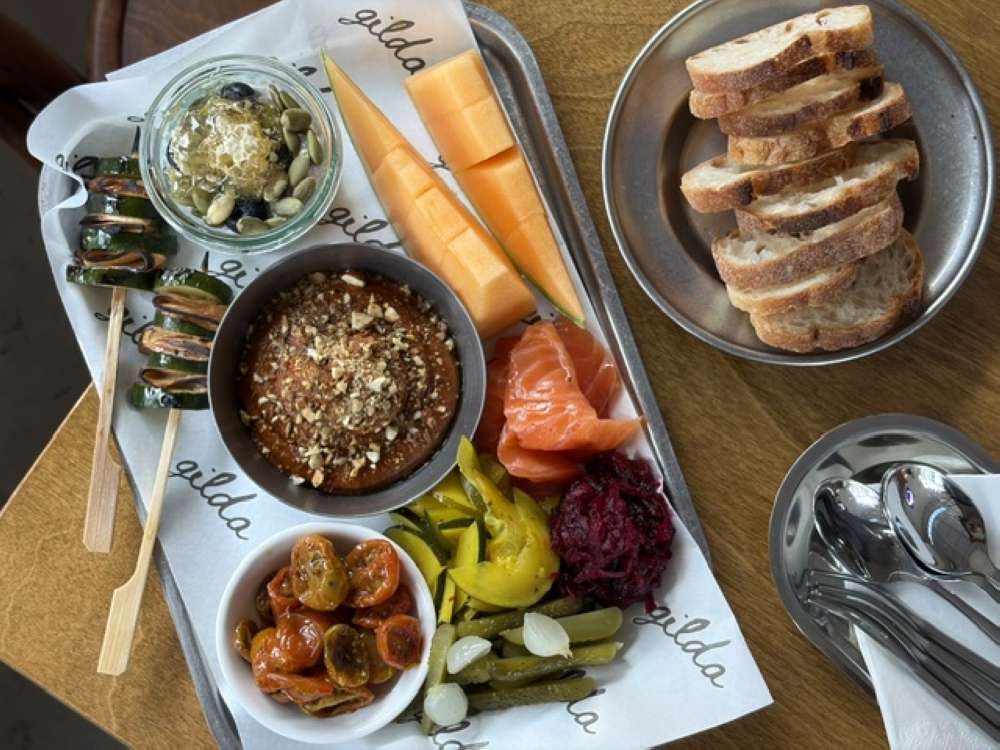
Gilda Lunch Spread is meant for sharing.

He said the locally sourced produce was of such good quality that the chefs did not really need to do much except to elevate it and let its natural flavours come through.

The couple had only expected to stay in Melbourne for about two years but it somehow stretched into eight as Ahmad worked his way up from a kitchen assistant to line cook to becoming the head chef of an Australian restaurant in five years.

“I worked in different cafes and restaurants and trained in modern Australian cuisine as my interest in cooking grew,” he said.

He had briefly considered applying to study in a culinary school but the fees were high while chefs in the restaurants he worked in encouraged him to learn on the job instead.

So, he took jobs in different kitchens to build his experience, going from working a morning shift in one restaurant and heading to another restaurant for dinner service.
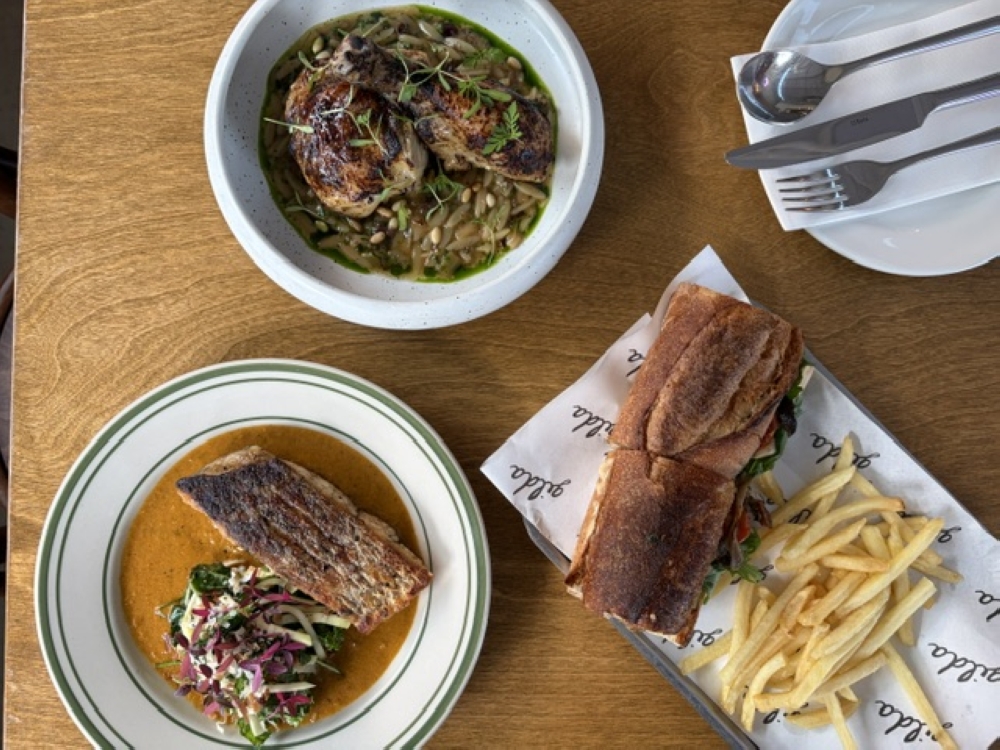
Clockwise from left: Grilled sea bass, grilled chicken and roasted mushroom baguette.

“I was fully occupied working from morning until night time for five days kind of thing, I often worked two jobs during that time because I wanted to learn,” he said.

 His appetite for learning was fuelled by what he found around him in Melbourne: cafes, restaurants, coffee and ingredients that opened up new possibilities.

After working his way up to become head chef and with Aim nearing the end of her PhD in late 2019, they decided to take one year off to travel and set up pop-up kitchens and collaborations in Jakarta, Hong Kong, Japan and Thailand.

However, the Covid-19 pandemic disrupted their plans.

The couple was in Penang to conduct research and work on a cookbook project in 2020.

“We managed to do our pop-up for three days—a kitchen takeover—at Norm Micro Roastery. And then the government announced a lockdown,” Ahmad said.

Interstate and international travel were prohibited and their plans to continue to Europe were put on hold.

It was then that they were asked to help plan a restaurant menu as a restaurant consultant.
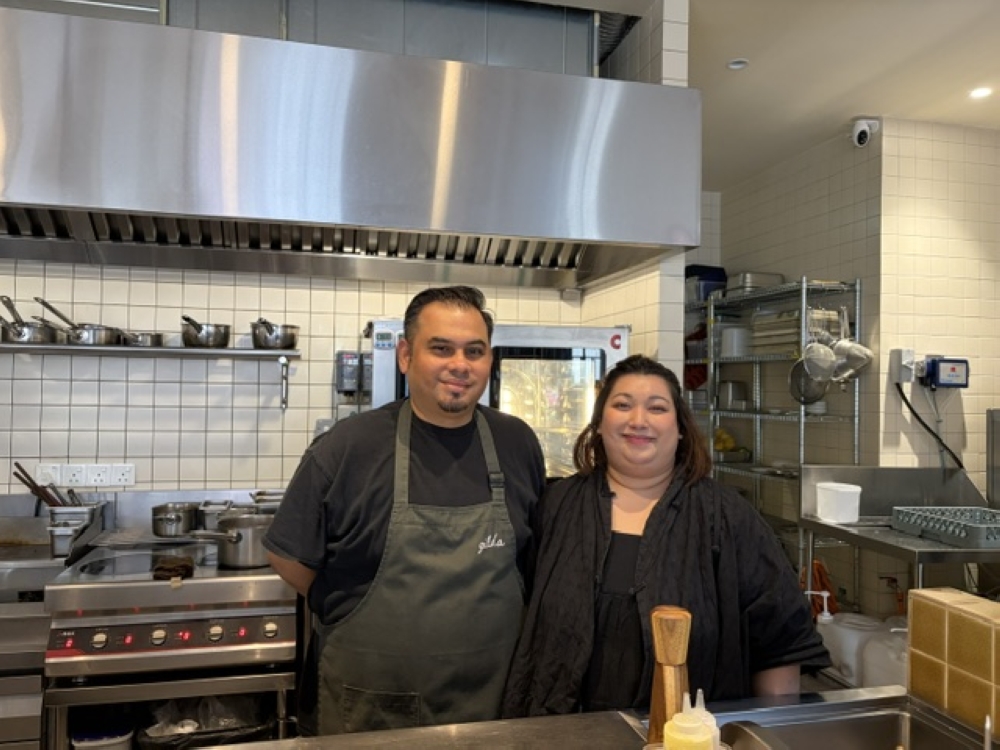
Chef Ahmad and wife Aim manage the restaurant which is co-founded with three other investors.

“At that point, I had only ever been a chef, I didn’t know much about restaurant consultancy so we told the restaurant, we will try,” he recalled.

What was initially meant to be a month of assistance became nine months as they developed the menu, helped run the kitchen and trained the team.

For Ahmad, it was also his first experience working as a chef in Malaysia.

Aim said they decided to make the most of their circumstances since they were both stranded in Penang during the lockdown.

From the one consultancy project, it led to more projects including a one-year residency at a restaurant in Chinatown in Kuala Lumpur in 2023.

The residency gave Ahmad something he had missed while setting up kitchens for others: a kitchen where he could cook his own food with his own team.

They later helped with the menu planning, training and opening of Peninsula House in Penang in July 2024, before handing over to its team.

The birth of Gilda

After years of moving between projects, they started toying with the idea of opening their own restaurant.

”Since we are both from KL, our initial plan was to set up a place there,” Aim said.

Penang, however, had another connection waiting for them — a friendship formed through a small pop-up during the pandemic.
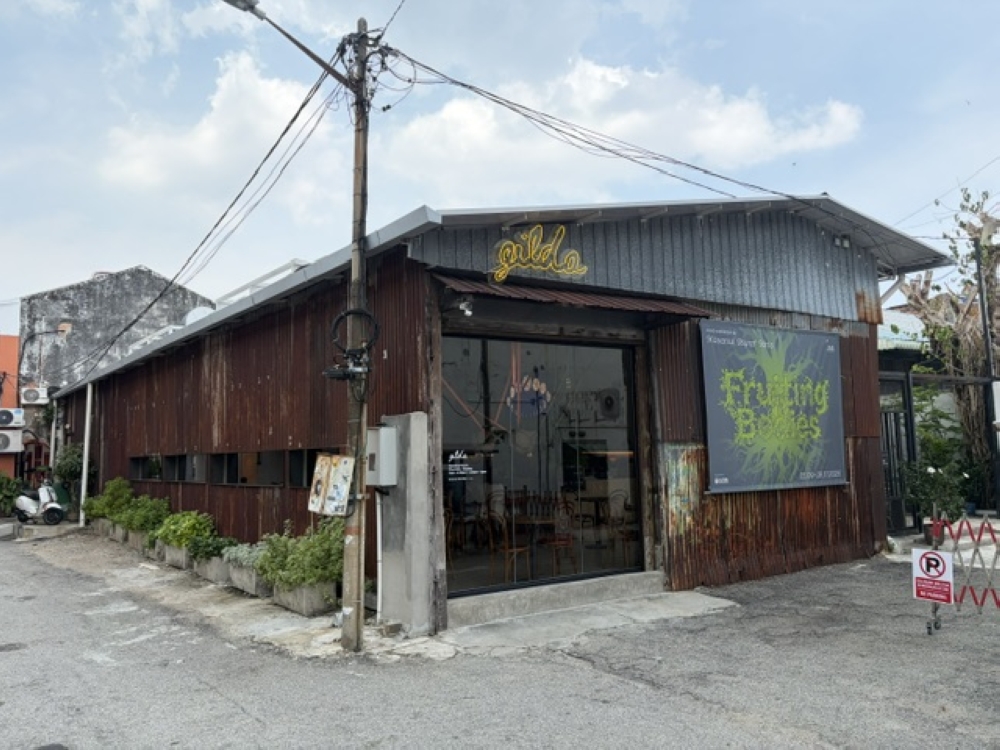
Gilda offers contemporary dining from brunch to dinner.

Among the guests was art collector and founder of Blank Canvas, Leong KY, who was also stranded in Penang at the time. 

He subsequently invited the couple to cook for private dinners and gallery events in Penang.

“I would say he is our ‘lockdown friend’,” Ahmad said.

When Leong found a new space for Blank Canvas in Soo Hong Lane, it was larger than he needed.

He reached out to Ahmad and suggested they use the extra space beside the gallery as a restaurant.

They initially offered to consult instead but Leong wanted them to run and manage the place.

The idea gradually took hold. Their Penang project progressed while their Kuala Lumpur plans were delayed, prompting them to focus on Gilda.

The restaurant opened on October 25 last year, with five founders: Ahmad, Aim, Leong, Alfred Cheong and property owner Dickson Lim.

Ahmad and Aim oversee operations, while the space also doubles as a showcase of artworks from Leong’s personal collection.

”I chose the name Gilda because I wanted something short, easy to read and with the character of a female name, as I noticed Melbourne restaurants tend to use female names,” she said.

She said the word is old English for golden and gold is a good thing to associate with the restaurant as in terms of food, it also refers to golden crust, the crispness of cooking, the golden standard or food that is really nice.

At Gilda, Ahmad’s food reflects the kitchens he learnt in, without restricting him to a single cuisine.

His foundation is modern Australian cooking, which he sees as shaped by the food, traditions and cultures brought by migrants.

Back in Malaysia, Southe-ast Asian flavours naturally became part of that mix.

“And safe to say the direction is more like we want to make good food, without any limitation, without any box,” he said.

One of the items on the menu is a sea bass served with Ahmad’s take on romesco that incorporates green chilli and coconut milk.

Alongside it is a kerabu-like salad with mango and edamame, bringing another combination of influences to the plate.

He said the menu he planned focused on layering of flavours with Malaysian influences.

Aim said Gilda not only offers contemporary dining but is a neo bistro with items for brunch and small plates for customers who just want to hang out with their friends and family.

Gilda is open from Thursday to Monday from 11am to 4.30pm and 5.30pm to 10pm. Reservations can be made at https://gildadining.com. - malaymail

Sarawak extends school closures in Serian, Lubok Antu until haze improves


The department said parents and guardians may keep their children at home if they are concerned about their health due to the haze currently affecting several areas in Sarawak. — Bernama pic

KUCHING, Sept 13 — The temporary closure of schools in the Serian and Lubok Antu districts has been extended until the Air Pollutant Index (API) readings in both districts fall below 200.

In a statement tonight, the Sarawak State Education Department (JPNS) said the decision was made based on continuous monitoring of API readings through the Department of Environment’s official portal, using the Malaysian Air Pollutant Index Management System (APIMS), as well as reports from the Malaysian Meteorological Department.

However, all primary and secondary schools under the supervision of 12 District Education Offices (PPD), namely Kuching, Padawan, Bau, Lundu, Samarahan, Simunjan, Sri Aman, Kanowit, Julau, Meradong, Bintulu and Tatau/Sebauh, will operate as usual from this Monday.

“Any changes regarding school operations or the latest developments will be announced from time to time,” the statement read.

It also stated that the Ministry of Education (MOE), in collaboration with the National Disaster Management Agency (NADMA), would soon distribute face masks to students, teachers and staff at schools identified as being severely affected by the haze.

JPNS said the welfare, health and safety of students remain a top priority, particularly during hot weather or unexpected weather conditions.

The department also reminded schools to take appropriate measures should haze affect their respective areas or districts.

“If the API reading exceeds 100, all outdoor activities involving students must be halted.

“When the API reading exceeds 200, all schools in the affected area or district must close immediately. If the reading exceeds 500, teachers and school staff are not required to report for duty,” it said.

JPNS said schools would reopen once the API reading falls below 200.

Additionally, the department said parents and guardians may keep their children at home if they are concerned about their health due to the haze currently affecting several areas in Sarawak.

However, parents and guardians must inform the respective schools of their decision, it said.

It said temporary school closures could also be implemented based on recommendations from the Sarawak State Disaster Management Committee (JPBNS), depending on developments in the situation.

The department also reminded all District Education Offices (PPD) and educational institutions under its purview to implement preventive measures to safeguard students’ health during hot or hazy weather.

“Schools must monitor activities that could expose students to hot or hazy conditions to ensure their health is not compromised, ensure an adequate supply of clean drinking water, and encourage students to bring their own drinking water.

“Students are also advised to wear face masks and drink water frequently in appropriate amounts to help regulate body temperature,” it said.

JPNS emphasised that the health, safety and well-being of the entire education community remain its top priority, and advised the public and parents to obtain the latest information on school operations in their respective districts through the department’s official channels. — Bernama

Paving the cracks in national family unit


Race and religion took a back seat during this year’s Merdeka celebration.

The feel-good speeches, however, overlooked a crucial question: have we truly evolved into an inclusive Keluarga Malaysia (Malaysian Family), an idea introduced by former prime minister Ismail Sabri Yaakob in 2021.

The concept faded when the MACC started an investigation into the Malaysian Family campaign funds for its alleged links to Ismail Sabri’s administration.

The Malaysian Family concept was replaced by Malaysia Madani after Anwar Ibrahim took office in late 2022.

Different slogans, same spirit: to unite Malaysians in an extended family unit, which by definition comprises several generations living together with shared responsibilities.

When one family member falls, another reaches out to pull them up. When one succeeds, the entire household rejoices.

But unlike a biological family, a national family does not grow organically. It requires deliberate scaffolding - a concept in education where teachers support students in their learning and grasping of new content.

As students understand more, and as they begin to take on more content on their own, teachers gradually step aside.

When ‘scaffolds’ become ‘concrete pillars’

Like in construction, scaffolds are removed with each stage of completing a multi-storey building. In our context, the New Economic Policy (NEP) and racial quotas are the “scaffolds”, which were necessary 50 years ago to address wealth disparity and ease racial tensions.

But over decades of rephrasing the race-based policies, the scaffolds have turned into permanent concrete pillars with cumulative effects.

Low-income Malays, the Orang Asli in particular, are trapped in mediocrity while the well-connected Malay elites get richer and richer.

To grow a national family, no member should be left on the wayside. All have shared aspirations for a better life. The state in this context is the familial provider. But the family remains divided.

We were raised and educated in national and vernacular schools from ages seven to 12. Our racial and cultural identities were formed early. We are differentiated by class, race, and religion.

Yet we have a remarkable capacity to get along without being overtly belligerent. That’s our Malaysian paradox. So, what follows?

Algorithm vs reality

I revisited this question when I caught up recently with former colleagues from Institut Teknologi Mara, Shah Alam. (I left ITM in the late 1980s for Australia to work as a journalist and later as a media academic).

Drawing from our inter-racial experiences, we thought Malaysians may not be as divided as the politics and algorithmically polarised social media suggest.

Our reminiscence brought me back to the early 1960s when I ran around barefoot with my Malay and Indian friends in the village.

The early morning muezzin’s call to prayer from the community mosque was my alarm bell.

Growing up, we respected our elders. Friends and strangers were “makcik” (aunt) and “pakcik” (uncle), “tuk” (grandfather) and “nenek” (grandmother).

We celebrated Kongsi Raya, Christmas, and Deepavali as one chaotic family. The grounds for growing an extended national family that existed in the pre-1969 era cracked after the race riots in 1969.

Innocence lost

We lost our tween innocence. Anxieties and fears were projected onto us from those who had witnessed the wanton killings in Penang and Kuala Lumpur.

The racial weeds started to creep in. Weeds are naturally opportunistic. They spread their seeds, settle, and grow in any cracks and exposed soil. And, in our government machinery, there are many cracks.

An effective weed killer lies in our political will to restore what was good about pre-1969 Malaysian society.

With today’s TikTok generations, imagine if we could mobilise a national family unit starting from the ground up to those who govern us. Social media can be a reckoning force in generating collaborative inter-ethnic content.

Political apathy from the TikTok generations will see the national family unit breaking up, further undermining Pakatan Harapan’s original reformasi agenda - particularly the prime minister’s declaration of zero tolerance for corruption.

In an extended family, trust is the currency of survival. Corruption and ongoing racial differentiation devalue that trust.

If the head of the household is seen to hoard resources and pardon corrupt elders, the younger members will lose their faith. (Malaysia is currently ranked 52nd on the Corruption Perceptions Index on a scale of 0 to 100, with 100 being “very clean”).

As the Center to Combat Corruption and Cronyism (C4) said following Harapan’s state election losses in August in Negeri Sembilan, Johor, and Sabah: “… numerous individuals appointed by Anwar to positions of power have found themselves tainted by scandals”. The irony is, well, scandalous.

C4’s conclusion rings ominously true: “With the 16th general election fast approaching, every further delay, compromise, or abandoned promise only serves to assure the public’s loss of confidence in Harapan and their subsequent loss of the mandate to govern.

“These electoral losses must serve as a warning... that Malaysians will not tolerate broken promises of a government that is complicit in corruption and has eroded our institutions of good governance.”

The prime minister may well have declared his "zero tolerance" for corruption.

But if the bureaucrats of state-owned enterprises and the Malay-dominant civil service resist any reforms, the head of the household is effectively hamstrung.

What undermines the national family unit is not just who is corrupt (or racist). It is the type of leadership that protects the corrupt (and the racist) that will break up the national family, the feel-good sloganeering notwithstanding. - Mkini


ERIC LOO is a former journalist and educator in Australia and a journalism trainer in parts of Asia.

The views expressed here are those of the author/contributor and do not necessarily represent the views of MMKtT.

Rewriting Malaysia's past, dividing its people


HISTORY | Our history is not the private property of any ethnic group, political party or government agency. It is the collective inheritance of all Malaysians.

Yet over the past three decades, the historical narrative promoted by the Education Ministry and other public bodies has become increasingly Malay-centric and Islam-oriented.

The contributions of the Orang Asli, Chinese, Indians and other communities have been reduced, marginalised or omitted, while some long-established accounts have given way to questionable claims.

This is not an argument for diminishing Malay history or the importance of Islam. Both belong at the heart of our national story.

The issue is whether they should be elevated by pushing other peoples and civilisations to the margins.

A national history worthy of Malaysia should help every citizen understand how our country was shaped by many communities, influences and struggles.

It should educate, not elevate one community’s past at everyone else’s expense.

A measurable change in our textbooks

The difference between earlier and current secondary school history textbooks is too substantial to be dismissed as a mere change of emphasis.

Until about the mid-1990s, the textbooks were generally more balanced in their authorship, coverage and interpretation.

They were not perfect, but they gave students a broader view of the peoples, economic forces and cultural influences that shaped Malaya and, later, Malaysia.

In the words of Azmi Sharom (above), an outspoken public intellectual: “History as it is taught appears to be an effort to push forward the Malay/Muslim agenda and little else. The current history syllabus is divisive and selective and it does not give … a clear or holistic picture of our history.”

Santhiram R Raman reached a similar conclusion in “From Decolonization to Ethno-Nationalism: A Study of Malaysia’s School History Syllabuses and Textbooks 1905–2020.”

He argued that “biased history teaching in schools” has “turned history into a private, ethnic domain” and that “half-truths and inaccuracies favouring and glorifying the efforts of one ethnic group” had entered history textbooks.

The comparison with earlier textbooks is revealing. “Sejarah Menengah Malaysia Tingkatan Empat”, published by Dewan Bahasa dan Pustaka in 1979, devoted about eight pages to tin mining and acknowledged that the Chinese virtually controlled the industry until the 1880s.

It devoted another seven pages to rubber and gave due recognition to Indian labour. The 2018 Form Three textbook reduces the Chinese role in tin mining to two or three sentences and treats the Indian role in rubber in much the same cursory manner.

The 1996 Form Two textbook offered a reasonably detailed account of Chinese and Indian contributions to Malaya’s economic development, including the opening of settlements and towns.

It described Chinese miners as the leading entrepreneurs in the 19th-century tin industry.

The 2003 Form Two textbook similarly stated that the Chinese dominated tin mining until the end of the 19th century.

In the current series, however, no mention is made of the role of Chinese pioneers in the commercial cultivation of pepper, gambier, tapioca and pineapple.

The contribution of Indian labourers to the construction of Malaya’s roads, railways, bridges, ports, airports and government buildings is similarly absent.

These are not peripheral details. Tin and rubber drove Malaya’s export economy, while migrant labour built much of the infrastructure that sustained it, often under appalling conditions.

Remove these contributions and students are left with mines without miners, plantations without labourers and towns without the communities that built them.

From Indianisation to historical amnesia

Earlier textbooks also explained the profound Hindu-Buddhist influence on early Malay civilisation. Gilbert Khoo’s “Sejarah Malaysia Tingkatan Satu” (1977) discussed its influence on government, royal installation, language, literature, the arts, customs and beliefs.

The 1979 Form Four textbook covered early Kedah as an Indianised kingdom and discussed the roles of Indian traders, priests and princes.

Current textbooks do not adequately explain this inheritance. Concepts such as “devaraja”, Sanskrit-derived royal terminology and the extensive Sanskrit influence on Malay vocabulary receive insufficient attention.

Words such as “raja” (king), “syurga” (heaven), “neraka” (hell), “sembahyang” (pray) and “puasa” (fasting) did not appear from nowhere.

Acknowledging their origins does not make Malay culture less Malay. On the contrary, it reveals the depth, adaptability, and richness of a civilisation shaped by centuries of cultural exchange.

The same selectivity appears on page 13 of the 2017 Form Two history textbook. A caption states: “Penemuan beberapa buah candi di kawasan Lembah Bujang yang menunjukkan kewujudan kerajaan Kedah Tua” (The discovery of several candi in the Bujang Valley indicates the existence of the kingdom of Kedah Tua).

The term “candi” refers here to Hindu-Buddhist religious monuments. The caption is not false, but it omits what these monuments most directly reveal: the influence of Hindu-Buddhist religion and culture in Kedah Tua.

By acknowledging the monuments while withholding their defining significance, the textbook presents a partial truth - a clear example of bias through omission.

The treatment of Parameswara (above) is even more troubling. The 2017 Form Two textbook repeats the disputed claim that he converted to Islam in 1414 and became Megat Iskandar Shah.

The “Ming shih-lu” (also known as Ming Veritable Records), however, records Megat Iskandar Shah reporting Parameswara’s death to the Ming court.

Leading scholars, including Wang Gungwu, Christopher Wake and OW Wolters, provide strong grounds for distinguishing father from son and for concluding that Parameswara did not convert. A disputed interpretation should not be presented to schoolchildren as settled fact.

The Orang Asli have suffered a similar disappearance. “Tawarikh Tanah Ayer Kita” (1963) devoted five pages to them, while William Jalleh’s 1972 Standard Four textbook gave them four pages and explicitly described them as “penduduk asal Tanah Melayu” (original inhabitants of Malaya).

In the current secondary series, they are virtually invisible apart from a brief reference to the Senoi Praaq. Yet the 2019 Form Four textbook describes the Malays as “rakyat asal Tanah Melayu”.

Malays have an indisputable and central place in the peninsula’s history, but the Orang Asli are its first peoples. An honest national history must be capable of stating both truths.

How Yap Ah Loy was diminished and discredited

No individual better exposes this change in emphasis than Yap Ah Loy. The 1979 Form Four textbook devoted almost three pages to his contribution and praised the determination with which he rebuilt Kuala Lumpur despite repeated disasters.

The 2018 Form Three textbook places him last among four personalities associated with the city’s development and gives students little sense of the scale of his achievement.

However, the Kuala Lumpur City Hall’s (DBKL) “Kuala Lumpur Structure Plan 2040” reduces him to the ungrammatical statement that the tin mining centre was “continue developed by Yap Ah Loy”. This is not merely poor English. It symbolises the shrinking of a once-prominent historical role into an awkward afterthought.

More recently, Yap has been attacked as a secret-society leader, gambling operator, opium profiteer and even a pimp, as though those labels were sufficient to erase his place in history.

The facts should not be concealed. SM Middlebrook and JM Gullick record his association with the Hai San secret society and his early management of a gaming farm.

According to Gullick, there were about 300 prostitutes on Yap’s (above) premises. In 19th-century mining settlements, secret societies, revenue farms, gambling, opium and prostitution formed part of the political economy. The colonial government licensed or taxed several of these activities and profited from them.

These facts deserve critical treatment, particularly the exploitation of women. Context is not exoneration, but condemnation alone is not history. Unsavoury business interests do not erase Yap’s documented public role.

Secret societies were not merely modern criminal gangs; they also organised labour, credit, protection and communal authority where state institutions were weak.

A truthful account must examine the whole man, including his failings, without weaponising selected vices to make his achievements disappear.

After Kuala Lumpur was devastated during the Selangor Civil War, Yap helped to recapture it in 1873 and undertook its reconstruction.

He borrowed heavily, revived mining and trade, persuaded people to return, maintained order, built roads, supported community institutions and kept the town viable.

Historian Ahmad Kamal Ariffin has argued that Yap’s role in rebuilding Kuala Lumpur deserves its proper place in textbooks and that, without him, the city might not have become the national capital.

Kuala Lumpur was not built by one man, but its survival owed much to Yap’s courage, resilience and determination. To acknowledge that is not communal triumphalism; it is historical fairness.

Distortions beyond Kuala Lumpur

The same weakness appears in a 2019 academic article on the Pahang Uprising. Amnah S Ismail and her co-authors claim, without citing a source, that the British proposed raising Dato’ Bahaman’s monthly allowance from $72 to $500, but that Bahaman rejected the offer because the chieftains’ other demands were ignored.

British colonial records and Abdullah Zakaria Ghazali’s study state the reverse: Bahaman requested an increase from $70 to $500, the British refused, and his resentment was one factor behind the revolt.

Reversing who made and rejected the request alters both the motive and meaning of the episode.

Our school textbooks display the same tendency to magnify one role while minimising others. The 2019 Form Four textbook says that the Malay Regiment formed the bulwark of Malaya’s defence during the Japanese invasion, although British, Indian and Australian formations constituted the main defending forces.

The 2018 Form Three textbook credits Long Jaafar with introducing Larut to the world tin market while overlooking the Chinese capital and labour that transformed production.

It also attributes pepper and gambier cultivation to the British, marginalising the Chinese pioneers who developed these commercial crops.

The pattern is subtle but persistent: acknowledge non-Malay contributions briefly, reduce their scale and shift the centre of agency elsewhere.

History must belong to every Malaysian

Not every error or omission proves a conspiracy. Textbooks must inevitably select and condense. Taken together, however, these changes reveal a consistent direction: Malay and Islamic agency is expanded, while non-Malay and pre-Islamic contributions are compressed, qualified or removed.

What emerges is not simply a shorter account of the past, but a national history rewritten through an increasingly narrow ethnic and religious lens.

This contradicts the declared purpose of national education: to build unity and a shared identity. When a Malaysian child opens a history textbook and cannot see his or her community in the making of the nation, the message is painful and unmistakable: you may live here, but you do not fully belong to the story.

The Education Ministry should appoint a genuinely independent, multi-ethnic panel of historians chosen for scholarship rather than ideological conformity.

Textbook claims should be properly sourced, contested questions clearly identified, and major departures from earlier accounts openly explained.

Drafts should undergo transparent review by specialists in Malay, Chinese, Indian, Orang Asli, Sabah and Sarawak history. Government agencies, including DBKL, should meet the same standard before publishing historical narratives that carry the authority of the state.

Malaysia does not need a Malay history with Chinese, Indian and indigenous footnotes. Nor does it need rival communal histories competing for recognition.

It needs an inclusive Malaysian history, grounded in evidence and large enough to acknowledge every community’s rightful place. Our children deserve to inherit the past as it was, not as political fashion would prefer it to have been.

Telling the whole truth does not diminish the Malays, weaken Islam or threaten national unity. It honours every generation whose labour, sacrifice and imagination helped to build this country.

The past belongs to all of us. If we allow it to be selectively rewritten, we do more than wrong the dead: we teach the living that some Malaysians matter more than others.

That is not the foundation of unity. An honest history is. - Mkini


RANJIT SINGH MALHI is an independent historian who has written 19 books on Malaysian, Asian, and world history. He is highly committed to writing an inclusive and truthful history of Malaysia based upon authoritative sources.

The views expressed here are those of the author/contributor and do not necessarily represent the views of MMKtT.

Umno mahu kebebasan bangkit semula sebelum bentuk pakatan PRU16, kata penganalisis

 Dengan mengekalkan pilihan terbuka, Umno boleh merancang untuk memulihkan sokongan pengundi sebelum terikat dalam pakatan politik.

umno logo resize 17825
Pemimpin Umno berkata membentuk pakatan politik dengan parti lain akan melenyapkan kuasa tawar-menawarnya dan sukar dilaksanakan di semua negeri.
PETALING JAYA:
Penganalisis berpendapat Umno sengaja mengelak membentuk pakatan politik menjelang PRU16 untuk membina semula kedudukan pilihan rayanya sebelum terikat dengan gabungan yang mungkin mengehadkan ruang rundingan kelak.
Awang Azman Pawi
Awang Azman Pawi.

Awang Azman Pawi dari Universiti Malaya berkata, jika membentuk pakatan terlalu awal, Umno berisiko terperangkap dalam agihan kerusi yang tidak mencerminkan kekuatan sebenarnya dan menyebabkan “kebergantungan politik” kepada sekutu berbanding memaksa diri membina semula asas sokongan Melayu.

“Strategi jangka panjang Umno perlu mengembalikan nilai pilihan rayanya sebagai parti tunggal supaya parti lain mahu bekerjasama dengan Umno disebabkan kekuatannya, bukan kerana terpaksa,” katanya kepada FMT.

Jelasnya, Malaysia mempunyai “politik negeri tidak seragam” yang menjadikan pakatan dibentuk lebih awal sukar dilaksanakan di semua negeri.

“Formula Umno–PAS mungkin berdaya saing di negeri tertentu, tetapi ia akan menyukarkan Umno menembusi kerusi campuran atau mengekalkan hubungan dengan parti di Sabah dan Sarawak.”

Hisomuddin Bakar
Hisomuddin Bakar.

Ketua Eksekutif Ilham Centre, Hisommudin Bakar, berkata pakatan politik akan menutup ruang diperlukan Umno untuk membina semula pengaruhnya di kerusi majoriti Melayu, kebanyakannya kini dikuasai Perikatan Nasional (PN).

Katanya, tanpa bukti jelas sokongan terhadap Umno telah pulih, parti itu mungkin menyertai rundingan agihan kerusi dalam kedudukan lemah.

“Di kawasan yang tidak ditandinginya, jentera parti berisiko kehilangan fungsi, menjadi semakin lemah dan gagal melahirkan kepimpinan baharu.”

Mereka mengulas gesaan pemimpin parti itu di Perhimpunan Agung Umno supaya ia tidak dibatasi pakatan politik.

Timbalan Presidennya, Mohamad Hasan, menegaskan sebarang bentuk kerjasama politik demi perpaduan Melayu mesti kekal fleksibel dan Umno tidak perlu menjadi sebahagian daripada gabungan politik baharu, sebaliknya akan terus berada dalam Barisan Nasional (BN) “sekarang dan selama-lamanya”.

Ketua Pemuda Umno Johor, Noor Azleen Ambrose, dilaporkan berkata Umno tidak patut terikat dengan parti lain di peringkat negeri atau persekutuan selepas PRU16 kerana akar umbi Melayu masih tidak berpuas hati dengan susunan kerajaan perpaduan yang dibentuk bersama Pakatan Harapan selepas PRU15.

Tetapi, Hisommudin berkata, kenyataan dua pemimpin itu perlu ditafsir sebagai usaha mengembalikan autonomi Umno dalam kerangka sedia ada, bukannya menolak politik gabungan secara menyeluruh.

Katanya, Umno masih boleh bekerjasama dengan parti lain untuk memenuhi keperluan politik segera, tetapi kerjasama itu tidak patut menjadi “talian hayat” yang menentukan kelangsungan parti.

Jelasnya, Umno perlu memulihkan kekuatan asalnya sebagai platform utama politik Melayu terlebih dahulu, dengan jentera menyeluruh dan hubungan langsung dengan rakyat.

“Selepas berjaya mendapatkan kembali sokongan besar, meluas dan dapat diukur, Umno akan mempunyai kebebasan untuk menentukan bentuk kerjasama politik paling menguntungkan.”

Awang Azman menyifatkannya konsep “fleksibiliti strategik” yang dibawakan Mohamad: Umno tetap bersama BN, tetapi ia boleh menjalin persefahaman secara berasingan dengan parti lain bergantung kepada negeri, pilihan raya dan faktor kestabilan kerajaan.

Hisommudin berkata, kenyataan itu tidak patut ditafsir sebagai keresahan Umno terhadap kerjasama dengan PAS demi “penyatuan ummah”.

“Penyatuan ummah boleh terus diteroka, tetapi Umno mahu memastikan identitinya, autonomi dan kepentingan strategiknya tidak terhakis.” - FMT