`


THERE IS NO GOD EXCEPT ALLAH
read:
MALAYSIA Tanah Tumpah Darahku

LOVE MALAYSIA!!!


Monday, June 30, 2025

Dr M warns against political interference in chief justice appointment


Former prime minister Dr Mahathir Mohamad has raised concerns over possible political interference in the appointment of a new chief justice, stressing that the selection process should remain free from external pressure.

ADS

He pointed to the delay in announcing a replacement for Chief Justice Tengku Maimun Tuan Mat, who will retire upon reaching the mandatory retirement age of 66 this Wednesday.

“I was informed there are differing views among the Judicial Appointments Commission (JAC) members selecting the judge, so I hope the commission settles it.

“There should be no external interference,” he said at a press conference after launching Maha Klinik in Puncak Alam, Selangor, today.

Mahathir warned that outside involvement could undermine the judiciary’s integrity.

“If outsiders decide who becomes a judge, we will not get the best judges. That’s why we entrust the responsibility to the commission. The commission has enough members to evaluate the candidates’ performance,” he said.

He stressed the importance of appointing someone with extensive judicial experience to match Tengku Maimun’s qualifications.

Chief Justice Tengku Maimun Tuan Mat

“If someone has never served as a judge, never sat in the High Court or Court of Appeal, and is suddenly appointed as chief justice, that’s not good.

“A chief justice like Tengku Maimun has a long track record, which is why her decisions are easily accepted by all parties,” Mahathir said, hinting cynically that there might be an outsider appointed to the soon-to-be-vacant post.

According to the Federal Constitution, a judge’s term can be extended by six months.

Lobby attempt

However, earlier today, Prime Minister Anwar Ibrahim spoke out against alleged attempts to lobby the government into extending Tengku Maimun’s tenure.

In his speech at the Prime Minister’s Department this morning, Anwar called the move an attempt to politicise the judiciary and stressed it should not have happened with such an independent institution.

ADS

Apart from Tengku Maimun, Court of Appeal president Abang Iskandar Abang Hashim is also set to retire this Wednesday.

The coming months will see the retirement of other senior judicial figures, including Chief Judge of Sabah and Sarawak Abdul Rahman Sebli, and Federal Court judges Nallini Pathmanathan, Zabariah Yusof, and Hanipah Farikullah.
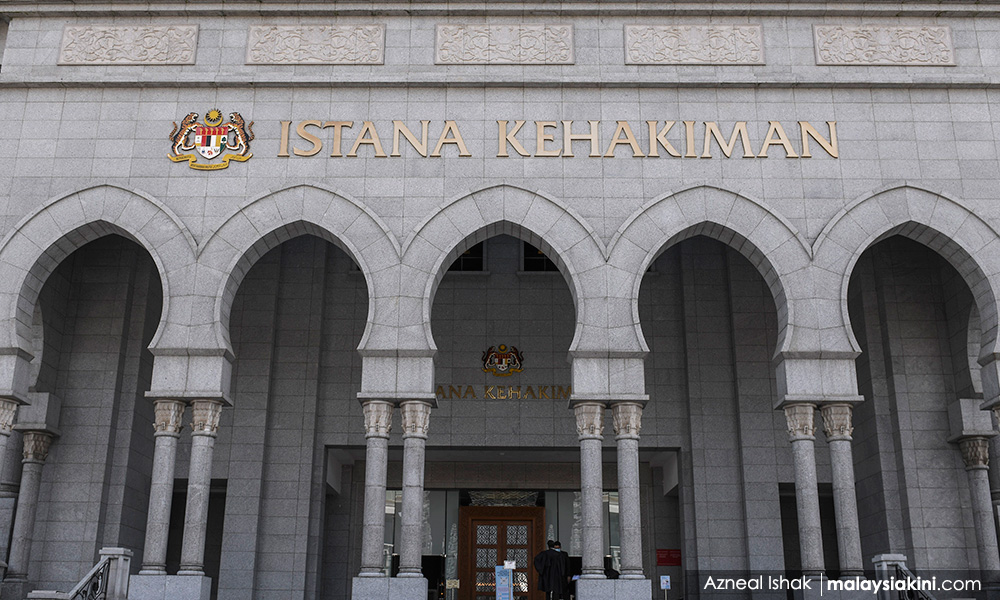
The tenures of Abdul Rahman, Zabariah, and Hanipah have already been extended by six months.

Mahathir himself has been criticised for alleged interference in judicial appointments during his tenure, most notably in the 1988 judicial crisis.

The crisis followed an amendment to Article 121 of the Federal Constitution, which placed the judiciary under federal laws passed by Parliament and led to the controversial dismissal of lord president Salleh Abas after he opposed the amendment.

Last December, Universiti Malaya constitutional law professor Shad Saleem Faruqi said the chief justice should be the one advising the Yang di-Pertuan Agong on judicial appointments, not the prime minister.

He also called for the JAC Act 2009 to be placed under the Constitution, but noted that under the current system, the prime minister is not bound by the advice of the chief justice or the JAC on shortlisted candidates.

He had argued that despite the many improvements brought by the JAC Act, the prime minister retains absolute power to choose the names to be submitted to the Yang di-Pertuan Agong. - Mkini

Debate on PM poster burning called off as Akmal's father on deathbed


A debate scheduled for tomorrow between Umno Youth chief Dr Akmal Saleh and a group of student activists has been called off after Akmal’s father has become severely ill and is on his deathbed.

ADS

In a statement tonight, Sekretariat Rakyat Benci Rasuah said it respects the situation and will give space for Akmal to focus on his family.

“For now, we have yet to receive confirmation from Akmal whether the planned debate will continue or be postponed.

“The secretariat will officially announce any changes and developments regarding the debate from time to time,” it added.

It also expressed sympathy for Akmal and his family and urged members of the public to pray for them.

The debate was originally slated to be held at 9pm tomorrow at Rumah Mandiri in Petaling Jaya, where he is to face off against the student Fakrurrazzi Khairur Rijal in a debate on topic “Demonstrasi Bakar-Membakar: Bebal atau Berakal” (Fiery demonstrations: Ignorant or Enlightened).

Call for debate

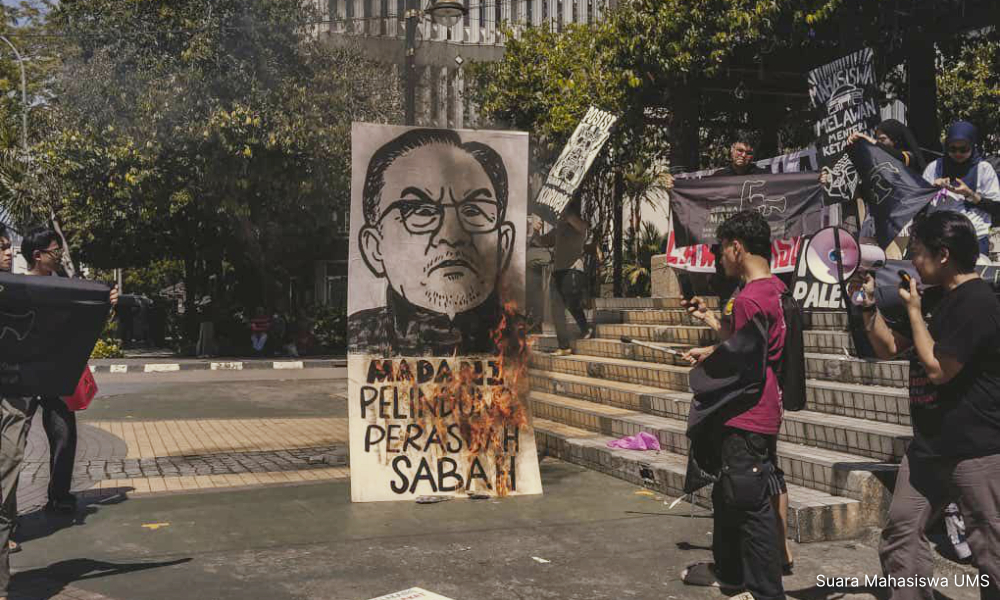
Akmal had challenged the students to a debate following a protest in Sabah on June 22 that culminated in the burning of a poster of Anwar, with the words “Madani protector of corrupt Sabahans”.

He called the students stupid and rude, and urged those who were angered in the past when images of leaders were disrespected to also be angry now.

Fakrurrazzi accepted the challenge and further challenged PKR Youth chief Kamil Abdul Munim - who also criticised the image burning - to face the protesters for a debate.

Last night, however, Akmal posted on his social media accounts that his father is on his deathbed.

“I ask friends who know my father to pray, and I apologise on my father’s behalf if he has hurt anyone’s feelings when he was well.

“Please forgive my father’s mistakes, and pray for my father,” he wrote. - Mkini

The peril within: Extremism threatens Malaysia’s security


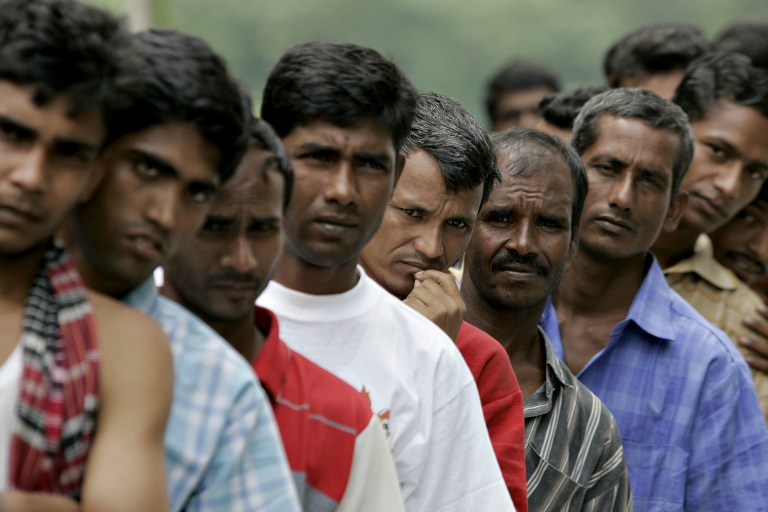
ON June 27, Malaysia made headlines with the arrest of 36 Bangladeshi nationals connected to a radical militant movement inspired by Islamic State (IS) ideology.

Of these, five individuals have been charged under the country’s terrorism laws, 15 are slated for deportation, and 16 remain under investigation.

This incident is not just a flashpoint it is a warning. It exposes a growing and highly dangerous trend: the quiet infiltration of transnational extremist elements using Malaysia as a base of operations.

Malaysia cannot afford to downplay this threat. While the majority of migrant workers come here seeking better lives, the reality is that a small number may be co-opted by extremist networks to exploit the country’s open labour system, legal blind spots, and strategic geography.

If left unaddressed, this could severely undermine national security, public safety, and Malaysia’s regional standing.

A new front in terrorist strategy

Terrorist networks have evolved. No longer confined to conflict zones, they now operate through decentralised cells, online propaganda, and global financial transfers.

Malaysia’s relatively open borders, labour demand, and large undocumented population offer fertile ground for such actors to establish recruitment hubs, fundraising channels, and ideological footholds.

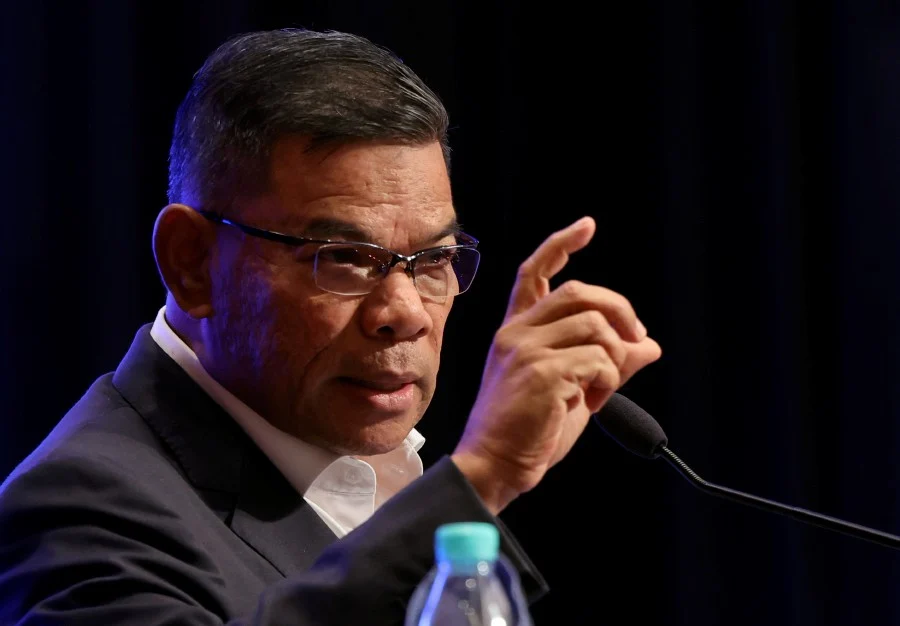
According to the Home Minister, the arrested individuals had established cells, spread radical ideologies, and attempted to finance operations aimed at overthrowing a government in their home country.

This is not just a foreign problem imported into Malaysia it’s a security breach with domestic implications. Radical groups do not respect national boundaries, and Malaysia’s enabling environment unintended though it may be can serve as a dangerous platform for regional destabilisation.

Migrant labour: A system at risk

(Image: AFP Photo)

Malaysia has long depended on migrant workers, especially from countries like Bangladesh, Nepal, and Indonesia. While many enter legally, loopholes in recruitment, legal protections, and employment enforcement lead many to slip into undocumented status.

This shadow economy, detailed by the International Organisation for Migration (IOM), not only enables exploitation by unscrupulous employers but also creates the conditions in which radical recruiters can thrive.

Disillusioned, isolated, and without legal recourse, some migrants become vulnerable to extremist influence. The risk is not in migration itself but in a system that fails to distinguish between the law-abiding and the exploited, and the few who may pose genuine threats.

Without major reforms, Malaysia risks creating the very conditions that radical groups exploit.

Don’t repeat the mistakes of others

The post-9/11 experience of the United States (US) offers a cautionary tale. Reacting to terrorism with sweeping immigration bans, mass surveillance, and indiscriminate crackdowns only deepened community mistrust and, in some cases, hindered counterterrorism cooperation.

The CATO Institute analysis showed that the annual risk of being killed by a foreign-born terrorist in the US was just 1 in 3.8 million yet fear drove disproportionately harsh policies that often-undermined security rather than strengthening it.

Malaysia must avoid these pitfalls. The correct path is not one of fear or overreach, but of intelligence-led, targeted, and proportionate responses.

The recent operation against the IS-linked group shows that Malaysian law enforcement is capable of this. Now, the challenge is to build on it with systemic reform.

Security begins with smart migration policy

National security cannot be separated from labour and immigration policy. When workers lack the ability to change jobs legally, report abuses, or regularise their status, they are pushed into hidden corners of the economy places that are invisible to law enforcement and vulnerable to manipulation.

To close these gaps, Malaysia must overhaul its migration policies. This includes legal employment mobility, transparent and enforceable contracts, standardised recruitment procedures, and protection from exploitative practices. These are not just labour rights they are national security imperatives.

An empowered, visible, and legally protected migrant workforce is far less likely to fall prey to radical recruiters. It also builds trust and cooperation between communities and the state, which is vital for long-term counterterrorism efforts.

The regional stakes

Extremism does not respect borders. Malaysia’s neighbours are facing similar threats, and no country can address transnational extremism in isolation.

Regional intelligence sharing, joint enforcement initiatives, and a unified stance on extremist returnees from conflict zones must be prioritised.

At the same time, Malaysia should lead in developing ASEAN-wide labour mobility agreements that include security screening, legal protections, and regularisation pathways.

This would reduce the reliance on informal networks and close off the backdoors that extremists use to move across borders undetected.

A strong nation acts with wisdom

As Home Minister Datuk Seri Saifuddin Nasution Ismail rightly stated, Malaysia must not become a “shelter” for extremist elements. But safeguarding national sovereignty is not just about border patrols or arrests it’s about fixing the internal systems that create openings for radical threats.

Malaysia must remain vigilant, but it must also act wisely. The right response is not to demonise migrant communities but to distinguish between those who pose legitimate threats and those who are victims of a broken system.

National security must be built on justice, reform, and evidence not xenophobia or reactionary fear.

If Malaysia rises to this challenge with intelligence, compassion, and clarity, it can secure not only its borders but also the strength of its institutions and the safety of all who call the country home. 

R. Paneir Selvam is the principal consultant of Arunachala Research & Consultancy Sdn Bhd, a think tank specialising in strategic national and geopolitical matters.

The views expressed are solely of the author and do not necessarily reflect those of  MMKtT.

- Focus Malaysia.